✵TCM herbalism is also known as the pharmaceutics of Traditional Chinese Medicine or Chinese pharmaceutics. It is the branch of health science dealing with the preparation, dispensing, and proper utilization of Chinese herbs. It is primarily composed of Introduction to Chinese Medicinals, Classification of Chinese Herbs, Formulas, and Patent Medicines.
Astringent Herbs
Introduction: Astringent Herbs—also known as discharge-stopping herbs—are agents or substances that arrest abnormal discharges such as sweat, diarrhea, urine, blood, leukorrhea, and semen.
Astringent herbs function to arrest discharges, induce astringency, and consolidate essence; they are primarily used for syndromes involving excessive discharge and deficiency exhaustion. Also termed discharge-stopping herbs, these herbs are mostly sour and puckery in flavor, and warm or neutral in nature.
According to their specific actions, astringent herbs are classified into several categories: (1) superficies-strengthening anhidrotic herbs, (2) lung- and intestine-astringent herbs, and (3) herbs that arrest spontaneous emission, leukorrhea, and polyuria.
Superficies-strengthening anhidrotic herbs arrest excessive sweating by reinforcing the superficial defensive layer (Wei Qi level). They are used to treat spontaneous perspiration due to Qi deficiency and weakened exterior resistance—characterized by loose skin and muscle interstices and leakage of body fluids—as well as night sweats resulting from Yin deficiency failing to anchor Yang, leading to pathological Yang effusion and fluid leakage. These herbs enter the superficies, regulate the Wei system, secure the Cou Li (the space between skin and muscles), and thereby strengthen the exterior and reduce sweating. Representative herbs include Fructus Tritici Levis (Fú Xiǎo Mài); others are Radix Oryzae Glutinosae (Nuò Dào Gēn), etc.
Lung-intestine astringent herbs relieve chronic cough, asthma, and persistent diarrhea. Sour and puckery in flavor, they astringe the Lung to stop coughing and astringe the Intestine to arrest diarrhea. They are mainly indicated for: Lung-Kidney deficiency-type asthma; Lung deficiency with chronic cough; chronic diarrhea and dysentery due to Cold and Deficiency of the Large Intestine impairing its astringent function; and Spleen- and Kidney-Deficiency-Cold syndromes. Representative herbs include Fructus Schisandrae (Wǔ Wèi Zǐ), Fructus Mume (Wū Méi); others include Galla Chinensis (Wǔ Bèi Zǐ), Fructus Chebulae (Hē Zǐ), Pericarpium Granati (Shí Liu Pí), Semen Myristicae (Ròu Dòu Kòu), Halloysitum Rubrum (Chì Shí Zhī), and Limonitum (Yǔ Yú Liánɡ).
Spontaneous emission and leukorrhagia-arresting and polyuria-arresting herbs are herbs that arrest spontaneous emission, leukorrhea, and polyuria alleviate spermatorrhea, leukorrhea, and frequent urination. Some also tonify the Kidneys. They are indicated for syndromes including spontaneous or involuntary emission, enuresis (urinary incontinence), polyuria (excessive urinary frequency), and pathological leukorrhea. Representative herbs include Fructus Corni (Shān Zhū Yú); others include Fructus Rosae Laevigatae (Jīn Yīnɡ Zǐ), Semen Nelumbinis (Lián Zǐ), Stamen Nelumbinis (Lián Xū), Semen Euryales (Qiàn Shí), Fructus Rubi (Fù Pén Zǐ), Os Sepiae (Hǎi Piāo Xiāo), and Concha Ostreae Usta (Duàn Mǔ Lì).
✵As of January 1, 2024, this category includes a total of [17] commonly used TCM herbs, derived from [17] plant species, [6] animal species, and [2] mineral sources.
✵As of January 1, 2024, this subcategory includes [1] commonly used TCM herb, derived from [1] plant species. These herbs are briefly introduced below:
Fructus Tritici Levis (Light Wheat)
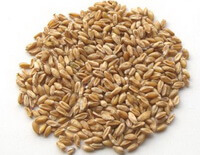
Brief Introduction:Fructus Tritici Levis is the dried, lightweight (shrunken or underdeveloped) grains of Triticum aestivum L. It is used clinically as an antihidrotic for spontaneous sweating and night sweats. Commonly known as Light Wheat, Fú Xiǎo Mài, or Fructus Tritici Levis.
✵As of January 1, 2024, this subcategory includes [8] commonly used TCM herbs, derived from [10] plant species and [2] mineral sources. These herbs are briefly introduced below:
Fructus Schisandrae (Chinese Magnoliavine Fruit)
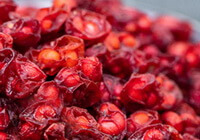
Brief Introduction:Fructus Schisandrae is the dried, ripe fruit of Schisandra chinensis (Turcz.) Baill. or Schisandra sphenanthera Rehd. et Wils. It is used as an astringent to treat dry cough, asthma, night sweats, seminal emission, and chronic diarrhea, and as a tranquilizer to alleviate palpitations and insomnia. The herb is commonly known as Fructus Schisandrae, Chinese Magnoliavine Fruit, or Wǔ Wèi Zǐ.
Fructus Mume (Smoked Plum)
Brief Introduction:Fructus Mume is the dried, nearly ripe fruit of Prunus mume (Sieb.) Sieb. et Zucc. It is used clinically as an antidiarrheal, antitussive, antithirst (antidiabetic), and anthelmintic agent for treating chronic diarrhea, persistent cough, morbid thirst (xiao ke), and ascariasis. Commonly known as Smoked Plum, Dark Plum, or Wū Méi.
Galla Chinensis (Chinese Gall)
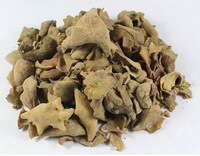
Brief Introduction:Galla Chinensis is a gall induced primarily by the aphid Melaphis chinensis (Bell) Baker on the leaves of sumac species—including Rhus chinensis Mill., Rhus potaninii Maxim., and Rhus punjabensis Stewart var. sinica (Diels) Rehder et Wilson. It is used internally as an astringent to treat persistent cough, night sweats, chronic diarrhea, hematochezia, and enuresis; and externally for burns, traumatic bleeding, hemorrhoids, and oral ulcers. It is commonly known as Chinese Gall or Wǔ Bèi Zǐ.
Fructus Chebulae (Terminalia Fruit)
Brief Introduction:Fructus Chebulae is the dried, ripe fruit of Terminalia chebula Retz. or Terminalia chebula Retz. var. tomentella (Kurz.) C.B. Clarke. It is used as an antidiarrheal and antitussive agent for treating chronic diarrhea or dysentery, persistent cough, and hoarseness. The herb is commonly known as Fructus Chebulae, Terminalia Fruit, or Hē Zǐ.
Pericarpium Granati (Pomegranate Rind)
Brief Introduction:Pericarpium Granati is the dried pericarp of Punica granatum L., used clinically as an antidiarrheal for chronic diarrhea and dysentery, and as an anthelmintic for intestinal taeniasis and ascariasis. It is commonly known as Pericarpium Granati, Pomegranate Rind, or Shí Liú Pí.
Semen Myristicae (Nutmeg)
Brief Introduction:Semen Myristicae is the dried kernel of Myristica fragrans Houtt., used as an antidiarrheal agent by warming the spleen and stomach for the treatment of chronic diarrhea. It is commonly known as Semen Myristicae, nutmeg, or Ròu Dòu Kòu.
Halloysitum Rubrum (Red Halloysite)
Brief Introduction:Halloysitum Rubrum is a naturally occurring hydrated aluminum silicate mineral, reddish in color due to trace iron oxide impurities. It is used as an antidiarrheal and hemostatic agent for chronic diarrhea, menorrhagia, and leukorrhea. It is commonly known as Halloysitum Rubrum, red halloysite, or Chì Shí Zhī.
Limonitum (Limonite)
Brief Introduction:Limonitum is a brownish iron ore, primarily composed of hydrated iron oxide [FeO(OH)]. It is used as an astringent to treat chronic diarrhea, dysentery, menorrhagia, and leukorrhea. The herb is commonly known as Limonite or Yǔ Yú Liáng.
Spontaneous emission and leukorrhagia-arresting and polyuria-arresting herbs
✵As of January 1, 2024, this category includes a total of [8] commonly used TCM herbs, derived from [6] plant species and [6] animal species. These herbs are briefly introduced below:
Fructus Corni (Asiatic Cornelian Cherry Fruit)
Brief Introduction:Fructus Corni is the dried, ripe sarcocarp of Cornus officinalis Sieb. et Zucc. It is used: (1) to nourish Liver and Kidney Yin, alleviating soreness and weakness of the lower back and knees, dizziness, and impotence; and (2) to astringe and arrest abnormal discharge—such as nocturnal emission, enuresis, metrorrhagia, and spontaneous sweating. The herb is commonly known as Fructus Corni, Asiatic Cornelian Cherry Fruit, Common Macrocarpium Fruit, Fruit of Macrocarpium, or Shān Zhū Yú.
Fructus Rosae Laevigatae (Cherokee Rose Fruit)
Brief Introduction:Fructus Rosae Laevigatae is the dried, ripe pseudocarp (receptacle-derived fruit) of Rosa laevigata Michx., used clinically as an astringent to treat seminal emission, enuresis, urinary frequency, and chronic diarrhea. It is commonly known as Cherokee Rose Fruit, Jīn Yīnɡ Zǐ, or Fructus Rosae Laevigatae.
Semen Nelumbinis (Lotus Seed)
Brief Introduction:Semen Nelumbinis is the dried, ripe seed of Nelumbo nucifera Gaertn., used as an astringent to treat chronic diarrhea, spontaneous emission, and leukorrhea. It is commonly known as Semen Nelumbinis, Lotus Seed, or Lián Zǐ.
Stamen Nelumbinis (Lotus Stamen)
Brief Introduction:Stamen Nelumbinis is the dried stamen of Nelumbo nucifera Gaertn., used as an astringent to consolidate Kidney Qi for treating seminal emission and pathological leukorrhea. It is commonly known as Lián Xū.
Semen Euryales (Gordon Euryale Seed)
Brief Introduction:Semen Euryales is the dried kernel of the ripe seed of Euryale ferox Salisb., used as an astringent to treat chronic diarrhea, spontaneous emission, enuresis, and pathological leukorrhea. It is commonly known as Semen Euryales, Gordon Euryale Seed, Seed of Gordon Euryale, or Qiàn Shí.
Fructus Rubi (Palmleaf Raspberry Fruit)
Brief Introduction:Fructus Rubi is the steamed and dried fruit of Rubus chingii Hu., used as an astringent to treat frequent urination, enuresis, and seminal emission. It is commonly known as Fructus Rubi, Palmleaf Raspberry Fruit, or Fù Pén Zi.
Os Sepiae (Cuttlebone)
Brief Introduction: The herb Os Sepiae is the dried internal shell of Sepiella maindroni de Rochebrune or Sepia esculenta Hoyle, used as a hemostatic and antacid agent for treating hematemesis, melena, menorrhagia, acid regurgitation, and leukorrhea. It is commonly known as Os Sepiae, Cuttlebone, Endoconcha Sepiae, or Hǎi Piāo Shāo.
Concha Ostreae Usta (Calcined Oyster Shell)
Brief Introduction:Concha Ostreae Usta is the calcined shell of oysters—Ostrea gigas Thunberg, Ostrea talienwhanensis Crosse, or Ostrea rivularis Gould (family Ostreidae)—used as an astringent and antacid for treating excessive sweating, seminal emission, leukorrhea, and acid regurgitation. It is commonly known as Concha Ostreae Usta, Calcined Oyster Shell, or Duàn Mǔ Lì.

 ✵TCM herbalism is also known as the pharmaceutics of Traditional Chinese Medicine or Chinese pharmaceutics. It is the branch of health science dealing with the preparation, dispensing, and proper utilization of Chinese herbs. It is primarily composed of Introduction to Chinese Medicinals, Classification of Chinese Herbs, Formulas, and Patent Medicines.
 Introduction: Astringent Herbs—also known as discharge-stopping herbs—are agents or substances that arrest abnormal discharges such as sweat, diarrhea, urine, blood, leukorrhea, and semen.
 Brief Introduction: Fructus Tritici Levis is the dried, lightweight (shrunken or underdeveloped) grains of Triticum aestivum L. It is used clinically as an antihidrotic for spontaneous sweating and night sweats. Commonly known as Light Wheat, Fú Xiǎo Mài, or Fructus Tritici Levis.
 Brief Introduction: Fructus Schisandrae is the dried, ripe fruit of Schisandra chinensis (Turcz.) Baill. or Schisandra sphenanthera Rehd. et Wils. It is used as an astringent to treat dry cough, asthma, night sweats, seminal emission, and chronic diarrhea, and as a tranquilizer to alleviate palpitations and insomnia. The herb is commonly known as Fructus Schisandrae, Chinese Magnoliavine Fruit, or Wǔ Wèi Zǐ.
 Brief Introduction: Fructus Mume is the dried, nearly ripe fruit of Prunus mume (Sieb.) Sieb. et Zucc. It is used clinically as an antidiarrheal, antitussive, antithirst (antidiabetic), and anthelmintic agent for treating chronic diarrhea, persistent cough, morbid thirst (xiao ke), and ascariasis. Commonly known as Smoked Plum, Dark Plum, or Wū Méi.
 Brief Introduction: Galla Chinensis is a gall induced primarily by the aphid Melaphis chinensis (Bell) Baker on the leaves of sumac species—including Rhus chinensis Mill., Rhus potaninii Maxim., and Rhus punjabensis Stewart var. sinica (Diels) Rehder et Wilson. It is used internally as an astringent to treat persistent cough, night sweats, chronic diarrhea, hematochezia, and enuresis; and externally for burns, traumatic bleeding, hemorrhoids, and oral ulcers. It is commonly known as Chinese Gall or Wǔ Bèi Zǐ.
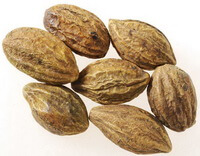 Brief Introduction: Fructus Chebulae is the dried, ripe fruit of Terminalia chebula Retz. or Terminalia chebula Retz. var. tomentella (Kurz.) C.B. Clarke. It is used as an antidiarrheal and antitussive agent for treating chronic diarrhea or dysentery, persistent cough, and hoarseness. The herb is commonly known as Fructus Chebulae, Terminalia Fruit, or Hē Zǐ.
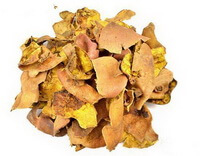 Brief Introduction: Pericarpium Granati is the dried pericarp of Punica granatum L., used clinically as an antidiarrheal for chronic diarrhea and dysentery, and as an anthelmintic for intestinal taeniasis and ascariasis. It is commonly known as Pericarpium Granati, Pomegranate Rind, or Shí Liú Pí.
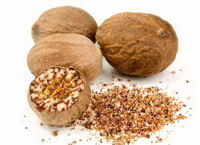 Brief Introduction: Semen Myristicae is the dried kernel of Myristica fragrans Houtt., used as an antidiarrheal agent by warming the spleen and stomach for the treatment of chronic diarrhea. It is commonly known as Semen Myristicae, nutmeg, or Ròu Dòu Kòu.
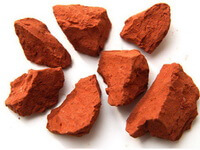 Brief Introduction: Halloysitum Rubrum is a naturally occurring hydrated aluminum silicate mineral, reddish in color due to trace iron oxide impurities. It is used as an antidiarrheal and hemostatic agent for chronic diarrhea, menorrhagia, and leukorrhea. It is commonly known as Halloysitum Rubrum, red halloysite, or Chì Shí Zhī.
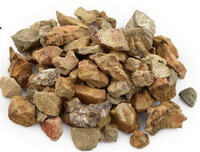 Brief Introduction: Limonitum is a brownish iron ore, primarily composed of hydrated iron oxide [FeO(OH)]. It is used as an astringent to treat chronic diarrhea, dysentery, menorrhagia, and leukorrhea. The herb is commonly known as Limonite or Yǔ Yú Liáng.
 Brief Introduction: Fructus Corni is the dried, ripe sarcocarp of Cornus officinalis Sieb. et Zucc. It is used: (1) to nourish Liver and Kidney Yin, alleviating soreness and weakness of the lower back and knees, dizziness, and impotence; and (2) to astringe and arrest abnormal discharge—such as nocturnal emission, enuresis, metrorrhagia, and spontaneous sweating. The herb is commonly known as Fructus Corni, Asiatic Cornelian Cherry Fruit, Common Macrocarpium Fruit, Fruit of Macrocarpium, or Shān Zhū Yú.
 Brief Introduction: Fructus Rosae Laevigatae is the dried, ripe pseudocarp (receptacle-derived fruit) of Rosa laevigata Michx., used clinically as an astringent to treat seminal emission, enuresis, urinary frequency, and chronic diarrhea. It is commonly known as Cherokee Rose Fruit, Jīn Yīnɡ Zǐ, or Fructus Rosae Laevigatae.
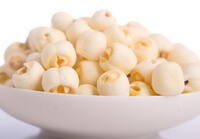 Brief Introduction: Semen Nelumbinis is the dried, ripe seed of Nelumbo nucifera Gaertn., used as an astringent to treat chronic diarrhea, spontaneous emission, and leukorrhea. It is commonly known as Semen Nelumbinis, Lotus Seed, or Lián Zǐ.
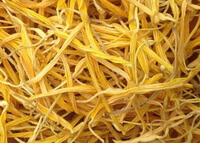 Brief Introduction: Stamen Nelumbinis is the dried stamen of Nelumbo nucifera Gaertn., used as an astringent to consolidate Kidney Qi for treating seminal emission and pathological leukorrhea. It is commonly known as Lián Xū.
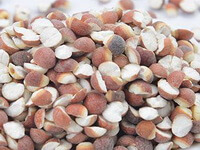 Brief Introduction: Semen Euryales is the dried kernel of the ripe seed of Euryale ferox Salisb., used as an astringent to treat chronic diarrhea, spontaneous emission, enuresis, and pathological leukorrhea. It is commonly known as Semen Euryales, Gordon Euryale Seed, Seed of Gordon Euryale, or Qiàn Shí.
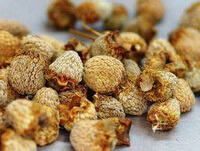 Brief Introduction: Fructus Rubi is the steamed and dried fruit of Rubus chingii Hu., used as an astringent to treat frequent urination, enuresis, and seminal emission. It is commonly known as Fructus Rubi, Palmleaf Raspberry Fruit, or Fù Pén Zi.
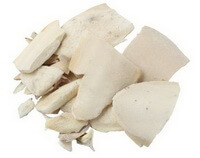 Brief Introduction: The herb Os Sepiae is the dried internal shell of Sepiella maindroni de Rochebrune or Sepia esculenta Hoyle, used as a hemostatic and antacid agent for treating hematemesis, melena, menorrhagia, acid regurgitation, and leukorrhea. It is commonly known as Os Sepiae, Cuttlebone, Endoconcha Sepiae, or Hǎi Piāo Shāo.
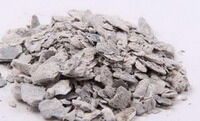 Brief Introduction: Concha Ostreae Usta is the calcined shell of oysters—Ostrea gigas Thunberg, Ostrea talienwhanensis Crosse, or Ostrea rivularis Gould (family Ostreidae)—used as an astringent and antacid for treating excessive sweating, seminal emission, leukorrhea, and acid regurgitation. It is commonly known as Concha Ostreae Usta, Calcined Oyster Shell, or Duàn Mǔ Lì.