✵The article records the herb red halloysite, including its English name, Latin name, Pinyin name, properties and flavor, and its mineral source—namely, Halloysite. It offers a detailed introduction to the physical and chemical features of this mineral, its geological occurrence and formation environment, the characteristics of the herb, its pharmacological actions, medicinal efficacy, and administration guidelines.
Halloysitum Rubrum (Red Halloysite)
Pinyin Name: Chì Shí Zhī
English Name: Halloysite, Red Halloysite
Latin Name:Halloysitum Rubrum Properties and Flavor: Warm in nature; sweet, sour, and astringent in taste
Brief Introduction:Halloysitum Rubrum is a naturally occurring hydrated aluminum silicate mineral, reddish in color due to trace iron oxide impurities. It is used as an antidiarrheal and hemostatic agent for chronic diarrhea, menorrhagia, and leukorrhea. It is commonly known as Halloysitum Rubrum, red halloysite, or Chì Shí Zhī.
Mineral Source: Traditional Chinese Medicine (TCM) herbal classics define Halloysitum Rubrum (Chì Shí Zhī) as the naturally occurring mineral halloysite, colored red by iron oxide inclusions. It is a hydrated aluminum silicate, typically found in weathered rock crusts and clay deposits. This widely used mineral is described below:
(1) Halloysite
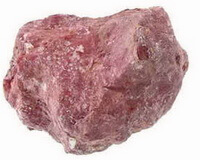
Mineral Description: Commonly known as Duō Shuǐ Gāo Lǐng Shí ("hydrated kaolinite") or Duō Shuǐ Gāo Lǐng Tǔ ("hydrated kaolin soil"). It crystallizes in the monoclinic system but rarely forms distinct crystals; instead, it commonly occurs as amorphous gels or fine-grained aggregates. Its base color is white, but it is frequently stained light red, light brown, light yellow, light blue, or light green due to trace metallic impurities. A fresh fracture exhibits a waxy luster and porous, earthy appearance. Fractures are flat and conchoidal. Hardness ranges from 1 to 2 on the Mohs scale. Specific gravity varies between 2.0 and 2.2, depending on water content. The mineral is brittle yet slightly plastic when moist. It has a characteristic earthy odor; dense clumps disintegrate into fragments upon drying. It occurs primarily in weathering crusts of parent rocks and clay-rich sedimentary layers.
Ecological Environment: The mineral is predominantly distributed in rock weathering crusts and clay layers. Major production areas include several provinces in China.
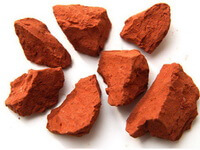
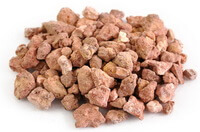
Characteristics of the Herb: The crude herb appears as irregular, lumpy aggregates. The surface is locally planar but overall uneven, exhibiting colors ranging from light red or pink to deep red, purple, or variegated red-and-white patterns. It is lightweight, soft, fragile, and displays an earthy or waxy luster. It is opaque; fingernail scratches leave visible marks, and the fracture surface is smooth with a waxy luster. It exhibits strong water absorption and adheres readily to the tongue. It possesses a mild clay-like odor and a bland, astringent taste, with no gritty or sandy sensation upon chewing.
Pharmacological Actions: (1) Adsorption of toxic substances and abnormal fermentation metabolites in the gastrointestinal tract; (2) Local protective effects on inflamed gastrointestinal mucosa and hemostatic action in cases of gastrointestinal bleeding; (3) Shortening of coagulation time in mice and plasma calcium recovery time in rats; (4) Inhibition of ADP-induced platelet aggregation in rabbits and rats, and inhibition of ADP-induced platelet thrombus formation in mice.
Medicinal Efficacy: Astringes the intestines; stops bleeding; dries dampness; promotes tissue regeneration and wound healing. It is indicated for chronic diarrhea, protracted dysentery, hematochezia, rectal prolapse, spermatorrhea, metrorrhagia, metrostaxis, and pathological leukorrhea. Externally, it is applied to non-healing ulcers, weeping sores, suppurative dermatitis, eczema, and traumatic bleeding.
Administration of Halloysitum Rubrum (Chì Shí Zhī):
Reference:
Administration Guide for Halloysitum Rubrum (Chì Shí Zhī)
TCM Books:
(1) Internally: 9–12 grams, decocted separately and added to the final decoction (to avoid clouding); externally: apply an appropriate amount of finely powdered herb directly to the affected area. (2) Internally: water decoction, 3–4 qián (≈9–12 grams); or prepared as pills or powders. Externally: apply finely powdered herb topically—sprinkled or pasted onto the affected area. (3) Internally:water decoction, 3–4 qián (≈9–12 grams); or formulated into pills or powders. Externally: apply finely powdered herb topically—sprinkled or pasted onto the affected area.
Contraindications, Precautions, and Adverse Reactions: Halloysitum Rubrum is contraindicated during pregnancy. It should not be combined with Radix et Rhizoma Rhei (rhubarb), Flos Genkwa (Daphne flower), pine oleoresin, Radix Scutellariae (skullcap root), or Cortex Cinnamomi (cassia bark).

 ✵The article records the herb red halloysite, including its English name, Latin name, Pinyin name, properties and flavor, and its mineral source—namely, Halloysite. It offers a detailed introduction to the physical and chemical features of this mineral, its geological occurrence and formation environment, the characteristics of the herb, its pharmacological actions, medicinal efficacy, and administration guidelines.
 Pinyin Name: Chì Shí Zhī
 Mineral Description: Commonly known as Duō Shuǐ Gāo Lǐng Shí ("hydrated kaolinite") or Duō Shuǐ Gāo Lǐng Tǔ ("hydrated kaolin soil"). It crystallizes in the monoclinic system but rarely forms distinct crystals; instead, it commonly occurs as amorphous gels or fine-grained aggregates. Its base color is white, but it is frequently stained light red, light brown, light yellow, light blue, or light green due to trace metallic impurities. A fresh fracture exhibits a waxy luster and porous, earthy appearance. Fractures are flat and conchoidal. Hardness ranges from 1 to 2 on the Mohs scale. Specific gravity varies between 2.0 and 2.2, depending on water content. The mineral is brittle yet slightly plastic when moist. It has a characteristic earthy odor; dense clumps disintegrate into fragments upon drying. It occurs primarily in weathering crusts of parent rocks and clay-rich sedimentary layers.
 Characteristics of the Herb: The crude herb appears as irregular, lumpy aggregates. The surface is locally planar but overall uneven, exhibiting colors ranging from light red or pink to deep red, purple, or variegated red-and-white patterns. It is lightweight, soft, fragile, and displays an earthy or waxy luster. It is opaque; fingernail scratches leave visible marks, and the fracture surface is smooth with a waxy luster. It exhibits strong water absorption and adheres readily to the tongue. It possesses a mild clay-like odor and a bland, astringent taste, with no gritty or sandy sensation upon chewing.
 URL QR code: