✵The article records the herb Talc—its English name, Latin name, properties and flavor, and its source: the mineral talc—with a detailed introduction to the mineral’s characteristics and ecological environment, as well as the herb’s features, pharmacological actions, medicinal efficacy, and administration guidelines.
Talcumn (Talc)
Pinyin Name: Huá Shí
English Name: Talc
Latin Name: Talcumn
Property and Flavor: Cold, sweet, tasteless
Brief Introduction: The herb Talc is a very soft mineral composed mainly of hydrous magnesium silicate. It is used to promote diuresis, clear summer-heat, and dispel dampness in the treatment of summer-related disorders, watery diarrhea, oliguria, and urinary tract infections; it is also applied externally for eczema and miliaria. The herb is commonly known as Talc, Talcum, or Huá Shí.
Mineral source: Classical herbal works define the herb Talc (Talcum) as the compact blocks of talc—a mineral composed primarily of hydrous magnesium silicate. It is described as follows:
(1) Talc.
Mineral Description: Also known as talc powder or Huá Shí, it crystallizes in the monoclinic system. Crystals are typically hexagonal or rhomboid, though intact crystals are rare; more commonly, it occurs as granular or scaly, dense, massive aggregates. The overall color ranges from eggshell blue to white or pale yellow. Streaks are white or light green. Luster is greasy; cleavage surfaces exhibit pearly luster. Transparency ranges from translucent to opaque. Cleavage is perfect basal. Hardness is 1 on the Mohs scale; relative density is 2.7–2.8. The mineral is soft and feels slippery and greasy. A piece of talc can be easily cut into any shape; thin sheets are flexible but inelastic.
Ecological Environment: This mineral occurs primarily in metamorphic rocks, limestone, dolomite, magnesite, and shale. It is distributed across China.
Characteristics of the Herb: (1) Talc: Appears as compact blocks or scale-like aggregates—irregular or flattened pieces. Color ranges from white, yellowish-white, light gray, to pale blue. It is translucent to opaque, with a waxy or occasionally pearly luster. Texture is soft and fine-grained (delicate); it can write on hard paper and feels lubricating to the touch. It is non-hygroscopic and does not disintegrate in water. Odorless, tasteless, and cool in nature.
(2) Talc Powder: A fine, non-gritty powder, white or off-white, with a greasy feel. Odorless and tasteless.
Pharmacological Actions: (1) Antimicrobial effect: In vitro, a 10% talc suspension inhibits Bacillus typhi and Bacillus paratyphosus A.
Medicinal Efficacy: Promotes diuresis and treats stranguria; clears heat and summer-heat; resolves dampness; facilitates urination and bowel movement; clears damp-heat and promotes wound healing. Indicated for: pyretic stranguria (heat-induced dysuria), urolithic stranguria, burning and painful urination, damp-heat in the bladder, summer-heat with dampness, excessive thirst, damp-heat-induced watery diarrhea, dysuria, diarrhea, heat-dysentery, gonorrhea, jaundice, edema, epistaxis, beriberi; and externally for eczema, moist sores, miliaria (prickly heat), damp skin lesions, and ulceration.
Administration of Talc (Huá Shí):
Reference:
Administration Guide for Talc (Huá Shí)
TCM Books:
(1) Internally:10–20 grams; topical: appropriate amount. (2) Internally:water decoction, (wrapped in cloth during boiling), 3–4 qian (~9–12 grams); or prepared as pills or powders. Topical: finely ground powder applied as a paste or dusting powder. (3) Internally:water decoction, 9–24 grams (wrapped during boiling), or prepared as pills or powders. Topical: appropriate amount of finely ground powder, applied topically as a paste or dusting powder.
Precautions and Adverse Reactions: Talc should be used with caution during pregnancy and should not be combined with azurite.

 ✵The article records the herb Talc—its English name, Latin name, properties and flavor, and its source: the mineral talc—with a detailed introduction to the mineral’s characteristics and ecological environment, as well as the herb’s features, pharmacological actions, medicinal efficacy, and administration guidelines.
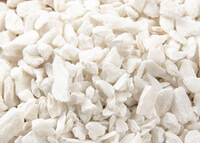 Pinyin Name: Huá Shí
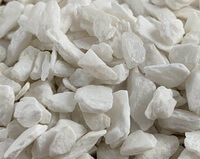 Ecological Environment: This mineral occurs primarily in metamorphic rocks, limestone, dolomite, magnesite, and shale. It is distributed across China.
 URL QR code: