✵The article records the herb Common Rush—its English name, Latin name, Pinyin name, properties and flavor, and its botanical source: the dried pith of Juncus effusus L.—with a detailed introduction to the plant’s botanical features, growth characteristics, ecological environment, the herb’s macroscopic and microscopic characteristics, pharmacological actions, medicinal efficacy, and administration guidelines.
Medulla Junci (Common Rush)
Pinyin Name: Dēnɡ Xīn Cǎo
English Name: Common Rush
Latin Name:Medulla Junci Properties and Flavor: Slightly cold, sweet, tasteless
Brief Introduction: The herb Medulla Junci is the dried pith of Juncus effusus L. It is used (1) to promote diuresis in the treatment of heat-induced dysuria and (2) to calm the mind and relieve restlessness and insomnia. The herb is commonly known as Medulla Junci, Common Rush, or Dēnɡ Xīn Cǎo.
Botanical Source: Classical herbal works define the herb Medulla Junci (Common Rush) as the dried pith of Juncus effusus L. It is a perennial herb belonging to the genus Juncus L., family Juncaceae (rush family), order Poales (formerly Liliflorae). This widely used species is described below:
(1) Juncus effusus L.
Botanical Description:Juncus effusus L. is also known as Juncus effusus var. decipiens (Buchen.) Buchen. or Juncus decipiens Buchen., and is commonly called Dēnɡ Xīn Cǎo. A perennial herb, it grows 40–100 cm tall. The rhizome is creeping, bearing dense fibrous roots. Stems are tufted, erect, slender, cylindrical, 1.5–4 mm in diameter, and filled internally with creamy-white (milk-white) pith, which occupies most of the stem volume. Leaf sheaths are mahogany (reddish-brown) or primrose yellow (pale yellow), up to 15 cm long; leaf blades are highly reduced and aristiform (bristle-like).
Inflorescences are pseudolateral, cymose, multiflorous, either dense or diffuse. Bracts subtending the inflorescence are 5–20 cm long. Flowers are pale green, short-stipitate, 2–2.5 mm long. Perianth consists of 6 tepals, lanceolate to strap-shaped, arranged in two whorls; the outer whorl is slightly longer, with membranous margins and pubescent abaxial surfaces. Stamens number 3 (rarely 6), approximately two-thirds the length of the perianth; anthers are slightly shorter than filaments. There is 1 pistil; ovary is superior, trilocular; style is very short; stigma is trifid.
Capsule fruit is oblong, apex is obtuse or emarginate, equal to or slightly longer than the perianth, and contains three complete septa. Seeds are numerous, ovate-oblong, brown, ~0.4 mm long. Flowering occurs from June to July; fruiting from July to October.
Ecological Environment: The plant grows in moist habitats, such as along water bodies and in fields.
Growth characteristics:Juncus effusus prefers a humid environment, is cold-tolerant, and drought-intolerant. Soil requirements are not strict, but moist, fertile, and loose soil is optimal for cultivation.
Characteristics of the Herb: The herb consists of thin, cylindrical strands, up to 90 cm long and 1–3 mm in diameter, with a white or yellowish-white surface. Under magnification, fine, raised longitudinal striations and spongy (sponge-like) pore spaces are visible. The herb exhibits slight luster, is lightweight, soft, flexible (elastic), and easily broken; fracture surfaces are uneven and white. Odor is faint; taste is mild.
Medicinal efficacy: Clears heart-fire, calms the mind, promotes diuresis, alleviates edema, and treats dysuria. Indicated for restlessness and insomnia, infantile night crying, oliguria and dysuria (reduced urine output with painful or difficult urination), edema, gonorrhea, damp-heat jaundice, pharyngitis, oral and lingual ulcers, and traumatic injuries.
Administration of Medulla Junci (Dēnɡ Xīn Cǎo):
Reference:
Administration Guide for Medulla Junci (Dēnɡ Xīn Cǎo)
TCM Books:
(1) Internally: 1–3 grams; (2) Internally:water decoction, 5–8 fēn (~1.5–2.4 grams); fresh herb used singly, 0.5–1 liǎng (~15–30 grams); or prepared as pills or powders. Topical: charred herb (retaining its properties), finely powdered, and applied by dusting or insufflation into the throat. (3) Internally: water decoction, 1–3 grams; fresh herb, 15–30 grams; or prepared as pills or powders. Topical: appropriate amount of charred herb, finely powdered, and dusted; or fresh herb mashed and applied topically.

 ✵The article records the herb Common Rush—its English name, Latin name, Pinyin name, properties and flavor, and its botanical source: the dried pith of Juncus effusus L.—with a detailed introduction to the plant’s botanical features, growth characteristics, ecological environment, the herb’s macroscopic and microscopic characteristics, pharmacological actions, medicinal efficacy, and administration guidelines.
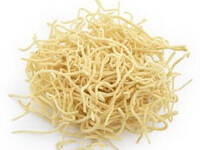 Pinyin Name: Dēnɡ Xīn Cǎo
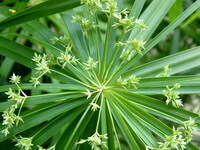 Botanical Source: Classical herbal works define the herb Medulla Junci (Common Rush) as the dried pith of Juncus effusus L. It is a perennial herb belonging to the genus Juncus L., family Juncaceae (rush family), order Poales (formerly Liliflorae). This widely used species is described below:
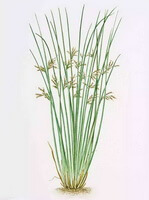 Botanical Description: Juncus effusus L. is also known as Juncus effusus var. decipiens (Buchen.) Buchen. or Juncus decipiens Buchen., and is commonly called Dēnɡ Xīn Cǎo. A perennial herb, it grows 40–100 cm tall. The rhizome is creeping, bearing dense fibrous roots. Stems are tufted, erect, slender, cylindrical, 1.5–4 mm in diameter, and filled internally with creamy-white (milk-white) pith, which occupies most of the stem volume. Leaf sheaths are mahogany (reddish-brown) or primrose yellow (pale yellow), up to 15 cm long; leaf blades are highly reduced and aristiform (bristle-like).
 Ecological Environment: The plant grows in moist habitats, such as along water bodies and in fields.
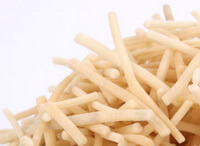 Characteristics of the Herb: The herb consists of thin, cylindrical strands, up to 90 cm long and 1–3 mm in diameter, with a white or yellowish-white surface. Under magnification, fine, raised longitudinal striations and spongy (sponge-like) pore spaces are visible. The herb exhibits slight luster, is lightweight, soft, flexible (elastic), and easily broken; fracture surfaces are uneven and white. Odor is faint; taste is mild.
 URL QR code:

