Introduction of Mian Bi Xie: Seven-lobed Yam Rhizome
✵This article documents the herb Seven-lobed Yam Rhizome, including its English name, Latin name, Pinyin name, properties and flavor, botanical sources—two plant species: (1) Dioscorea septemloba Thunb. and (2) Dioscorea futschauensis Uline—along with detailed descriptions of their botanical features, growth characteristics, ecological environments, macroscopic and microscopic characteristics of the dried rhizome, pharmacological actions, medicinal efficacy, and administration guidelines.
Pinyin Name: Mián Bì Xiè
English Name: Seven-lobed Yam Rhizome
Latin Name:Rhizoma Dioscoreae Septemlobae Properties and Flavor: Neutral; bitter.
Brief Introduction:Rhizoma Dioscoreae Septemlobae is the dried rhizome of Dioscorea septemloba Thunb. or Dioscorea futschauensis Uline. It is used (1) to drain damp-turbidity in conditions such as chyluria and stranguria with turbid urine, and (2) to dispel wind-damp in rheumatic arthralgia. Common names include Rhizoma Dioscoreae Septemlobae, Seven-lobed Yam Rhizome, Severely lobed Yam Rhizome, and Mián Bì Xiè.
Botanical Source: Classical herbal works define Rhizoma Dioscoreae Septemlobae (Seven-lobed Yam Rhizome) as the dried rhizome of (1) Dioscorea septemloba Thunb. or (2) Dioscorea futschauensis Uline. Both belong to the genus Dioscorea L., family Dioscoreaceae (yam family), order Liliales. The two commonly used species are described below:
(1) Dioscorea septemloba Thunb.
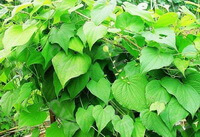
Botanical Description:Dioscorea spongiosa J. Q. Xi, M. Mizuno et W. L. Zhao is a heterotypic synonym of Dioscorea septemloba Thunb. and is commonly known as Mián Bì Xiè. It is a perennial twining herbaceous vine. Rhizomes are amphitropous, branched, and stout, 2–5 cm in diameter; when dried, they are loose in texture and spongy, with a sallow (grayish-yellow) bark and numerous slender fibrous roots. The stem is sinistral and cylindrical. Leaves are simple and alternate; leaf blades are slightly coriaceous and morphologically variable: basal leaves are palmately deeply cordate, while upper leaves are ovate (egg-shaped); margins are undulate or entire; reticulate venation is conspicuous on the abaxial surface; both surfaces are sparsely covered with white hirsute trichomes.
Male inflorescences are axillary and racemose; male flowers are pedicellate, with a total length (including perianth) of 4–5 mm. The perianth is orange-yellow when fresh and turns brown upon drying; there are six stamens, though sometimes only three are fully developed.
The capsule is retroflexed and pendulous at maturity; the wings are nearly semicircular, with a slightly emarginate apex and a rounded base; it measures 1.5–1.8 cm in length and 1.2 cm in width. Seeds are oblate-ovoid, 4–5 mm in diameter, surrounded by membranous wings. Flowering occurs from June to July; fruiting occurs from July to October.
Ecological Environment:Dioscorea septemloba grows in open forests or shrublands at altitudes of 450–700 m above sea level.
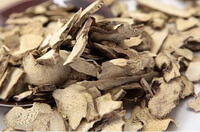
Characteristics of the Herb: Rhizomes are processed into mostly straight-cut or beveled circular slices with irregular edges and variable diameters, 2–5 mm thick. The bark is brown to yellow-brown, thick, and often curled at the periphery; sparse residues of fibrous roots and conical protrusions are present. The fracture surface is pale yellowish-white to grayish-white or light grayish-brown, coarse and rough, with scattered yellowish-brown punctate vascular bundles. The texture is loose and slightly spongy, and the slices break easily. The herb has a faint odor and a slightly bitter taste.
Medicinal Efficacy: Promotes diuresis to drain dampness, eliminates turbidity, dispels wind-damp, alleviates wind-damp bi syndrome (painful obstruction), relieves pain and numbness, reduces swelling, and detoxifies. It is indicated for chyluria, leukorrhea (including excessive leucorrhea), damp-heat syndromes, toxic sores, rheumatic arthralgia, numbness and pain in the lower back and knees, turbid urine (white turbidity), dribbling urination, and similar conditions.
Administration of Rhizoma Dioscoreae Septemlobae (Mián Bì Xiè):
Reference:
Administration Guide for Rhizoma Dioscoreae Septemlobae (Mián Bì Xiè)
TCM Books:
(1) Internally: 9–15 grams; (2) Internally: water decoction, 9–20 grams; also used in wine-based preparations, pills, or powders. External use: Apply an appropriate amount of freshly mashed herb topically.
(2) Dioscorea futschauensis Uline
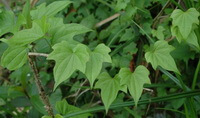
Botanical Description:Dioscorea futschauensis Uline is also known as Dioscorea futschauensis Uline ex R. Knuth; it is commonly known as Hóu Zi Shǔ. It is a perennial twining herbaceous vine. Rhizomes are amphitropous and irregularly long-cylindrical, with tawny (yellow-brown) bark. The stem is sinistral and glabrous. Leaves are simple and alternate; leaf blades are slightly coriaceous and morphologically variable: basal leaves are palmately deeply cordate and 7-lobed, differing in size; upper leaves are ovate-triangular; margins are undulate or subentire; reticulate venation is conspicuous on the abaxial surface; both surfaces are sparsely covered with white hirsute trichomes.
Flowers are unisexual and plants are dioecious. Male inflorescences are axillary, racemose—often paniculate—and may occur solitarily or in clusters of two to three in the leaf axils. Male flowers are pedunculate; the total length including the perianth is 4–5 mm. The perianth is orange-yellow when fresh and turns brown upon drying. There are six stamens, though sometimes only three are fully developed.
The capsule is retroflexed and pendulous at maturity; the wings are nearly semicircular, with a slightly emarginate apex and a rounded base; it measures 1.5–1.8 cm in length and 1–1.2 cm in width. Seeds are oblate-ovoid, 4–5 mm in diameter, surrounded by membranous wings. Flowering occurs from June to July; fruiting occurs from July to October.
Ecological Environment: The plant grows in thickets and along forest edges on hillsides and mountain slopes, as well as in gullies or beside roads, at altitudes below 700 m above sea level.
Characteristics of the Herb: The rhizome is irregularly long-cylindrical, 6–16 cm long and 1–4.5 cm in diameter. The surface is uneven, with depressions and elevations, tawny (yellow-brown) in color, bearing irregular wizened hook-like lines and stem scars, interspersed with scattered nodular protrusions. The texture is hard and difficult to break. Commercial specimens are typically sliced thinly (2–3 mm thick); the fracture surface is ash-gray (grayish-white) or yellowish-white, powdery, and bears scattered punctate vascular bundles. Although the outer appearance suggests density, the internal texture is relatively loose and slightly spongy. The herb has a faint odor and a slightly bitter and pungent taste.
Article Link:
URL QR code:
References:
1.Introduction of Mian Bi Xie: Seven-lobed Yam Rhizome

 ✵This article documents the herb Seven-lobed Yam Rhizome, including its English name, Latin name, Pinyin name, properties and flavor, botanical sources—two plant species: (1) Dioscorea septemloba Thunb. and (2) Dioscorea futschauensis Uline—along with detailed descriptions of their botanical features, growth characteristics, ecological environments, macroscopic and microscopic characteristics of the dried rhizome, pharmacological actions, medicinal efficacy, and administration guidelines.
 Pinyin Name: Mián Bì Xiè
 Botanical Description: Dioscorea spongiosa J. Q. Xi, M. Mizuno et W. L. Zhao is a heterotypic synonym of Dioscorea septemloba Thunb. and is commonly known as Mián Bì Xiè. It is a perennial twining herbaceous vine. Rhizomes are amphitropous, branched, and stout, 2–5 cm in diameter; when dried, they are loose in texture and spongy, with a sallow (grayish-yellow) bark and numerous slender fibrous roots. The stem is sinistral and cylindrical. Leaves are simple and alternate; leaf blades are slightly coriaceous and morphologically variable: basal leaves are palmately deeply cordate, while upper leaves are ovate (egg-shaped); margins are undulate or entire; reticulate venation is conspicuous on the abaxial surface; both surfaces are sparsely covered with white hirsute trichomes.
 Ecological Environment: Dioscorea septemloba grows in open forests or shrublands at altitudes of 450–700 m above sea level.
 Characteristics of the Herb: Rhizomes are processed into mostly straight-cut or beveled circular slices with irregular edges and variable diameters, 2–5 mm thick. The bark is brown to yellow-brown, thick, and often curled at the periphery; sparse residues of fibrous roots and conical protrusions are present. The fracture surface is pale yellowish-white to grayish-white or light grayish-brown, coarse and rough, with scattered yellowish-brown punctate vascular bundles. The texture is loose and slightly spongy, and the slices break easily. The herb has a faint odor and a slightly bitter taste.
 Botanical Description: Dioscorea futschauensis Uline is also known as Dioscorea futschauensis Uline ex R. Knuth; it is commonly known as Hóu Zi Shǔ. It is a perennial twining herbaceous vine. Rhizomes are amphitropous and irregularly long-cylindrical, with tawny (yellow-brown) bark. The stem is sinistral and glabrous. Leaves are simple and alternate; leaf blades are slightly coriaceous and morphologically variable: basal leaves are palmately deeply cordate and 7-lobed, differing in size; upper leaves are ovate-triangular; margins are undulate or subentire; reticulate venation is conspicuous on the abaxial surface; both surfaces are sparsely covered with white hirsute trichomes.
 The capsule is retroflexed and pendulous at maturity; the wings are nearly semicircular, with a slightly emarginate apex and a rounded base; it measures 1.5–1.8 cm in length and 1–1.2 cm in width. Seeds are oblate-ovoid, 4–5 mm in diameter, surrounded by membranous wings. Flowering occurs from June to July; fruiting occurs from July to October.
 URL QR code: