✵The article records the herb Belvedere Fruit—including its English name, Latin name, Pinyin name, properties and flavor, botanical source—a single plant species: (1) Kochia scoparia (L.) Schrad.—and provides a detailed introduction to the botanical features, growth characteristics, and ecological environment of this species; the macroscopic and microscopic characteristics of the herb Belvedere Fruit; its pharmacological actions, medicinal efficacy, and administration guidelines.
Fructus Kochiae (Belvedere Fruit)
Pinyin Name: Dì Fū Zǐ
English Name: Belvedere Fruit
Latin Name:Fructus Kochiae Properties and Flavor: Cold, bitter
Brief Introduction:Fructus Kochiae is the dried, ripe fruit of Kochia scoparia (L.) Schrad. It is used to clear damp-heat—particularly in cases of bladder damp-heat with stranguria—and to relieve itching in urticaria, eczema, and pruritus. Common names include Fructus Kochiae, Belvedere Fruit, and Dì Fū Zǐ.
Botanical Source: Classical herbal works define Fructus Kochiae (Belvedere Fruit) as the dried, ripe fruit of (1) Kochia scoparia (L.) Schrad. It is a member of the genus Kochia, family Chenopodiaceae (goosefoot family), order Caryophyllales (formerly in Centrospermae). This widely used species is described below:
(1) Kochia scoparia (L.) Schrad.
Botanical Description:Kochia scoparia (L.) Schrad. is also known as Chenopodium scoparium L. and commonly referred to as Kochia scoparia or Dì Fū. It is an annual herb reaching 50–150 cm in height. The root is fusiform (spindle-shaped). The stem is erect, much-branched, terete, pea-green (pale green) or light red, prominently ribbed, and pubescent. Leaves are alternate and sessile; leaf blades are narrow-lanceolate or linear-lanceolate, 2–7 cm long and 3–7 mm wide; the apex is shortly acuminate; the base is cuneate (wedge-shaped) and tapers into a short petiole; margins are entire; the adaxial surface is green and glabrous; the abaxial surface is pale green and either glabrous or pubescent; three main veins are typically present; upper stem leaves are smaller and possess only a single midvein.
Flowers are solitary or occur in pairs in leaf axils, forming sparse spikes; rust-colored, long pilose hairs may be present beneath the flowers. Flowers are small, hermaphroditic or functionally female; yellowish-green; with 5 tepals (perianth lobes), subsphaeroidal (subglobular), basally connate; during fruiting, triangular, transverse protrusions—or wings—develop on the dorsal surface; these may be fan-shaped. There are 5 stamens; filaments are filiform (threadlike); the style is very short, with 2 filiform stigmas.
Utricles are oblate; the pericarp is membranous and free from the seed, enclosed within the persistent perianth. Seeds are ovate or oblate, solitary, black-brown (dark brown), 1.5–2 mm long, and slightly lustrous. Flowering occurs from June to September; fruiting occurs from August to October.
Ecological Environment: The plant grows wild in wastelands, field margins, and along roadsides, and is also cultivated in gardens. It is native to Europe and temperate Asia (including Central and Southern Asia). Its distribution includes Asia and Europe, as well as Siberia, the Ussuri region, zeea-brea, and other areas.
Growth Characteristics:Kochia scoparia prefers a warm, moderately moist climate; exhibits strong adaptability and drought tolerance; and thrives in full sun. Soil requirements are not stringent, though it is more tolerant of alkaline soils. Optimal growth occurs in fertile, loose, humus-rich loam. Cultivation should be carried out in sunny locations with well-drained, humus-rich loamy soil.
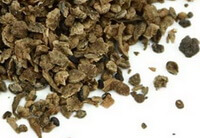
Characteristics of the Herb: The utricle is an oblate pentacle, 1–3 mm in diameter, enveloped by a persistent perianth. The surface is celadon (grayish-green) or pale brown, bearing five triangular, membranous winglets; punctate, protruding fruit-stalk scars; and 5–10 radial veins centered on the dorsal surface. Upon removal of the perianth, the translucent, membranous pericarp becomes visible. Seeds are flattened-ovate, ~1 mm long, and black. The herb is odorless and tastes slightly bitter.
Pharmacological Actions: (1) Inhibitory effect against various dermatophytes; (2) diuretic activity; (3) inhibition of mononuclear phagocyte system function; (4) anti-inflammatory effect.
Medicinal efficacy: Clears heat and drains dampness via diuresis; dispels wind and alleviates itching. Indications include dysuria (painful or difficult urination), pruritus vulvae, leukorrhea, gonorrhea, turbid urine, bloody diarrhea (dysentery with blood), hernia, urticaria (rubella), furuncles (“sore poison”), eczema, scabies, generalized pruritus, and damp-itching of the genital region.
Administration of Fructus Kochiae (Dì Fū Zǐ):
Reference:
Administration Guide for Fructus Kochiae (Dì Fū Zǐ)
TCM Books:
(1) Internally: 9–15 grams; externally: appropriate amount, used as fumigation or wash with water decoction. (2) Internally: water decoction, 2–5 qian (approximately 6–15 grams), or prepared as pills or powder; externally: wash with water decoction. (3) Internally: water decoction, 6–15 grams, or prepared as pills or powder; externally: appropriate amount, wash with water decoction.
Precautions and Adverse Reactions: Fructus Kochiae should not be combined with Ootheca Mantidis.

 ✵The article records the herb Belvedere Fruit—including its English name, Latin name, Pinyin name, properties and flavor, botanical source—a single plant species: (1) Kochia scoparia (L.) Schrad.—and provides a detailed introduction to the botanical features, growth characteristics, and ecological environment of this species; the macroscopic and microscopic characteristics of the herb Belvedere Fruit; its pharmacological actions, medicinal efficacy, and administration guidelines.
 Pinyin Name: Dì Fū Zǐ
 Botanical Description: Kochia scoparia (L.) Schrad. is also known as Chenopodium scoparium L. and commonly referred to as Kochia scoparia or Dì Fū. It is an annual herb reaching 50–150 cm in height. The root is fusiform (spindle-shaped). The stem is erect, much-branched, terete, pea-green (pale green) or light red, prominently ribbed, and pubescent. Leaves are alternate and sessile; leaf blades are narrow-lanceolate or linear-lanceolate, 2–7 cm long and 3–7 mm wide; the apex is shortly acuminate; the base is cuneate (wedge-shaped) and tapers into a short petiole; margins are entire; the adaxial surface is green and glabrous; the abaxial surface is pale green and either glabrous or pubescent; three main veins are typically present; upper stem leaves are smaller and possess only a single midvein.
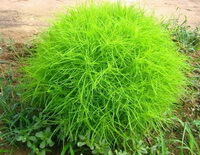 Flowers are solitary or occur in pairs in leaf axils, forming sparse spikes; rust-colored, long pilose hairs may be present beneath the flowers. Flowers are small, hermaphroditic or functionally female; yellowish-green; with 5 tepals (perianth lobes), subsphaeroidal (subglobular), basally connate; during fruiting, triangular, transverse protrusions—or wings—develop on the dorsal surface; these may be fan-shaped. There are 5 stamens; filaments are filiform (threadlike); the style is very short, with 2 filiform stigmas.
 Ecological Environment: The plant grows wild in wastelands, field margins, and along roadsides, and is also cultivated in gardens. It is native to Europe and temperate Asia (including Central and Southern Asia). Its distribution includes Asia and Europe, as well as Siberia, the Ussuri region, zeea-brea, and other areas.
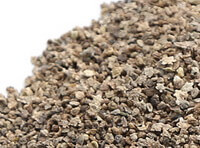 Characteristics of the Herb: The utricle is an oblate pentacle, 1–3 mm in diameter, enveloped by a persistent perianth. The surface is celadon (grayish-green) or pale brown, bearing five triangular, membranous winglets; punctate, protruding fruit-stalk scars; and 5–10 radial veins centered on the dorsal surface. Upon removal of the perianth, the translucent, membranous pericarp becomes visible. Seeds are flattened-ovate, ~1 mm long, and black. The herb is odorless and tastes slightly bitter.
 URL QR code: