Introduction of Dong Gua Pi: Chinese Wax-gourd Peel
✵This article documents Chinese Wax-gourd Peel—including its English name, Latin name, Pinyin name, properties and flavor—and its botanical source, Benincasa hispida (Thunb.) Cogn., with a detailed description of the plant’s botanical features, growth characteristics, ecological environment, macroscopic characteristics of the herb, pharmacological actions, medicinal efficacy, and administration guidelines.
Exocarpium Benincasae (Chinese Wax-gourd Peel)
Pinyin Name: Dōnɡ Guā Pí
English Name: Chinese Wax-gourd Peel
Latin Name:Exocarpium Benincasae Properties and Flavor: Slightly cold; sweet
Brief Introduction:Exocarpium Benincasae is the dried exocarp of Benincasa hispida (Thunb.) Cogn. It is used to promote diuresis in oliguria and edema. It is commonly known as Exocarpium Benincasae, Chinese Wax-gourd Peel, or Dōnɡ Guā Pí.
Botanical Source: Classical herbal works define Exocarpium Benincasae (Chinese Wax-gourd Peel) as the dried exocarp of Benincasa hispida (Thunb.) Cogn., a vine of the genus Benincasa, family Cucurbitaceae (gourd family), order Cucurbitales. This widely used species is described below:
(1) Benincasa hispida (Thunb.) Cogn.
Botanical Description:Benincasa hispida (Thunb.) Cogn. is also known as Benincasa cerifera Savi. Common names include Chinese wax-gourd, winter gourd, and Dōnɡ Guā. An annual climbing vine; stems are covered with tawny (yellowish-brown) hirsute and pilose pubescence, bearing prominent ridges and grooves. Leaves are alternate and solitary; petioles are stout, 5–20 cm long, and densely covered with tawny (cinnamon-colored) hirsute and pilose hairs; leaf blades are subrounded reniform, 15–30 cm wide, deeply 5–7-lobed (sometimes irregularly fissured), with broadly ovate lobes, acuminate apices, serrulate margins, and deeply cordate bases; both surfaces are covered with coarse, stiff hairs; venation is reticulate, slightly raised on the abaxial surface and densely hairy. Tendrils are axillary, dichotomous or trifurcated, and covered with thick hirsute and pilose pubescence.
Flowers are unisexual and monoecious, solitary, and axillary. Pedicels are hirsute; the calyx is tubular; bracts are triangular-ovate with serrate margins and are reflexed; the corolla is yellow, 5-lobed to the base, and spreading outward. Male flowers possess 3 stamens with meristic filaments and oval anthers whose cells are flexed into an S-shape. Female flowers have a long terete (cylindrical) or ovate-oblong ovary, densely covered with tawny (sienna-colored) long hirsute hairs; the style is 2–3 mm long; the stigma is 3-lobed, 12–15 mm long, and slightly twisted.
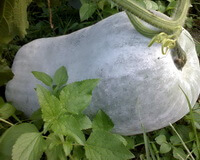
Fruits are large, fleshy, long terete (cylindrical) or subspherical, 25–60 cm long and 10–25 cm in diameter; the surface is hirsute and coated with a waxy, whitish bloom. Seeds are numerous, ovoid, white or pale yellow, flattened, 10–11 mm long, 5–7 mm wide, and ~2 mm thick. Flowering occurs from May to June; fruiting from June to August.
Ecological Environment: The plant is native to tropical and subtropical Asia and is widely cultivated across China. It is also naturalized in eastern Australia and Madagascar.
Growth Characteristics:Benincasa hispida prefers warm climates, is heat-tolerant, intolerant of waterlogging, and sensitive to low temperatures. Cultivation requires deep, well-drained soils—such as sandy loam or clay loam—and avoids low-lying, poorly drained land.
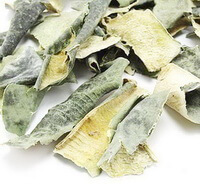
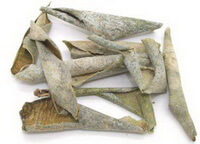
Characteristics of the Herb: The pericarp is an irregular, thin slice, usually involute, cylindrical (cylinder-shaped), or double-barrelled, with varying sizes. The outer surface is yellowish-white to sap green (dark green), smooth or covered with white powder. The inner surface is rough and bears tendon-like vascular bundles. The herb is light in weight, with a crisp texture and breaks easily. It has a slight odor and a mild taste.
Pharmacological Actions: (1) Diuretic effect.
Medicinal efficacy: Promotes diuresis to alleviate edema, clears heat, and resolves water retention. It is indicated for edema, abdominal distension and fullness, dysuria (difficulty in urination), summer-heat syndrome with thirst, diarrhea, loose stools, oliguria with reddish urine, carbuncles and swellings, sores and swellings.
Administration of Exocarpium Benincasae (Dōnɡ Guā Pí):
Reference:
Administration Guide of Exocarpium Benincasae (Dōnɡ Guā Pí)
TCM Books:
(1) Internally: 9–30 grams; (2) Internally: water decoction, 0.3–1 liang (≈9–30 grams), or prepared as a powder; externally: wash with water decoction, or prepare into a finely ground herb powder and apply topically; (3) Internally: water decoction, 15–30 grams; externally: appropriate amount, wash with water decoction.
Precautions and Adverse Reactions: Exocarpium Benincasae should be used cautiously in cases of puffiness (deficiency-type edema) due to malnutrition.
Article Link:
URL QR code:
References:
1.Introduction of Dōnɡ Guā Pí: Chinese Wax-gourd Peel

 ✵This article documents Chinese Wax-gourd Peel—including its English name, Latin name, Pinyin name, properties and flavor—and its botanical source, Benincasa hispida (Thunb.) Cogn., with a detailed description of the plant’s botanical features, growth characteristics, ecological environment, macroscopic characteristics of the herb, pharmacological actions, medicinal efficacy, and administration guidelines.
 Pinyin Name: Dōnɡ Guā Pí
 Botanical Description: Benincasa hispida (Thunb.) Cogn. is also known as Benincasa cerifera Savi. Common names include Chinese wax-gourd, winter gourd, and Dōnɡ Guā. An annual climbing vine; stems are covered with tawny (yellowish-brown) hirsute and pilose pubescence, bearing prominent ridges and grooves. Leaves are alternate and solitary; petioles are stout, 5–20 cm long, and densely covered with tawny (cinnamon-colored) hirsute and pilose hairs; leaf blades are subrounded reniform, 15–30 cm wide, deeply 5–7-lobed (sometimes irregularly fissured), with broadly ovate lobes, acuminate apices, serrulate margins, and deeply cordate bases; both surfaces are covered with coarse, stiff hairs; venation is reticulate, slightly raised on the abaxial surface and densely hairy. Tendrils are axillary, dichotomous or trifurcated, and covered with thick hirsute and pilose pubescence.
 Flowers are unisexual and monoecious, solitary, and axillary. Pedicels are hirsute; the calyx is tubular; bracts are triangular-ovate with serrate margins and are reflexed; the corolla is yellow, 5-lobed to the base, and spreading outward. Male flowers possess 3 stamens with meristic filaments and oval anthers whose cells are flexed into an S-shape. Female flowers have a long terete (cylindrical) or ovate-oblong ovary, densely covered with tawny (sienna-colored) long hirsute hairs; the style is 2–3 mm long; the stigma is 3-lobed, 12–15 mm long, and slightly twisted.
 Fruits are large, fleshy, long terete (cylindrical) or subspherical, 25–60 cm long and 10–25 cm in diameter; the surface is hirsute and coated with a waxy, whitish bloom. Seeds are numerous, ovoid, white or pale yellow, flattened, 10–11 mm long, 5–7 mm wide, and ~2 mm thick. Flowering occurs from May to June; fruiting from June to August.
 Characteristics of the Herb: The pericarp is an irregular, thin slice, usually involute, cylindrical (cylinder-shaped), or double-barrelled, with varying sizes. The outer surface is yellowish-white to sap green (dark green), smooth or covered with white powder. The inner surface is rough and bears tendon-like vascular bundles. The herb is light in weight, with a crisp texture and breaks easily. It has a slight odor and a mild taste.
 URL QR code: