✵TCM herbalism is also known as the pharmaceutics of Traditional Chinese Medicine or Chinese pharmaceutics. It is the branch of health science dealing with the preparation, dispensing, and proper utilization of Chinese herbs. It is primarily composed of Introduction to Chinese Medicinals, Classification of Chinese Herbs, Formulas, and Patent Medicines.
Herbs Clearing Heat and Counteracting Toxins
Introduction: Herbs Clearing Heat and Counteracting Toxins are a category of traditional Chinese medicinal substances that clear heat and detoxify—primarily indicated for boils, sores, abscesses, erysipelas, epidemic infectious diseases, mumps, dysentery, insect or snake bites, and burns.
Heat-clearing herbs are mostly cold or cool in nature; a few are neutral and cool. Most are bitter in flavor, while some are sweet, pungent, or salty. Their functions include clearing heat, purging fire, cooling the blood, eliminating heat toxins, clearing deficiency-heat, drying dampness, draining dampness, nourishing yin, and relieving exterior syndromes. These herbs are mainly used to treat various interior-heat patterns. Heat-clearing herbs are classified into five principal types: (1) heat-clearing and fire-purging herbs, (2) heat-clearing and dampness-drying herbs, (3) heat-clearing and counteracting-toxins herbs, (4) heat-clearing and blood-cooling herbs, and (5) asthenic heat-clearing herbs.
Heat-clearing and toxin-resolving herbs are predominantly cold or slightly cold in nature and bitter or sweet in flavor. They function to clear heat and resolve toxins, and are primarily used for patterns arising from toxic-heat—such as furuncles, carbuncles, erysipelas (“St. Anthony’s fire”), and macular eruptions. Due to their cold nature and bitter flavor, these herbs should not be administered for prolonged periods, as they may impair the qi of the Spleen and Stomach. Representative herbs in this category include Flos Lonicerae (Jīn Yín Huā), Fructus Forsythiae (Lián Qiáo), and other herbs including Herba Taraxaci (Pú Gōnɡ Yīnɡ), Herba Lobeliae (Bàn Biān Lián), Herba Houttuyniae (Yú Xīnɡ Cǎo), Rhizoma Belamcandae (Shè Gān), Radix Sophorae Tonkinensis (Shān Dòu Gēn), Lasiosphaera seu Calvatia (Mǎ Bó), Herba Violae (Zǐ Huā Dì Dīnɡ), Folium Isatidis (Dà Qīnɡ Yè), Indigo Naturalis (Qīnɡ Dài), Herba Andrographitis (Chuān Xīn Lián), Herba Portulacae (Mǎ Chǐ Xiàn), Herba Potentillae Discoloris (Fān Bái Cǎo), Rhizoma Bistortae (Quán Shēn), Radix Pulsatillae (Bái Tóu Wēnɡ), and Fructus Bruceae (Yā Dǎn Zi).
✵As of January 1, 2024, this category comprises [33] commonly used TCM herbs, derived from [56] plant species and [3] fungal species. Each herb is briefly introduced separately below:
Flos Lonicerae (Honeysuckle Flower)
Brief Introduction:Flos Lonicerae is the dried flower bud of Lonicera japonica Thunb., Lonicera hypoglauca Miq., Lonicera confusa (Sweet) DC., or Lonicera fulvotomentosa Hsu et S. C. Cheng. It is used to clear heat, resolve toxins, and disperse wind-heat. It is indicated for: (1) boils, sores, and abscesses; (2) wind-heat exterior syndromes and early-stage warm diseases; and (3) toxic-heat dysentery. It is commonly known as Flos Lonicerae, Honeysuckle Flower, or Jīn Yín Huā.
Caulis Lonicerae (Honeysuckle Stem)
Brief Introduction:Caulis Lonicerae is the dried stem and branches of Lonicera japonica Thunb. (Caprifoliaceae). Its pharmacological actions resemble those of Flos Lonicerae (honeysuckle flower), but it is more frequently used to clear heat from the meridians and collaterals—particularly in the treatment of acute rheumatic arthritis.
Fructus Forsythiae (Weeping Forsythia Fruit)
Brief Introduction:Fructus Forsythiae is the dried fruit of weeping forsythia (Forsythia suspensa (Thunb.) Vahl.), commonly used together with honeysuckle flower (1) to clear heat, resolve toxins, and dissipate nodules in cases of boils, sores, and abscesses; and (2) to dispel wind-heat in wind-heat syndromes and early-stage warm diseases. The herb is commonly known as Fructus Forsythiae, Weeping Forsythia Fruit, or Lián Qiáo.
Radix Isatidis (Isatis Root)
Brief Introduction:Radix Isatidis is the dried root of Isatis indigotica Fort., used to clear heat, resolve toxins, and cool the blood in treating warm diseases with fever, headache, and sore throat; eruptive epidemic diseases; mumps; boils, sores, and erysipelas. The herb is commonly known as Radix Isatidis, Isatis Root, or Bǎn Lán Gēn.
Folium Isatidis (Dyers Woad Leaf)
Brief Introduction:Folium Isatidis is the dried leaf of Isatis indigotica Fort. It is used to clear heat, resolve toxins, and cool the blood—indicated for warm diseases at the nutrient and blood stages accompanied by eruption, mumps, painful and swollen throat, and erysipelas. It is commonly known as Folium Isatidis, Dyers Woad Leaf, or Dà Qīnɡ Yè.
Folium Polygoni Tinctorii (Indigoplant Leaf)
Brief Introduction:Folium Polygoni Tinctorii is the dried leaf of Polygonum tinctorium Ait. It is used as a dyer’s woad leaf with relatively stronger effects. It is commonly known as Folium Polygoni Tinctorii, Indigoplant Leaf, or Liǎo Dà Qīnɡ Yè.
Indigo Naturalis (Natural Indigo)
Brief Introduction:Indigo Naturalis is a deep blue powder prepared from the fermented and processed leaves of Baphicacanthus cusia (Nees) Bremek. (Acanthaceae), Polygonum tinctorium Ait. (Polygonaceae), Indigofera tinctoria L. (Fabaceae), or Isatis indigotica Fort. (Brassicaceae). It is primarily used to treat eruptive febrile diseases and high fever in children, and externally for oral ulcers, mumps, and cutaneous infections. It is commonly known as Indigo Naturalis, Natural Indigo, or Qīnɡ Dài.
Herba Taraxaci (Dandelion)
Brief Introduction:Herba Taraxaci is the dried whole plant of Taraxacum mongolicum Hand.-Mazz., Taraxacum sinicum Kitag., or several other Taraxacum species, used for boils, sores, and other pyogenic infections. It is commonly known as Herba Taraxaci, Dandelion, or Pú Gōnɡ Yīnɡ.
Brief Introduction:Flos Chrysanthemi Indici is the dried capitulum (flower head) of Chrysanthemum indicum L., used to clear heat and resolve toxins for treating boils, sores, carbuncles, erysipelas, and acute conjunctivitis; it is also applied externally for eczema and pruritus. It is commonly known as Flos Chrysanthemi Indici, Wild Chrysanthemum Flower, or Yě Jú Huā.
Herba Violae (Violet Herb)
Brief Introduction:Herba Violae—the dried aerial parts of Viola yedoensis Makino—is used to clear heat and counteract toxins for the treatment of acute pyogenic infections such as boils, sores, and abscesses, as well as venomous snakebites. It is commonly known as Herba Violae, Violet Herb, or Zǐ Huā Dì Dīng.
Herba Houttuyniae (Heartleaf Houttuynia Herb)
Brief Introduction:Herba Houttuyniae—the dried aerial parts of Houttuynia cordata Thunb.—is used to clear heat, counteract toxins, expel pus, and promote diuresis. It is indicated for lung abscess with purulent sputum, cough due to lung-heat, boils and sores, damp-heat stranguria, and acute dysentery. Common names include Yú Xīng Cǎo, Heartleaf Houttuynia Herb, and Houttuynia Herb.
Rhizoma Paridis (Paris Rhizome)
Brief Introduction:Rhizoma Paridis is the dried rhizome of Paris polyphylla Smith var. yunnanensis (Franch.) Hand.-Mazz., used for treating acute suppurative inflammations and as an anticonvulsant in infantile convulsions. It is commonly known as Rhizoma Paridis, Paris Rhizome, or Zhong Lou.
Herba Patriniae (Patrinia)
Brief Introduction:Herba Patriniae is the dried whole plant of Patrinia scabiosaefolia Fisch. ex Trev. or Patrinia villosa Juss., used for clearing heat, detoxifying, draining abscesses, invigorating blood circulation to remove stasis, and relieving pain—indicated for lung abscess, acute appendicitis, boils, sores, ulcers, and postpartum abdominal pain. It is commonly known as Herba Patriniae, Patrinia, or Bai Jiang Cao.
Herba Commelinae (Common Dayflower Herb)
Brief Introduction:Herba Commelinae is the dried aerial part of Commelina communis L. It is used (1) to clear heat and counteract toxins—indicated for febrile diseases, boils, sores, and painful pharyngeal swelling—and (2) to promote diuresis in edema and heat-induced stranguria. The herb is commonly known as Herba Commelinae, Common Dayflower Herb, or Yā Zhí Cǎo.
Herba Andrographitis (Common Andrographis Herb)
Brief Introduction:Herba Andrographis is the dried aerial part of Andrographis paniculata (Burm.f.) Nees., used to clear heat, resolve toxins, dry dampness, and reduce swelling. It treats wind-heat exterior syndromes, early-stage warm diseases, lung-heat cough and dyspnea, lung abscess, damp-heat dysentery, and painful pharyngeal swelling. It is commonly known as Herba Andrographis, Common Andrographis Herb, or Chuān Xīn Lián.
Herba Oldenlandiae (Oldenlandia)
Brief Introduction:Herba Oldenlandiae is the dried whole plant of Hedyotis diffusa Willd. (syn. Oldenlandia diffusa (Willd.) Roxb.), used to clear heat, resolve toxins, drain dampness, and promote urination. It treats boils, carbuncles, abscesses, venomous snake bites, and heat-induced strangury. Common names include Herba Oldenlandiae, Oldenlandia, and Bái Huā Shé Shé Cǎo.
Radix Rhapontici (Uniflower Swisscentaury Root)
Brief Introduction:Radix Rhapontici is the dried root of Rhaponticum uniflorum (L.) DC., used (1) to clear heat and counteract toxins in mastitis and (2) to promote lactation in cases of galactostasis. It is commonly known as Radix Rhapontici, Uniflower Swisscentaury Root, Root of Broadleaf Globethistle, or Lou Lu.
Herba Solani Nigri (Black Nightshade Herb)
Brief Introduction:Herba Solani Nigri is the dried aerial part of Solanum nigrum L., used for the treatment of gastric and esophageal cancers. It is commonly known as Herba Solani Nigri, Black Nightshade Herb, or Long Kui.
Brief Introduction:Herba Scutellariae Barbatae is the dried whole plant of Scutellaria barbata D. Don, used for the treatment of boils and sores, cirrhosis with ascites, and snake or insect bites. It is commonly known as Barbated Skullcap Herb, Barbed Skullcap Herb, or Ban Zhi Lian.
Herba Lobeliae Chinensis (Chinese Lobelia Herb)
Brief Introduction: The herb Herba Lobeliae Chinensis is the dried entire plant of Lobelia chinensis Lour (family Campanulaceae), used to clear heat, counteract toxins and induce diuresis for treating anasarca, ascites, boils and snake-and insect-bite. The herb is commonly known as Herba Lobeliae Chinensis, Chinese Lobelia Herb, Bàn Biān Lián.
Brief Introduction:Radix Achyranthis Asperae is the dried root of Achyranthes aspera L. and other related species, used clinically for sore throat and diphtheria. It is commonly known as Radix Achyranthis Asperae, Native Achyranthes Root, or Tǔ Niú Xī.
Brief Introduction:Radix Sophorae Tonkinensis is the dried root and rhizome of Sophora tonkinensis Gagnep., used clinically for sore throat and gingivitis. It is commonly known as Vietnamese Sophora Root or Shān Dòu Gēn.
Rhizoma Menispermi (Asiatic Moonseed Rhizome)
Brief Introduction:Rhizoma Menispermi is the dried rhizome of Menispermum dauricum DC., used similarly to Radix Sophorae Tonkinensis.
Rhizoma Belamcandae (Blackberrylily Rhizome)
Brief Introduction:Rhizoma Belamcandae is the dried rhizome of Belamcanda chinensis (L.) DC., used clinically to relieve sore throat with painful swelling, cough, and dyspnea with profuse phlegm. It is commonly known as Shè Gān, Blackberrylily Rhizome, or Rhizoma Belamcandae.
Lasiosphaera seu Calvatia (Puff-ball)
Brief Introduction:Lasiosphaera seu Calvatia refers to the dried sporophores of Lasiosphaera fenzlii Reichb., Calvatia gigantea (Batsch ex Pers.) Lloyd, or Calvatia lilacina (Mont. et Berk.) Lloyd (family Agaricaceae, formerly Lycoperdaceae). It is used to clear lung-heat, soothe the throat, counteract toxins, and arrest bleeding—primarily for sore throat with swelling and hoarseness due to wind-heat invasion or lung-fire, as well as for epistaxis, hematemesis, and traumatic bleeding. Common names include Mǎ Bó, Puffball, and Lasiosphaera seu Calvatia.
Fructus Canarii (Chinese White Olive)
Brief Introduction:Fructus Canarii is the dried, ripe fruit of Canarium album (Lour.) Raeusch., used clinically to relieve sore throat and hoarseness. It is commonly known as Chinese White Olive, Qīnɡ Guǒ, or Gǎn Lǎn.
Calyx seu Fructus Physalis (Franchet Groundcherry Fruit)
Brief Introduction: The herb Calyx seu Fructus Physalis consists of the dried persistent calyx, with or without the fruit, of winter cherry, Physalis alkekengi L. var. francheti (Mast.) Makino, and is used chiefly for treating sore throat. It is commonly known as Calyx seu Fructus Physalis, Franchet Groundcherry Fruit, and Jǐn Dēnɡ Lóng.
Herba Humuli Scandentis (Climbing Hop Herb)
Brief Introduction:Herba Humuli Scandentis is the dried aerial part of Humulus scandens (Lour.) Merr. (family Moraceae), used to treat enteritis, dysentery, acute urinary tract infections, and as a sedative for insomnia. It is commonly known as Herba Humuli Scandentis, Climbing Hop Herb, or Lü Cǎo.
Herba Portulacae (Purslane Herb)
Brief Introduction:Herba Portulacae is the dried aerial part of Portulaca oleracea L. (family Portulacaceae), used internally to treat dysentery with bloody stools and externally for boils, sores, eczema, erysipelas, and snake or insect bites. It is commonly known as Herba Portulacae, Purslane Herb, or Mǎ Chǐ Xiàn.
Brief Introduction:Herba Potentillae Discoloris is the dried whole plant of Potentilla discolor Bunge, used to treat enteritis, dysentery, pharyngitis, and gastrointestinal bleeding. It is commonly known as Herba Potentillae Discoloris, Diverse-Color Cinquefoil, or Fān Bái Cǎo.
Rhizoma Bistortae (Bistort Rhizome)
Brief Introduction:Rhizoma Bistortae is the dried rhizome of Polygonum bistorta L., used: (1) to clear heat and resolve toxicity—indicated for dysentery, boils, and sores; (2) to arrest bleeding—in cases of hematemesis, epistaxis, and hemorrhoidal bleeding; and (3) externally—for snakebite. It is commonly known as Rhizoma Bistortae, Bistort Rhizome, or Quán Shēn.
Radix Pulsatillae (Chinese Pulsatilla Root)
Brief Introduction:Radix Pulsatillae is the dried root of Pulsatilla chinensis (Bunge) Regel. It is used internally for bacterial and amoebic dysentery and externally for trichomonas vaginitis. The herb is commonly known as Radix Pulsatillae, Chinese Pulsatilla Root, or Bái Tóu Wēnɡ.
Fructus Bruceae (Java Brucea Fruit)
Brief Introduction:Fructus Bruceae is the dried, ripe fruit of Brucea javanica (L.) Merr., used internally to treat amoebic dysentery and malaria, and externally for warts, clavus, and Trichomonas vaginitis. It is commonly known as Fructus Bruceae, Java Brucea Fruit, or Yā Dǎn Zi.

 ✵TCM herbalism is also known as the pharmaceutics of Traditional Chinese Medicine or Chinese pharmaceutics. It is the branch of health science dealing with the preparation, dispensing, and proper utilization of Chinese herbs. It is primarily composed of Introduction to Chinese Medicinals, Classification of Chinese Herbs, Formulas, and Patent Medicines.
 Introduction: Herbs Clearing Heat and Counteracting Toxins are a category of traditional Chinese medicinal substances that clear heat and detoxify—primarily indicated for boils, sores, abscesses, erysipelas, epidemic infectious diseases, mumps, dysentery, insect or snake bites, and burns.
 Brief Introduction: Flos Lonicerae is the dried flower bud of Lonicera japonica Thunb., Lonicera hypoglauca Miq., Lonicera confusa (Sweet) DC., or Lonicera fulvotomentosa Hsu et S. C. Cheng. It is used to clear heat, resolve toxins, and disperse wind-heat. It is indicated for: (1) boils, sores, and abscesses; (2) wind-heat exterior syndromes and early-stage warm diseases; and (3) toxic-heat dysentery. It is commonly known as Flos Lonicerae, Honeysuckle Flower, or Jīn Yín Huā.
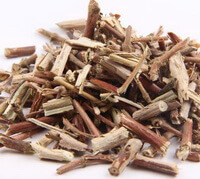 Brief Introduction: Caulis Lonicerae is the dried stem and branches of Lonicera japonica Thunb. (Caprifoliaceae). Its pharmacological actions resemble those of Flos Lonicerae (honeysuckle flower), but it is more frequently used to clear heat from the meridians and collaterals—particularly in the treatment of acute rheumatic arthritis.
 Brief Introduction: Fructus Forsythiae is the dried fruit of weeping forsythia (Forsythia suspensa (Thunb.) Vahl.), commonly used together with honeysuckle flower (1) to clear heat, resolve toxins, and dissipate nodules in cases of boils, sores, and abscesses; and (2) to dispel wind-heat in wind-heat syndromes and early-stage warm diseases. The herb is commonly known as Fructus Forsythiae, Weeping Forsythia Fruit, or Lián Qiáo.
 Brief Introduction: Radix Isatidis is the dried root of Isatis indigotica Fort., used to clear heat, resolve toxins, and cool the blood in treating warm diseases with fever, headache, and sore throat; eruptive epidemic diseases; mumps; boils, sores, and erysipelas. The herb is commonly known as Radix Isatidis, Isatis Root, or Bǎn Lán Gēn.
 Brief Introduction: Folium Isatidis is the dried leaf of Isatis indigotica Fort. It is used to clear heat, resolve toxins, and cool the blood—indicated for warm diseases at the nutrient and blood stages accompanied by eruption, mumps, painful and swollen throat, and erysipelas. It is commonly known as Folium Isatidis, Dyers Woad Leaf, or Dà Qīnɡ Yè.
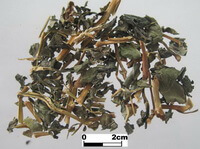 Brief Introduction: Folium Polygoni Tinctorii is the dried leaf of Polygonum tinctorium Ait. It is used as a dyer’s woad leaf with relatively stronger effects. It is commonly known as Folium Polygoni Tinctorii, Indigoplant Leaf, or Liǎo Dà Qīnɡ Yè.
 Brief Introduction: Indigo Naturalis is a deep blue powder prepared from the fermented and processed leaves of Baphicacanthus cusia (Nees) Bremek. (Acanthaceae), Polygonum tinctorium Ait. (Polygonaceae), Indigofera tinctoria L. (Fabaceae), or Isatis indigotica Fort. (Brassicaceae). It is primarily used to treat eruptive febrile diseases and high fever in children, and externally for oral ulcers, mumps, and cutaneous infections. It is commonly known as Indigo Naturalis, Natural Indigo, or Qīnɡ Dài.
  Brief Introduction: Herba Taraxaci is the dried whole plant of Taraxacum mongolicum Hand.-Mazz., Taraxacum sinicum Kitag., or several other Taraxacum species, used for boils, sores, and other pyogenic infections. It is commonly known as Herba Taraxaci, Dandelion, or Pú Gōnɡ Yīnɡ.
  Brief Introduction: Flos Chrysanthemi Indici is the dried capitulum (flower head) of Chrysanthemum indicum L., used to clear heat and resolve toxins for treating boils, sores, carbuncles, erysipelas, and acute conjunctivitis; it is also applied externally for eczema and pruritus. It is commonly known as Flos Chrysanthemi Indici, Wild Chrysanthemum Flower, or Yě Jú Huā.
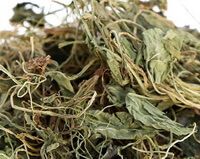 Brief Introduction: Herba Violae—the dried aerial parts of Viola yedoensis Makino—is used to clear heat and counteract toxins for the treatment of acute pyogenic infections such as boils, sores, and abscesses, as well as venomous snakebites. It is commonly known as Herba Violae, Violet Herb, or Zǐ Huā Dì Dīng.
 Brief Introduction: Herba Houttuyniae—the dried aerial parts of Houttuynia cordata Thunb.—is used to clear heat, counteract toxins, expel pus, and promote diuresis. It is indicated for lung abscess with purulent sputum, cough due to lung-heat, boils and sores, damp-heat stranguria, and acute dysentery. Common names include Yú Xīng Cǎo, Heartleaf Houttuynia Herb, and Houttuynia Herb.
 Brief Introduction: Rhizoma Paridis is the dried rhizome of Paris polyphylla Smith var. yunnanensis (Franch.) Hand.-Mazz., used for treating acute suppurative inflammations and as an anticonvulsant in infantile convulsions. It is commonly known as Rhizoma Paridis, Paris Rhizome, or Zhong Lou.
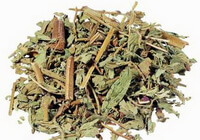 Brief Introduction: Herba Patriniae is the dried whole plant of Patrinia scabiosaefolia Fisch. ex Trev. or Patrinia villosa Juss., used for clearing heat, detoxifying, draining abscesses, invigorating blood circulation to remove stasis, and relieving pain—indicated for lung abscess, acute appendicitis, boils, sores, ulcers, and postpartum abdominal pain. It is commonly known as Herba Patriniae, Patrinia, or Bai Jiang Cao.
 Brief Introduction: Herba Commelinae is the dried aerial part of Commelina communis L. It is used (1) to clear heat and counteract toxins—indicated for febrile diseases, boils, sores, and painful pharyngeal swelling—and (2) to promote diuresis in edema and heat-induced stranguria. The herb is commonly known as Herba Commelinae, Common Dayflower Herb, or Yā Zhí Cǎo.
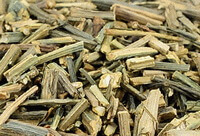 Brief Introduction: Herba Andrographis is the dried aerial part of Andrographis paniculata (Burm.f.) Nees., used to clear heat, resolve toxins, dry dampness, and reduce swelling. It treats wind-heat exterior syndromes, early-stage warm diseases, lung-heat cough and dyspnea, lung abscess, damp-heat dysentery, and painful pharyngeal swelling. It is commonly known as Herba Andrographis, Common Andrographis Herb, or Chuān Xīn Lián.
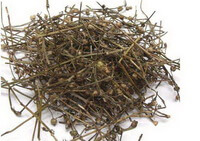 Brief Introduction: Herba Oldenlandiae is the dried whole plant of Hedyotis diffusa Willd. (syn. Oldenlandia diffusa (Willd.) Roxb.), used to clear heat, resolve toxins, drain dampness, and promote urination. It treats boils, carbuncles, abscesses, venomous snake bites, and heat-induced strangury. Common names include Herba Oldenlandiae, Oldenlandia, and Bái Huā Shé Shé Cǎo.
 Brief Introduction: Radix Rhapontici is the dried root of Rhaponticum uniflorum (L.) DC., used (1) to clear heat and counteract toxins in mastitis and (2) to promote lactation in cases of galactostasis. It is commonly known as Radix Rhapontici, Uniflower Swisscentaury Root, Root of Broadleaf Globethistle, or Lou Lu.
 Brief Introduction: Herba Solani Nigri is the dried aerial part of Solanum nigrum L., used for the treatment of gastric and esophageal cancers. It is commonly known as Herba Solani Nigri, Black Nightshade Herb, or Long Kui.
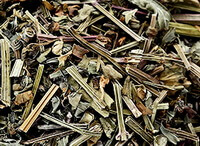 Brief Introduction: Herba Scutellariae Barbatae is the dried whole plant of Scutellaria barbata D. Don, used for the treatment of boils and sores, cirrhosis with ascites, and snake or insect bites. It is commonly known as Barbated Skullcap Herb, Barbed Skullcap Herb, or Ban Zhi Lian.
 Brief Introduction: The herb Herba Lobeliae Chinensis is the dried entire plant of Lobelia chinensis Lour (family Campanulaceae), used to clear heat, counteract toxins and induce diuresis for treating anasarca, ascites, boils and snake-and insect-bite. The herb is commonly known as Herba Lobeliae Chinensis, Chinese Lobelia Herb, Bàn Biān Lián.
 Brief Introduction: Radix Achyranthis Asperae is the dried root of Achyranthes aspera L. and other related species, used clinically for sore throat and diphtheria. It is commonly known as Radix Achyranthis Asperae, Native Achyranthes Root, or Tǔ Niú Xī.
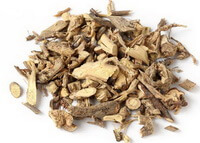 Brief Introduction: Radix Sophorae Tonkinensis is the dried root and rhizome of Sophora tonkinensis Gagnep., used clinically for sore throat and gingivitis. It is commonly known as Vietnamese Sophora Root or Shān Dòu Gēn.
 Brief Introduction: Rhizoma Menispermi is the dried rhizome of Menispermum dauricum DC., used similarly to Radix Sophorae Tonkinensis.
 Brief Introduction: Rhizoma Belamcandae is the dried rhizome of Belamcanda chinensis (L.) DC., used clinically to relieve sore throat with painful swelling, cough, and dyspnea with profuse phlegm. It is commonly known as Shè Gān, Blackberrylily Rhizome, or Rhizoma Belamcandae.
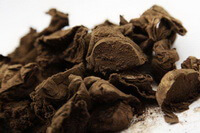 Brief Introduction: Lasiosphaera seu Calvatia refers to the dried sporophores of Lasiosphaera fenzlii Reichb., Calvatia gigantea (Batsch ex Pers.) Lloyd, or Calvatia lilacina (Mont. et Berk.) Lloyd (family Agaricaceae, formerly Lycoperdaceae). It is used to clear lung-heat, soothe the throat, counteract toxins, and arrest bleeding—primarily for sore throat with swelling and hoarseness due to wind-heat invasion or lung-fire, as well as for epistaxis, hematemesis, and traumatic bleeding. Common names include Mǎ Bó, Puffball, and Lasiosphaera seu Calvatia.
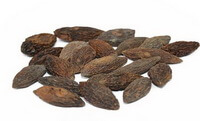 Brief Introduction: Fructus Canarii is the dried, ripe fruit of Canarium album (Lour.) Raeusch., used clinically to relieve sore throat and hoarseness. It is commonly known as Chinese White Olive, Qīnɡ Guǒ, or Gǎn Lǎn.
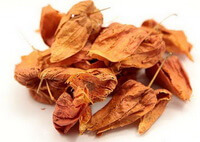 Brief Introduction: The herb Calyx seu Fructus Physalis consists of the dried persistent calyx, with or without the fruit, of winter cherry, Physalis alkekengi L. var. francheti (Mast.) Makino, and is used chiefly for treating sore throat. It is commonly known as Calyx seu Fructus Physalis, Franchet Groundcherry Fruit, and Jǐn Dēnɡ Lóng.
 Brief Introduction: Herba Humuli Scandentis is the dried aerial part of Humulus scandens (Lour.) Merr. (family Moraceae), used to treat enteritis, dysentery, acute urinary tract infections, and as a sedative for insomnia. It is commonly known as Herba Humuli Scandentis, Climbing Hop Herb, or Lü Cǎo.
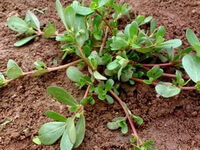 Brief Introduction: Herba Portulacae is the dried aerial part of Portulaca oleracea L. (family Portulacaceae), used internally to treat dysentery with bloody stools and externally for boils, sores, eczema, erysipelas, and snake or insect bites. It is commonly known as Herba Portulacae, Purslane Herb, or Mǎ Chǐ Xiàn.
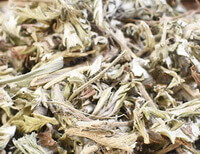 Brief Introduction: Herba Potentillae Discoloris is the dried whole plant of Potentilla discolor Bunge, used to treat enteritis, dysentery, pharyngitis, and gastrointestinal bleeding. It is commonly known as Herba Potentillae Discoloris, Diverse-Color Cinquefoil, or Fān Bái Cǎo.
 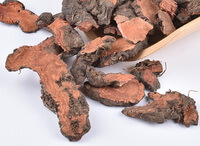 Brief Introduction: Rhizoma Bistortae is the dried rhizome of Polygonum bistorta L., used: (1) to clear heat and resolve toxicity—indicated for dysentery, boils, and sores; (2) to arrest bleeding—in cases of hematemesis, epistaxis, and hemorrhoidal bleeding; and (3) externally—for snakebite. It is commonly known as Rhizoma Bistortae, Bistort Rhizome, or Quán Shēn.
 Brief Introduction: Radix Pulsatillae is the dried root of Pulsatilla chinensis (Bunge) Regel. It is used internally for bacterial and amoebic dysentery and externally for trichomonas vaginitis. The herb is commonly known as Radix Pulsatillae, Chinese Pulsatilla Root, or Bái Tóu Wēnɡ.
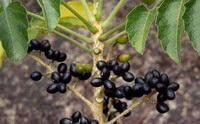 Brief Introduction: Fructus Bruceae is the dried, ripe fruit of Brucea javanica (L.) Merr., used internally to treat amoebic dysentery and malaria, and externally for warts, clavus, and Trichomonas vaginitis. It is commonly known as Fructus Bruceae, Java Brucea Fruit, or Yā Dǎn Zi.