✵TCM herbalism is also known as the pharmaceutics of Traditional Chinese Medicine or Chinese pharmaceutics. It is the branch of health science dealing with the preparation, dispensing, and proper utilization of Chinese herbs. It is primarily composed of Introduction to Chinese Medicinals, Classification of Chinese Herbs, Formulas, and Patent Medicines.
Fragrant Herbs for Resolving Dampness
Introduction: Fragrant Herbs for Resolving Dampness: are aromatic herbs effective in resolving dampness. They are commonly used to treat damp syndromes characterized by anorexia, lassitude, nausea and vomiting, chest and abdominal distension, greasy tongue coating, and slippery pulse—whether arising in febrile diseases or other miscellaneous disorders.
Most fragrant damp-resolving herbs are warm and drying in nature, aromatic in flavor, and fragrant in odor. Their functions include clearing damp and promoting diuresis; inducing diuresis and relieving strangurtia; eliminating dampness and resolving jaundice; and more. These herbs are primarily indicated for endogenous damp syndromes. Being pungent in flavor, warm, aromatic, and drying, they should be used with caution in individuals with yin deficiency or blood dryness, and prolonged use is not recommended. Representative herbs in this category include Rhizoma Atractylodis (Cānɡ Shù), Herba Agastachis (Huò Xiānɡ), and other herbs include Herba Pogostemonis (Guǎnɡ Huò Xiānɡ), Herba Eupatorii (Pèi Lán), Fructus Amomi (Shā Rén), Fructus Amomi Rotundus (Dòu Kòu), Semen Alpiniae Katsumadai (Cǎo Dòu Kòu), and Fructus Tsaoko (Cǎo Guǒ).
✵As of January 1, 2024, this category includes a total of [9] commonly used TCM herbs derived from [12] plant species. Each herb is briefly introduced separately below.
Rhizoma Atractylodis (Atractylodes Rhizome)
Brief Introduction:Rhizoma Atractylodis is the dried rhizome of Atractylodes lancea (Thunb.) DC. or Atractylodes chinensis (Bunge) DC. It is used (1) to eliminate dampness and invigorate the spleen—indicated for damp accumulation in the spleen and stomach; (2) to dispel wind-damp—indicated for rheumatic arthralgia; and (3) to improve vision—indicated for night blindness. The herb is commonly known as Swordlike Atractylodes Rhizome, Chinese Atractylodes Rhizome, Simplicifolious Atractylodes Rhizome, Shēng Zhú, or Cāng Zhú.
Herba Agastachis (Agastache)
Brief Introduction:Herba Agastachis is the dried aerial part of Agastache rugosa (Fisch. et Mey.) O. Kuntze., used similarly to Pogostemon cablin. It is commonly known as Herba Agastachis, Agastache, Cablin Patchouli Herb, Wrinkled Giant Hyssop Herb, or Huò Xiāng.
Herba Pogostemonis (Cablin Patchouli Herb)
Brief Introduction:Herba Pogostemonis is the dried aerial part of Pogostemon cablin (Blanco) Benth., used to resolve dampness, relieve nausea, vomiting, and diarrhea—especially in summer-heat disorders. The herb is commonly known as Herba Pogostemonis, Guǎnɡ Huò Xiānɡ.
Herba Eupatorii (Fortune Eupatorium Herb)
Brief Introduction:Herba Eupatorii consists of the aerial parts of Eupatorium fortunei Turcz. It is used to resolve dampness, relieve nausea, vomiting, and abdominal distension—especially in summer-heat disorders. Common names include Fortune Eupatorium Herb, Herba Eupatorii, and Pèi Lán.
Fructus Amomi Rotundus (Round Cardamom Fruit)
Brief Introduction:Fructus Amomi Rotundus consists of the dried, ripe fruits of Amomum kravanh Pierre ex Gagnep. or Amomum compactum Soland ex Maton. It resolves dampness, moves Qi, and warms the Middle Energizer to relieve epigastric and abdominal distension, nausea, and vomiting caused by cold-damp accumulation and Qi stagnation in the Spleen and Stomach. Common names include Fructus Amomi Rotundus, Round Cardamom Fruit, and Dòu Kòu.
Semen Amomi Rotundus (Round Cardamom Seed)
Brief Introduction:Semen Amomi Rotundus refers to the freshly extracted seeds of Round Cardamom, removed from the pericarp; they possess greater biological activity than the whole fruit.
Fructus Amomi (Spiny Amomum Fruit)
Brief Introduction:Fructus Amomi is the dried, ripe fruit of Amomum villosum Lour., Amomum villosum Lour. var. xanthioides (Wall. ex Baker) T. L. Wu et Senjen, or Amomum longiligulare T. L. Wu. It is used (1) to resolve dampness—particularly in cases of damp accumulation in the spleen and stomach; (2) to warm the middle jiao—especially for vomiting and diarrhea due to spleen- and stomach-deficiency-cold; and (3) to stabilize the fetus in cases of threatened abortion. The herb is commonly known as Fructus Amomi, Spiny Amomum Fruit, or Shā Rén.
Brief Introduction:Semen Alpiniae Katsumadai is the dried seed of Alpinia katsumadai Hayata. It is used to dry dampness, regulate Qi, and warm the middle energizer to alleviate epigastric pain, vomiting, and diarrhea caused by cold-damp accumulation or Qi stagnation in the Spleen and Stomach. The herb is commonly known as Katsumada Galangal Seed, Seed of Katsumada Galangal, or Cǎo Dòu Kòu.
Fructus Tsaoko (Tsaoko,Caoguo)
Brief Introduction:Fructus Tsaoko is the dried, ripe fruit of Amomum tsao-ko Crevost et Lemaire. It is used (1) to dispel dampness and warm the stomach in cases of epigastric distension, vomiting, and abdominal pain, and (2) to treat malaria. The herb is commonly known as Tsaoko Amomum Fruit, Fructus Tsaoko, Caoguo, or Cǎo Guǒ.

 ✵TCM herbalism is also known as the pharmaceutics of Traditional Chinese Medicine or Chinese pharmaceutics. It is the branch of health science dealing with the preparation, dispensing, and proper utilization of Chinese herbs. It is primarily composed of Introduction to Chinese Medicinals, Classification of Chinese Herbs, Formulas, and Patent Medicines.
 Introduction: Fragrant Herbs for Resolving Dampness: are aromatic herbs effective in resolving dampness. They are commonly used to treat damp syndromes characterized by anorexia, lassitude, nausea and vomiting, chest and abdominal distension, greasy tongue coating, and slippery pulse—whether arising in febrile diseases or other miscellaneous disorders.
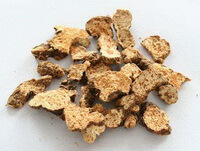 Brief Introduction: Rhizoma Atractylodis is the dried rhizome of Atractylodes lancea (Thunb.) DC. or Atractylodes chinensis (Bunge) DC. It is used (1) to eliminate dampness and invigorate the spleen—indicated for damp accumulation in the spleen and stomach; (2) to dispel wind-damp—indicated for rheumatic arthralgia; and (3) to improve vision—indicated for night blindness. The herb is commonly known as Swordlike Atractylodes Rhizome, Chinese Atractylodes Rhizome, Simplicifolious Atractylodes Rhizome, Shēng Zhú, or Cāng Zhú.
 Brief Introduction: Herba Agastachis is the dried aerial part of Agastache rugosa (Fisch. et Mey.) O. Kuntze., used similarly to Pogostemon cablin. It is commonly known as Herba Agastachis, Agastache, Cablin Patchouli Herb, Wrinkled Giant Hyssop Herb, or Huò Xiāng.
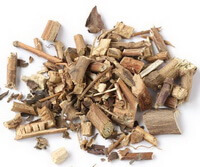 Brief Introduction: Herba Pogostemonis is the dried aerial part of Pogostemon cablin (Blanco) Benth., used to resolve dampness, relieve nausea, vomiting, and diarrhea—especially in summer-heat disorders. The herb is commonly known as Herba Pogostemonis, Guǎnɡ Huò Xiānɡ.
 Brief Introduction: Herba Eupatorii consists of the aerial parts of Eupatorium fortunei Turcz. It is used to resolve dampness, relieve nausea, vomiting, and abdominal distension—especially in summer-heat disorders. Common names include Fortune Eupatorium Herb, Herba Eupatorii, and Pèi Lán.
 Brief Introduction: Fructus Amomi Rotundus consists of the dried, ripe fruits of Amomum kravanh Pierre ex Gagnep. or Amomum compactum Soland ex Maton. It resolves dampness, moves Qi, and warms the Middle Energizer to relieve epigastric and abdominal distension, nausea, and vomiting caused by cold-damp accumulation and Qi stagnation in the Spleen and Stomach. Common names include Fructus Amomi Rotundus, Round Cardamom Fruit, and Dòu Kòu.
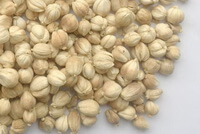 Brief Introduction: Semen Amomi Rotundus refers to the freshly extracted seeds of Round Cardamom, removed from the pericarp; they possess greater biological activity than the whole fruit.
 Brief Introduction: Fructus Amomi is the dried, ripe fruit of Amomum villosum Lour., Amomum villosum Lour. var. xanthioides (Wall. ex Baker) T. L. Wu et Senjen, or Amomum longiligulare T. L. Wu. It is used (1) to resolve dampness—particularly in cases of damp accumulation in the spleen and stomach; (2) to warm the middle jiao—especially for vomiting and diarrhea due to spleen- and stomach-deficiency-cold; and (3) to stabilize the fetus in cases of threatened abortion. The herb is commonly known as Fructus Amomi, Spiny Amomum Fruit, or Shā Rén.
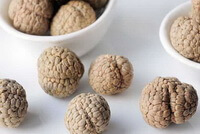 Brief Introduction: Semen Alpiniae Katsumadai is the dried seed of Alpinia katsumadai Hayata. It is used to dry dampness, regulate Qi, and warm the middle energizer to alleviate epigastric pain, vomiting, and diarrhea caused by cold-damp accumulation or Qi stagnation in the Spleen and Stomach. The herb is commonly known as Katsumada Galangal Seed, Seed of Katsumada Galangal, or Cǎo Dòu Kòu.
 Brief Introduction: Fructus Tsaoko is the dried, ripe fruit of Amomum tsao-ko Crevost et Lemaire. It is used (1) to dispel dampness and warm the stomach in cases of epigastric distension, vomiting, and abdominal pain, and (2) to treat malaria. The herb is commonly known as Tsaoko Amomum Fruit, Fructus Tsaoko, Caoguo, or Cǎo Guǒ.