Introduction of Lù Lù Tōnɡ: Beautiful Sweetgum Fruit
✵The article records the herb Beautiful Sweetgum Fruit, including its English name, Latin name, Pinyin name, properties and flavor, botanical source—namely the single plant species Liquidambar formosana Hance—and a detailed description of its botanical features, growth characteristics, ecological environment, macroscopic characteristics, pharmacological actions, medicinal efficacy, and administration guidelines.
Fructus Liquidambaris (Beautiful Sweetgum Fruit)
Pinyin Name: Lù Lù Tōnɡ
English Name: Beautiful Sweetgum Fruit
Latin Name:Fructus Liquidambaris Properties and Flavor: Neutral; bitter
Brief Introduction:Fructus Liquidambaris is the dried, mature, strobile-like infructescence of Liquidambar formosana Hance., used to (1) promote diuresis for edema, (2) dispel wind-damp in arthralgia, and (3) regulate menstruation in amenorrhea. It is commonly known as Fructus Liquidambaris, Beautiful Sweetgum Fruit, or Lù Lù Tōnɡ.
Botanical Source: Classical herbal works define Fructus Liquidambaris (Beautiful Sweetgum Fruit) as the dried infructescence of Liquidambar formosana Hance., a deciduous tree belonging to the genus Liquidambar, family Hamamelidaceae, order Saxifragales. This widely used species is described below:
(1) Liquidambar formosana Hance.
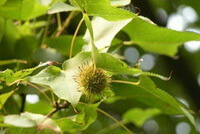
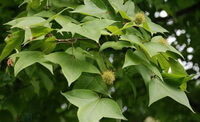
Botanical Description: Commonly known as Formosan sweetgum or Fēng Xiāng Shù, Liquidambar formosana is a deciduous tree reaching 20–40 m in height, with a diameter at breast height (DBH) up to 1 m. The bark is grayish-brown (taupe), exfoliating in square flakes. Young branches are gray, pubescent, and slightly lenticellate. Buds are ovoid, ~1 cm long, sparsely pilose, with scaly bracts coated in resin that turn brownish-black and glossy upon drying. Leaves are alternate, thinly coriaceous, broadly ovate, and palmately 3-lobed; juvenile and lateral branch leaves are often palmately 5-lobed, measuring 6–12 cm in length and 8–15 cm in width. Lobes are ovate-triangular or elliptic, with caudate-acuminate apices, cordate bases, serrulate margins, and glandular teeth.
Flowers are unisexual and monoecious, achlamydeous (lacking perianth). Male flowers are pale yellowish-green, arranged in slender, pendulous catkins (racemes) at branch tips; each flower bears numerous stamens with filaments of unequal length. Female flowers are aggregated into spherical, sessile capitula (flower heads); each has five subulate calyx teeth; the ovary is semi-inferior, bilocular, with two styles and curved stigmas.
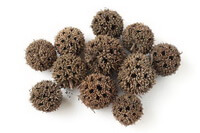
The infructescence is a globose, multiple fruit (strobile-like), 2.5–4.5 cm in diameter, covered with persistent, spinous calyx teeth and beaked styles (~0.5–1 mm long). Each carpel dehisces along two valves, each valve bifid. Seeds are numerous, minute, flattened, and wingless. Flowering occurs from March to April; fruiting from September to October.
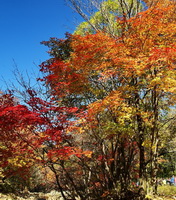
Ecological Environment:Liquidambar formosana grows in evergreen and deciduous broad-leaved forests of mountainous regions, typically at elevations of 100–1,500 m.
Growth Characteristics:Liquidambar formosana thrives in moist, well-drained, fertile soils—especially deep loams—and prefers full sun to partial shade. It is moderately cold-tolerant but sensitive to waterlogging.
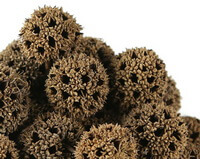
Characteristics of the Herb:Fructus Liquidambaris is a syncarp—a collective fruit composed of numerous fused, woody capsules. The infructescence is globose, 2–3 cm in diameter, with a grayish-brown to tan (chocolate-brown) surface bearing persistent, spinous calyx teeth and beak-like styles (~0.5–1 mm long), often broken or bent. After removal of these appendages, numerous honeycomb-like pits remain. A cylindrical, often broken, peduncle (3–4.5 cm long) persists at the base, sometimes reduced to a scar. The apex of each capsule is dehiscent, forming a hollow, star-shaped opening; immature seeds are minute, rounded (~1 mm diameter), yellowish-brown to tan; mature seeds are rare, flattened-oblong, wingless, brown, lightweight, and hard. The herb is dense and difficult to fracture. It possesses a mild, balsamic fragrance and a bland to slightly bitter taste.
Medicinal Efficacy: Promotes circulation in the channels and collaterals, dispels wind-damp, resolves damp retention, regulates menstruation, and promotes lactation. Indicated for wind-damp bi syndrome (e.g., arthralgia, limb numbness, muscular rigidity), epigastric pain, edema, abdominal distension and fullness, amenorrhea, postpartum insufficient lactation, carbuncles, abscesses, anal fistula, scabies, and eczema.
Administration of Fructus Liquidambaris (Lù Lù Tōnɡ):
Reference:
Administration Guide for Fructus Liquidambaris (Lù Lù Tōnɡ)
TCM Books:
(1) Internally: 5–9 grams; (2) Internally: water decoction, 1–2 qián (≈3–6 grams); or char the herb while retaining its properties, then prepare as a fine powder. Externally: char the herb while retaining its properties, prepare as a fine powder for topical application, or burn it to produce smoke and inhale the fumes; (3) Internally: water decoction, 3–10 grams; or char the herb while retaining its properties, prepare as a fine powder, and take orally. Externally: use an appropriate amount—prepare as a fine powder for topical application, or burn it to produce smoke and inhale the fumes.
Precautions and Adverse Reactions: Avoid using Fructus Liquidambaris during pregnancy.
Article Link:
URL QR code:
References:
1.Introduction of Lù Lù Tōnɡ: Beautiful Sweetgum Fruit

 ✵The article records the herb Beautiful Sweetgum Fruit, including its English name, Latin name, Pinyin name, properties and flavor, botanical source—namely the single plant species Liquidambar formosana Hance—and a detailed description of its botanical features, growth characteristics, ecological environment, macroscopic characteristics, pharmacological actions, medicinal efficacy, and administration guidelines.
 Pinyin Name: Lù Lù Tōnɡ
 Botanical Description: Commonly known as Formosan sweetgum or Fēng Xiāng Shù, Liquidambar formosana is a deciduous tree reaching 20–40 m in height, with a diameter at breast height (DBH) up to 1 m. The bark is grayish-brown (taupe), exfoliating in square flakes. Young branches are gray, pubescent, and slightly lenticellate. Buds are ovoid, ~1 cm long, sparsely pilose, with scaly bracts coated in resin that turn brownish-black and glossy upon drying. Leaves are alternate, thinly coriaceous, broadly ovate, and palmately 3-lobed; juvenile and lateral branch leaves are often palmately 5-lobed, measuring 6–12 cm in length and 8–15 cm in width. Lobes are ovate-triangular or elliptic, with caudate-acuminate apices, cordate bases, serrulate margins, and glandular teeth.
 Flowers are unisexual and monoecious, achlamydeous (lacking perianth). Male flowers are pale yellowish-green, arranged in slender, pendulous catkins (racemes) at branch tips; each flower bears numerous stamens with filaments of unequal length. Female flowers are aggregated into spherical, sessile capitula (flower heads); each has five subulate calyx teeth; the ovary is semi-inferior, bilocular, with two styles and curved stigmas.
 Ecological Environment: Liquidambar formosana grows in evergreen and deciduous broad-leaved forests of mountainous regions, typically at elevations of 100–1,500 m.
 Characteristics of the Herb: Fructus Liquidambaris is a syncarp—a collective fruit composed of numerous fused, woody capsules. The infructescence is globose, 2–3 cm in diameter, with a grayish-brown to tan (chocolate-brown) surface bearing persistent, spinous calyx teeth and beak-like styles (~0.5–1 mm long), often broken or bent. After removal of these appendages, numerous honeycomb-like pits remain. A cylindrical, often broken, peduncle (3–4.5 cm long) persists at the base, sometimes reduced to a scar. The apex of each capsule is dehiscent, forming a hollow, star-shaped opening; immature seeds are minute, rounded (~1 mm diameter), yellowish-brown to tan; mature seeds are rare, flattened-oblong, wingless, brown, lightweight, and hard. The herb is dense and difficult to fracture. It possesses a mild, balsamic fragrance and a bland to slightly bitter taste.
 Pharmacological Actions: (1) Hepatoprotective effect: exhibits significant anti-hepatocytotoxic activity.
(2) Anti-inflammatory effect.
Pharmacological Actions: (1) Hepatoprotective effect: exhibits significant anti-hepatocytotoxic activity.
(2) Anti-inflammatory effect.
 URL QR code: