
Wang Haogu: Biographical introduction and legendary stories, major works and academic contributions
-
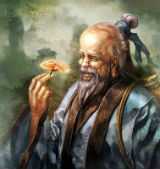 ✵Wang Haogu: A distinguished, sagacious physician lived in the thirteenth and early fourteenth centuries. He was also known as Wang Jinzhi by his alias and as Wang Hai-Zang in his later years. A prominent herbalist of the Yishui school during the Jin Yuan period, he mastered the ancient book Nei Jing (the Inner Canon)and had an in-depth study of Zhongjing's theory. He learned from the herbalists Zhang Yuansu and Li Dongyuan and developed their theory. His chief contribution was explaining yin syndromes and using warming tonics in the later stages of cold-induced diseases. He developed and enriched the theory of traditional Chinese medicine (TCM) and had a far-reaching influence on later generations. Five of his books are still extant and well known.
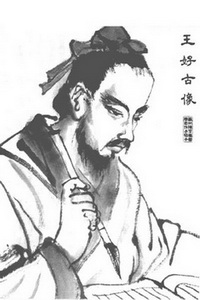
- Wang Haogu
-
Brief Introduction Chinese Name: 王好古 (Wáng Hǎogǔ) Alias: 海藏 (Hǎi Cáng) Style Names: 進之 (Jìn Zhī) or 信之 (Xìn Zhī) English Name: Wang Haogu (family name first) or Haogu Wang (given name first) Hometown: Zhao Zhou (today's Zhao county, Hebei) Dates: c. 1200–1308 CE Major Works: Over 20 kinds ever recorded, mainly Yin Zheng Lue Li (the Sketchy Cases of Yin Syndromes) 1 volume, Yi Lei Yuan Rong (Fighting Diseases in Medical Field) 12 volumes, Ci Shi Nan Zhi 2 volumes, Ban Lun Cui Ying 1 volume, Tang Ye Ben Cao 3 volumes; other works ever published but some lost: Ban Zhen Lun 1 volumes, Ben Cao Shi Lu, Huo Ren Jie Yao Ge Kuo, Dou Zhen Lun, Biao Ben Lun, Qian Shi Bu Yi), Shi Er Jing Yao Tu Jie; Other works not ever published:Shang Han Bian Huo Lun, Zhong Jing Xiang Bian, Guang Ming Lun, etc. Representative Works: Yin Zheng Lue Li (the Sketchy Cases of Yin Syndromes) 1 volume, Tang Ye Ben Cao 3 volumes, Yi Lei Yuan Rong (Fighting Diseases in Medical Field) 12 volumes, Ci Shi Nan Zhi (the Questions difficult to understand) 2 volumes, Ban Lun Cui Ying (the collected essential thesis on ecchymosis) 1 volume, etc. Biographical introduction and legendary stories
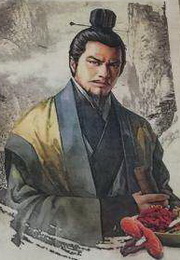 Wang Haogu: A distinguished and sagacious physician who lived in the thirteenth and early fourteenth centuries. He was also known by his style name Wang Jinzhi and as Wang Hai-Zang in his later years. A prominent herbalist of the Yishui school during the Jin-Yuan period, he mastered the ancient text Nei Jing (The Inner Canon) and conducted an in-depth study of Zhang Zhongjing’s theories. He studied under the herbalists Zhang Yuansu and Li Dongyuan and further developed their theories. His chief contribution was elucidating yin syndromes and advocating the use of warming tonics in the later stages of cold-induced diseases. He enriched and advanced the theory of traditional Chinese medicine (TCM) and exerted a far-reaching influence on subsequent generations. Five of his works remain extant and are widely recognized.
Wang Haogu, whose alias was Jin Zhi and courtesy name Hai Cang, was a native of Zhaozhou. He studied medicine under his master Zhang Yuansu and also learned from Li Dongyuan—a fellow disciple of Zhang—but was twenty years younger than Li Dongyuan. Later, he formally took Li Dongyuan as his teacher and inherited his theoretical framework. Zhang Yuansu emphasized syndrome differentiation of the Zang-Fu viscera and stressed distinguishing cold from heat and deficiency from excess of the Zang-Fu viscera, according to the location of disease. Li Dongyuan expounded the spleen-stomach theory and made profound contributions to understanding endogenous injury deficiency syndromes of the spleen and stomach. Influenced by both Zhang Yuansu and Li Dongyuan, Wang Haogu also devoted close attention to the classical text Shang Han Lun (The Treatise on Cold-Induced Diseases), developing distinctive viewpoints—particularly emphasizing the progression from primordial qi deficiency to yang deficiency, manifesting as the Three Yin syndromes and Yang Deficiency syndrome. He thus established a distinct school and doctrinal system.
Regarding Wang Haogu’s dates of birth and death, some popular sources cite approximately 1200–1264 CE. This dating was inferred by later scholars based on references to the reign title “Zhi Yuan” appearing in one of his works. However, due to possible confusion surrounding reign titles and other historical inconsistencies—as well as the preface date of his later work Tang Ye Ben Cao (recorded as the Wuxu year)—this conventional chronology is questionable and likely inaccurate. The Wuxu year corresponds to 1298 CE. Based on additional evidence—including the “Ren Chen” year recorded in the preface of Yin Zheng Lue Li (Sketchy Cases of Yin Syndromes)—recent historical research suggests his actual lifespan was approximately 1200–1308 CE.
Wang Haogu was well versed in ancient classics and history from an early age. He possessed a lucid and wise disposition and had extensive knowledge of history and classical texts. He developed a deep interest in medical prescriptions and passed the highest imperial examination—the jinshi degree. He was subsequently appointed Jiao Shou, an official title equivalent to "scholar" or "professor" at the local prefectural level. Later in life, he also held the official post of Ti Ju Guan Nei Yi Xue. Wang Haogu’s academic thought drew primarily from classical texts such as the Nei Jing (The Inner Canon) and Shang Han Lun (Treatise on Cold-Induced Diseases), among others. He was also influenced by earlier renowned physicians, including Wang Shuhe, Zhu Gong, Xu Shuwei, and Han Zhihe. He was especially influenced by Zhang Yuansu’s spleen-stomach theory and Li Dongyuan’s theory of endogenous injury of the spleen and stomach. Later, he studied the writings of various schools—from Qi Bo to Huang Di—and mastered them thoroughly, as if knowing the palm and fingers of his own hand; all of this formed the foundation for his theories on yin syndromes and related doctrines.Major works and academic contributions
Major Works: Wang Haogu is known to have compiled over twenty works, some of which survive to this day, while others have been lost and still others were never published. The extant works include: Yin Zheng Lue Li (Sketchy Cases of Yin Syndromes), in one volume; Yi Lei Yuan Rong (Fighting Diseases in the Medical Field), in twelve volumes; Ci Shi Nan Zhi, in two volumes; Ban Lun Cui Ying; Tang Ye Ben Cao, in three volumes; and others. Among these, Yin Zheng Lue Li (Sketchy Cases of Yin Syndromes) is regarded as his representative work. His other works include Ban Zhen Lun, in one volume. Some of his works were published, but others have been lost—these include Ben Cao Shi Lu, Huo Ren Jie Yao Ge Kuo, Dou Zhen Lun, Biao Ben Lun, Qian Shi Bu Yi, and Shi’er Jing Yao Tu Jie. Additional works are recorded in ancient literature but appear never to have been published; they include Shang Han Bian Huo Lun, Zhong Jing Xiang Bian, and Guang Ming Lun.
The classical text Yin Zheng Lue Li (Sketchy Cases of Yin Syndromes) is a scholarly treatise devoted to the analysis and discussion of yin syndromes. According to Wang Haogu’s own preface, the book was compiled and completed in 1232 CE. It opens with the observation that "cold-induced disease has been a major category of illness from antiquity to the present; yin syndromes, in particular, endanger patients most acutely," and that "yang syndromes are comparatively easier to differentiate and treat, whereas yin syndromes are more difficult to differentiate and treat." Drawing upon discussions and treatises on yin syndromes by earlier physicians, the author synthesizes them with his own insights to offer detailed and comprehensive interpretations from multiple perspectives—including etiology, pathogenesis, diagnosis, and treatment. His aim is to clarify the dangers and harms associated with yin syndromes and treatment strategies. According to ancient bibliographic records, this work was first incorporated into Ji Sheng Ba Cui (Essence for Life Saving) by Du Sijing — the earliest known compilation date of which is 1308 CE. It was also later cited in Yi Shu Wu Shi Si Zhong (Fifty-Four Medical Books) by Chen Xiuyuan and Zhong Guo Yi Xue Da Cheng (Great Compendium of Chinese Medicine).
The first draft of Tang Ye Ben Cao (The Materia Medica of Decoction, or Herbal Classics of Tang Ye) was compiled in 1298 CE, and the final version was completed in 1308 CE. Its main content encompasses interpretations of medicinal substances, therapeutic methods, acupuncture points, and herbal preparation techniques, among others. It further elaborates upon and develops the theories of Zhang Yuansu and Li Dongyuan, reflecting the academic achievements of traditional Chinese medicine (TCM) theory and herbal scholarship of that era. The term “Tang Ye” means “decoction,” as most herbal prescriptions at the time were prepared and administered as water decoctions; hence, the title Tang Ye Ben Cao ("Herbal Classics of Decoctions"). It incorporates herbal descriptions and clinical applications drawn from Zhang Zhongjing, Cheng Wuji, Zhang Yuansu, and Li Dongyuan, as well as Wang Haogu’s own practical experience. The first volume contains Li Dongyuan’s collected works Yao Lei Fa Xiang and Yong Yao Xin Fa, along with Wang Haogu’s foundational herbal and prescription theory under the heading Tang Ye Ben Cao. According to the author’s preface, the prescription theory of Tang Ye Ben Cao was originally based on the doctrines presented by Wang Haogu’s teacher Zhang Yuansu in his work Zhen Zhu Nang; this foundation was then enriched with Wang Haogu’s own innovative contributions. Volumes two and three document 241 representative herbs classified into nine categories and provide in-depth analyses of topics including herb properties, channel tropism, and specific principles governing the use of the five-flavor herbs to tonify deficiency and eliminate excess (dispel excess), as well as dietary adjuncts (dietary regulation).
The classical text Yi Lei Yuan Rong (Fighting Diseases in the Medical Field) was compiled and completed in 1291 CE. Following Zhang Zhongjing’s foundational distinction between exogenous febrile diseases and miscellaneous diseases, medical practice gradually became more specialized—and, at times, increasingly coarse in its application. Wang Haogu inherited Zhang Zhongjing’s scholarly legacy and integrated methodologies from both the Yishui School and Li Dongyuan. He reinterpreted key therapeutic principles for managing exogenous febrile diseases and miscellaneous diseases, aiming to enable learners to attain mastery through comprehensive study. The book’s content centers primarily on cold-induced diseases and miscellaneous diseases, grounded in Zhang Zhongjing’s theoretical framework and prescriptions; many of these miscellaneous diseases are classified according to the six-channel system. As a result of his efforts, syndromes arising from both endogenous injury and exogenous pathogenic influence could be differentiated and treated within the six-channel paradigm. The text is supplemented with theories and methods drawn from renowned physicians—including Zhang Yuansu and Li Dongyuan—as well as clinically effective prescriptions formulated by Wang Haogu himself. It also offers flexible adaptations of Zhang Zhongjing’s classic formulas, thereby expanding their clinical applicability. This work stands among his most significant contributions to the interpretation and development of Zhang Zhongjing’s medical theory.
The text Ci Shi Nan Zhi (Questions Difficult to Understand) was completed in 1308 CE and compiled based on Li Dongyuan’s medical theories. Comprising two volumes, it contains 106 essays addressing topics such as the Zang-fu viscera, channels and collaterals, qi and blood, ying-qi and wei-qi, diagnostic methods, etiology and pathogenesis, treatment strategies, and the relationship and interaction between humans and heaven—among others. Although its content largely reflects Li Dongyuan’s doctrines, it was historically misattributed to him. In fact, it is a compilation and editorial work by Wang Haogu, preserving certain lost discussions on cold-induced diseases originally articulated by Li Dongyuan.
The text Ban Lun Cui Ying (Collected Essential Theses on Ecchymosis) was compiled and completed in 1237 CE. Its content is concise and focused, offering specific analyses and clinical viewpoints on the diagnosis and treatment of infantile ecchymosis, including differentiation from herpes. It gathers discussions on ecchymosis by earlier physicians Qian Yi, Zhang Yuansu, and Li Dongyuan, as well as related essays authored by Wang Haogu. The prescriptions included are appropriately formulated and clinically practical.
Disciples: According to the preface to Yin Zheng Lue Li (Sketchy Cases of Yin Syndromes) by the physician Ma Xinzhi (Má Xìnzhī), Wang Haogu had five disciples: Huangfu Fu (Huángfǔ Fú), Zhang Dun (Zhāng Dùn), Song Tinggui (Sòng Tíngguī), Zhang Ke (Zhāng Kě), and Yi Gouying (Yi Gòuyīng).
 ✧Main Theories and Theoretical Innovations by Wang Haogu:
Theory of Endogenous Yin Syndrome: Since the publication of the ancient herbal classic Shang Han Lun (The Treatise on Cold-Induced Diseases) by Zhang Zhongjing, subsequent generations of herbalists have revered it as a canonical text for in-depth study. However, most scholars produced detailed studies and related works only on the Three Yang Syndromes, while neglecting the Three Yin Syndromes. As a result, the descriptions of Yin Syndromes in the Shang Han Lun (The Treatise on Cold-Induced Diseases) did not receive adequate attention. In peaceful eras, clinical cases were often described as “fat people consume greasy food and routinely use potent formulas, which work well enough,” leading many herbalists to overlook the manifestations of the Three Yin Syndromes. He devoted several years to this subject, studying relevant discussions by earlier herbalists and verifying them through clinical practice. Over ten years, he revised his drafts three times and ultimately compiled and completed his seminal work, Yin Zheng Lue Li (Sketchy Cases of Yin Syndromes). Building upon Zhang Zhongjing’s prescriptions and theories—as well as incorporating discussions and treatises on Yin Syndromes and the Yin channels by earlier scholars—he provided a detailed analysis and interpretation of the etiology, pathogenesis, diagnosis, and treatment of Yin Syndrome. Wang Haogu grounded his theory of endogenous Yin Syndrome in his understanding of endogenous injury to the three Yin channels. His teacher, Zhang Yuansu, had treated dietary internal injury by establishing three therapeutic methods—based on pulse manifestations at the wrist and differentiation among diseases of the three Yin channels.
Theory of Insidious Yin Hidden Deeply in the Interior and Identification of Yin Syndrome: Wang Haogu established the theory of insidious Yin hidden deeply in the interior. He elaborated in detail on the pathogenic mechanisms of endogenous Yin Syndrome and concluded that it arises from both exogenous and endogenous pathogens. He also developed diagnostic methods for Yin Syndrome, whose symptoms are complex and varied (i.e., deteriorated syndromes) and often present with pseudosymptoms—or false appearances. Wang Haogu extensively consulted diverse schools of thought for reference. He summarized practical criteria to aid in differentiating Yin Syndrome from Yang Syndrome.
Experience in Treating Yin Syndrome:
(1) Exogenous Cold and Dampness Affection: Pathogenic factors such as cold-dampness from fog and dew may affect individuals and, although they may initially cause exterior syndromes, the principles and prescriptions for treatment reflect Wang Haogu’s clinical experience with the Four Qi Properties (ascending, descending, floating, and sinking, or "ADFS"), inherited from his teachers.
(2) Characteristics of Prescriptions: Regarding the treatment of Yin Syndrome, Wang Haogu proposed his specific views. He also held views differing from those of Zhang Zhongjing in Article 29 of the Shang Han Lun (The Treatise on Cold-induced Diseases). His academic work, Yin Zheng Lue Li (Sketchy Cases of Yin Syndromes), recorded 58 prescriptions.
 Other Academic Thoughts of Wang Haogu:
Regarding exogenous febrile diseases, Wang Haogu emphasized the importance of internal or endogenous pathogenic factors. Exogenous cold pathogens, endogenous dietary injury, and a cold or vacuous stomach (empty stomach) all contribute to endogenous Yin syndrome. This theoretical viewpoint is consistent with—and closely aligned to—that described in the Huang Di Nei Jing (The Inner Canon) : "Where pathogens congregate, Qi therein becomes deficient," and other relevant discussions. Additionally, Wang Haogu proposed a pathogenesis for the Three Yin Syndrome. He also inherited relevant theories from Li Dongyuan.
Based on his clinical experience, Wang Haogu held that the treatment of Three Yin syndromes arising from endogenous injury requires differentiated prescriptions for distinct Yin syndromes, including three types of Yin syndromes. Wang Haogu attached great importance to the Three Yin syndromes in exogenous febrile diseases and stated: “Yang syndromes are relatively easy to differentiate and treat, whereas Yin syndromes are difficult to differentiate and challenging to treat.” He also supplemented prior generations’ studies of the Shang Han Lun (The Treatise on Cold-Induced Diseases) by addressing its shortcomings. His distinctive contributions and refinements lie in the precise application of the warming-tonifying theory inherited from Li Dongyuan—and its flexible integration into the study and interpretation of the Shang Han Lun (The Treatise on Cold-Induced Diseases).
In clinical practice and prescription formulation, Wang Haogu maintained that herbs with a warm nature should invigorate the Spleen and Stomach. He developed novel prescriptions for various Yin syndromes: (1) Yin toxin combined with exogenous febrile disease; (2) Excessive Yin repelling Yang (predominant Yin rejecting Yang); (3) Yin toxin combined with exogenous febrile disease; (4) Yin toxin combined with exogenous febrile disease; (5) Exogenous febrile disease with concurrent evil symptoms; (6) Yin toxin combined with exogenous febrile disease; (7) Exogenous febrile disease, progressing to severe Yin toxin syndrome.
With his wisdom, insight, and extensive knowledge—as well as his diligent study and clinical dedication—Wang Haogu followed Zhang Yuansu’s theory of Zang-Fu syndrome differentiation and Li Dongyuan’s theory of the Spleen and Stomach. He integrated this knowledge with his own experience and frequently cited discussions from diverse schools. Through original insights, he independently interpreted and elaborated the syndrome differentiation of Yin syndromes. He collated scattered discussion and treatise passages—previously dispersed across earlier works and presented in disjointed order—systematizing them into a coherent theoretical framework grounded in his own logical sequence of syndrome differentiation and treatment. This made a significant contribution to the development of Traditional Chinese Medicine (TCM) theory during that turbulent wartime period and initiated a major breakthrough in the study of Yin syndromes for subsequent generations.
In discussing Yin Syndrome, Wang Haogu emphasized the importance of internal or endogenous pathogenic factors. He was not constrained by the traditional theory attributing cold-disease syndromes solely to exogenous pathogenic origins and thus proposed the theory of Endogenous Yin Syndrome. He advanced the differentiation and treatment of Yin syndrome from cold-induced exogenous Yin syndrome to a new stage, significantly expanding the clinical scope of Yin Syndromes. This theory integrated the theory of cold-induced disease with the theory of Spleen-Stomach internal injury. It not only extended Zhang Zhongjing’s theoretical framework but also supplemented aspects and clinical domains unaddressed in Li Dongyuan’s theory of Spleen-Stomach internal injury—particularly regarding heat syndromes originating from the middle energizer. His emphasis on warming tonics and replenishing the Spleen and Stomach profoundly influenced the Warm-Recuperation School of the Ming dynasty and subsequent generations.
Wang Haogu was a brilliant scholar whose original contributions in this field enlightened numerous later-generation herbalists. Given the severity of Yin syndromes and their inherent resistance to treatment, his dedicated efforts and scholarly achievements saved countless lives; he is rightly revered as a great physician and a master of herbal medicine.
References:
-
- 1. Wang Haogu: Biographical introduction and legendary stories, major works and academic contributions
