
Li Dongyuan: Biographical introduction and legendary stories, major works and academic contributions
-
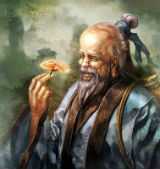 ✵Li Gao: He is also known as Li Mingzhi or Li Dongyuan (1180–1251 CE), a disciple of the herbalist Zhang Yuansu. He held the view that diseases, apart from exogenous pathogenic factors, were mainly caused by internal injury to the spleen and stomach—such as intemperance in diet and drinking or overwork—and advocated therapies focused on regulating the spleen and stomach and nourishing the premordial Qi (Yuan Qi). He is considered the founder of the School for Strengthening the Spleen and Stomach, and his masterpiece is the Pi Wei Lun (Treatise on the Spleen and Stomach).
- Li Dongyuan
-
Brief Introduction Chinese Name: 李杲 (Lǐ Gǎo) Alias: 東垣老人 (Dōng Yuán Lǎo Rén) Style Name: 明之 (Míng Zhī) English Name: Li Gao (family name first) or Gao Li (given name first) Hometown: Zhu Li of Zhen Ding Dates: c. 1180–1251 CE Major Works: Nei Wai Shang Bian Huo Lun (the thesis differentiation between endogenous hurt and exogenous affection), in 3 volumes; Pi Wei Lun (Treatise on the Spleen and Stomach), in 3 volumes; Yong Yao Xiang Fa (Rules for the Use of Herbs), in 1 volume; Lan Shi Mi Cang (Secret Book of Orchid Chamber), in 3 volumes; Yi Xue Fa Ming (Inventions of Medicine), in 1 volume; Huo Fa Ji Yao, Dong Yuan Shi Xiao Fang (Effective Prescriptions verified by Dong Yuan), in 9 volumes. Representative Works: Nei Wai Shang Bian Huo Lun (the thesis differentiation between endogenous hurt and exogenous affection), Pi Wei Lun (Treatise on the Spleen and Stomach), in 3 volumes; Lan Shi Mi Cang (Secret Book of Orchid Chamber), in 3 volumes; Dong Yuan Shi Xiao Fang (Effective Prescriptions verified by Dong Yuan), in 9 volumes. Biographical introduction and legendary stories
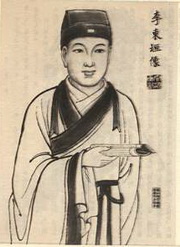 Li Dongyuan (1180 or 1182–1251 CE), a disciple of the herbalist Zhang Yuansu (Zhāng Yuánsù), held the view that diseases were mainly caused by endogenous injury to the spleen and stomach, apart from exogenous pathogenic influences. He advocated treatment through regulation of the spleen and stomach and nourishment of the premordial Qi (Yuan Qi). He is regarded as the founder of the School for Strengthening the Spleen and Stomach. His masterpiece is the Pi Wei Lun (Treatise on the Spleen and Stomach).
Li Gao’s style name was Mingzhi (Míng Zhī). He was from Zhuli in Zhen Ding Prefecture. During the early Han Dynasty, the Zhen Ding area was part of the Dongyuan Principality. In his later years, he styled himself Dongyuan Laoren. Later, people referred to him as Li Dongyuan. He was the progenitor of the School of Invigorating the Spleen and Stomach. Wealthy by birth, Li Gao studied under the herbalist Zhang Yuansu and took him as his master. Zhang Yuansu was a renowned herbalist of the Yishui School and a key developer of the TCM theory of the spleen and stomach; he emphasized the central role of the spleen and stomach in health and disease. His major surviving works include: Nei Wai Shang Bian Huo Lun (The Thesis Differentiation Between Endogenous Hurt and Exogenous Affection), Pi Wei Lun (Treatise on the Spleen and Stomach), Yong Yao Xiang Fa (Methods and Principles of Herbal Prescription), Yi Xue Fa Ming (Medical Innovations), Lan Shi Mi Cang (Secret Record of the Orchid Chamber), and Huo Fa Ji Yao (Essential Prescriptions for Effective Treatment).
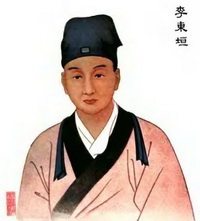 Li Gao studied the Confucian classics with eminent Hanlin academicians Wang Ruoxu (Wáng Ruòxū) and Feng Shuxian (Féng Shūxiàn) from an early age. He maintained a wide circle of friends, all of whom were virtuous individuals; however, he deliberately avoided associating with idle playboys or good-for-nothings from wealthy families. By age 22, he was already recognized as a distinguished Confucian scholar. In his youth, Li Gao had no intention of pursuing medicine to save others—he studied it solely for self-cultivation and health maintenance. However, when he was twenty, his mother fell gravely ill. He consulted local physicians, who offered conflicting diagnoses, prescribed divergent treatments, and administered various herbal formulas—yet her condition did not improve, and she ultimately passed away. Because he knew only Confucian learning and lacked medical knowledge, Li Gao was powerless to treat her and could only witness her death, filling him with profound grief and remorse. Thereupon, he vowed to become the student of an accomplished herbalist should the opportunity arise. At that time, two renowned herbalists lived nearby: one was Li Wansu (c. 1120–1200 CE), who resided in Hejian and was elderly and infirm; the other was Zhang Yuansu, who lived in Yishui and had gained fame for successfully treating Liu Wansu’s cold-induced disease. Upon hearing of Zhang Yuansu, Li Gao traveled over 400 miles from his hometown to Yishui and presented “gold and silk” as tokens of respect to request discipleship. He devoted many years to diligent study and mastered Zhang Yuansu’s academic theories and clinical techniques for diagnosis and treatment. After bidding farewell to his master, he returned home to practice medicine and assist the local community. All patients he treated—even those suffering from complex and refractory illnesses—experienced favorable outcomes. From youth, Li Gao cultivated integrity, fidelity to promises, courteous conduct toward others, prudence in friendship, avoidance of mockery or frivolity, deep concern for personal reputation and moral uprightness, and steadfast resistance to improper advances—including those from courtesans.
Major works and academic contributions
 In his 30s, Li Gao’s father used his connections to secure him an official position in the Jin court. He purchased an official post at Ji Yuan (in present-day Henan Province), but Li Gao did not serve as a herbalist. He only treated relatives and friends in urgent cases. During this period, an epidemic known as “Da Tou Tian Xing” (“Massive Head Scourge”) — characterized by facial swelling and redness — spread widely. Its symptoms included facial and head erythema and edema, as well as throat obstruction. Many physicians of that time consulted ancient herbal classics but could find no descriptions of this disease. They commonly prescribed purgatives for treatment, yet these proved ineffective. Patients suffered repeated diarrhea and died one after another. Although these outcomes persisted, physicians did not acknowledge their therapeutic failures, and patients’ families raised no objections. Li Dongyuan, however, believed that patients were dying unjustly. He repeatedly studied the disease — from its symptoms to its pathogenesis — and ultimately identified both the underlying mechanism and an effective prescription. Once patients took the prescription, positive results followed. He engraved the formula on a wooden board and hung it in a public place where crowds gathered. Those who took the medicine recovered. Locals misunderstood the origin of the remedy and believed it had been bestowed by immortals; thus, they carved it onto a stone tablet. To escape impending war and chaos, Li Dongyuan migrated to Bianliang City. While there, he treated numerous high-ranking officials, achieving excellent outcomes and gaining widespread renown. After returning from the Central Plains of China, Li Dongyuan practiced medicine for six years in the Dongping and Liaocheng regions. In 1244 CE, Li Dongyuan returned to his hometown, Zhending. By then, he was 64 years old. Years of displacement during wartime had weakened his physical condition — though he continued clinical practice and saving lives without interruption. He compiled his decades of clinical experience and formulated a theory centered on internal injury–induced dysfunction of the spleen and stomach. Later, he completed his seminal work, Nei Wai Shang Bian Huo Lun (Differentiation of Endogenous and Exogenous Injury). In his later years, around age 70, Li compiled his subsequent works: Pi Wei Lun (Treatise on the Spleen and Stomach) in three volumes, Lan Shi Mi Cang (Secret Book of the Orchid Chamber) in three volumes, as well as selected theses and clinical records. Before his death, Li Dongyuan entrusted his manuscripts and academic writings to his disciple Luo Tianyi (Luó Tiānyì), instructing him: "These books are not for Li Mingzhi or Luo Qianfu alone. They are for the people and for future generations. Take good care of them — do not let them be forgotten. Publish them, and make them useful." Later, Luo Tianyi edited, compiled, and published Pi Wei Lun (three volumes) and Lan Shi Mi Cang (three volumes). He also used Lan Shi Mi Cang as the foundation, supplementing it with Dongyuan’s academic essays and clinical records, to compile Dong Yuan Shi Xiao Fang (Effective Prescriptions Verified by Dong Yuan). The surviving works attributed to Li Dongyuan include: Nei Wai Shang Bian Huo Lun (The Thesis Differentiation Between Endogenous Hurt and Exogenous Diseases), Pi Wei Lun (Treatise on the Spleen and Stomach) in three volumes, Lan Shi Mi Cang (Secret Book of the Orchid Chamber) in three volumes, Mai Jue Zhi Zhang (Essentials of Pulse Diagnosis), Huo Fa Ji Yao, and Yi Xue Fa Ming (Innovative Elaborations on Medical Science) in one volume. Several other ancient texts have been ascribed to him — including Dong Yuan Mai Jue (Pulse Formula of Dong Yuan), Shi Wu Ben Cao (Food-Based Materia Medica), and Zhen Zhu Nang Zhi Zhang Bu Yi Yao Xing Fu (Supplement Herb Properties handbook in Verse of the Pearl Bag)— though their authorship remains doubtful. Another lost work, Shang Han Hui Yao (Essentials of Cold-Induced Diseases), is also attributed to him. His major authenticated works are briefly introduced below:
The book Nei Wai Shang Bian Huo Lun (The Thesis of Differentiation Between Endogenous Hurt and Exogenous Diseases) was compiled between 1231 and 1247 CE and is divided into three volumes. In TCM theory, the author emphasized the importance of the spleen and stomach among all the Zang-Fu viscera. In diagnosis, he distinguished between endogenous injury and exogenous diseases, correcting contemporaneous physicians who had mistakenly classified endogenous injury as exogenous diseases. In treatment methods and prescriptions, he developed relevant therapeutic principle and formulated well-known prescriptions. He also clarified the distinct roles of the three elimination methods—sweating, emesis, and purgation—in treating endogenous injury and proposed principles for application of prescriptions.
The three-volume book Pi Wei Lun (Treatise on the Spleen and Stomach) provides a systematic exposition of endogenous injury centered on the spleen and stomach viscera. Compiled after Nei Wai Shang Bian Huo Lun (The Thesis Differentiation Between Endogenous Hurt and Exogenous Diseases), it was completed around 1249 CE. Its theoretical foundation rests on the ancient text Neijing (The Inner Canon), and it also cites discussions and doctrines from classical physicians Zhang Zhongjing, Sun Simiao, and Qian Yi. Sixty-three prescriptions are listed, followed by four essays titled "Pi Wei Jiang Li Fa" (“Regulating the Spleen and Stomach”), "She Yang" (“Preserving and Supplement”), "Yuan Yu", and "Xing Yan Jian (Sayings from Reflections)," among others. The first volume contains seven essays that systematically explain the physiological functions of the spleen and stomach, their interior-exterior relationships, and the pathological progression and transmission of deficiency and excess. It also quotes relevant passages from the Neijing (The Inner Canon) and presents related interpretations. The second volume contains twelve essays that elaborate on treatment principles and methods for syndromes arising from endogenous injury to the spleen and stomach viscera. It summarizes the pathological interrelationships between the spleen and stomach viscera and the other four Zang organs, as well as the four principal treatment approaches. The third volume addresses residual questions, the relationship between the stomach and the five Zang-viscera and the nine orifices, and the correspondence between the spleen-stomach viscera system and the Yin-Yang dynamics of heaven and earth. The book marks the formal establishment of the Spleen-Stomach Theory. It offers further exegesis of related concepts from the Neijing (The Inner Canon) and supplements the pattern differentiation and treatment of endogenous and miscellaneous disorders originally described by Zhang Zhongjing.
Lan Shi Mi Cang (Secret Book of the Orchid Chamber) is a three-volume work that substantiates Dongyuan’s core theory through clinical case records. The book's title derives from the phrase "Cang Zhu Ling Lan Zhi Shi (hide it in the Orchid Chamber)," recorded in the Nei Jing·Suwen (The Inner Cannon·Plain Questions). Compiled between 1249 CE and Li Dongyuan’s final years, it was edited and published 25 years later by his disciple Luo Tianyi. Its principal content concerns the practical application of the Spleen-Stomach Theory across diverse clinical specialties. It contains over 280 prescriptions, most of which were formulated by Li Dongyuan himself.
The nine-volume work Dong Yuan Shi Xiao Fang (Effective Prescriptions Verified by Dong Yuan) bears close resemblance to the three-volume Lan Shi Mi Cang (Secret Book of the Orchid Chamber). It comprises supplementary prescriptions and documented therapeutic outcomes. These prescriptions embody Li Dongyuan’s clinical reasoning, and the case records are representative, serving both to validate his theoretical framework and to confirm the efficacy of his formulas. Its textual organization and literary form are more rigorously structured than those of Lan Shi Mi Cang (Secret Book of the Orchid Chamber).
 Li Dongyuan proposed a specific viewpoint on the therapeutic significance of the spleen—associated with the Earth element—at the middle energizer. He inherited this viewpoint concerning the spleen and stomach from his master, Zhang Yuansu. Some of his patients were officials who consumed excessive greasy and rich foods, which could easily impair their spleen and stomach. Others were impoverished people who suffered from eating disorders, hunger, anxiety, and sorrow during wartime—conditions that could likewise damage the spleen and stomach. Therefore, he believed that the new social reality demanded a novel analytical approach grounded in patients’ individual characteristics, rather than reliance on ancient prescriptions. All these conditions became the starting point and driving force behind his development of the Spleen-Stomach Theory. His Spleen-Stomach Theory bears resemblance to a related theory recorded in the Nei Jing (The Inner Canon of Huangdi). Additionally, Li Dongyuan classified internal diseases into two broad categories: exogenous affections and endogenous injuries. This classification carries profound implications for diagnosis and treatment. Li Dongyuan’s theory was inherited and further developed by his disciples Wang Haogu and Luo Tianyi. Wang Haogu absorbed Li Dongyuan’s pharmaceutical theory and rigorously pursued its clinical application. He was also inspired by Li Dongyuan’s concepts of endogenous injury and spleen-stomach pathogenesis, leading him to formulate the Yin Syndrome Theory. Luo Tianyi likely inherited Li Dongyuan’s Spleen-Stomach Theory in its entirety and enriched it with his own systematic classification and clinical experience regarding spleen-stomach endogenous injury. His academic ideas exerted significant influence on later herbalists—especially those of the Warm-Recuperation School.
Herbalist Li Dongyuan held specific views on women’s diseases and possessed extensive clinical experience. Most of his writings on this subject appear in his book Lan Shi Mi Cang (The Secret Book of the Orchid Chamber). His major contribution to gynecology was the establishment of a pathogenesis-based therapeutic model for women’s diseases. He also provided detailed discussions on the principal pathogenic mechanisms—as well as the diverse etiologies and pathogenic factors—underlying various types of women’s diseases.
 For morbid leucorrhea (pathological leucorrhea), Li Dongyuan discussed its main pathogenic causes, and discussed its clinical manifestation and main pathogenesis. Li Dongyuan treated cases of morbid leucorrhea arising from prolonged Qi-sinking and Yin-fire–induced cold syndrome. Consequently, most cases of morbid leucorrhea progressed to deficiency, deficiency-cold, or exhaustion syndrome. He provided detailed explanations of the pathogenesis of various types of leucorrhea.
In treating women’s diseases, Li Dongyuan proposed the theory of “elevating Yang and draining fire.” His insights into the specific properties of herbs and their clinical applications were original and surpassed those of earlier herbalists. He revealed principles previously unarticulated by his predecessors. He formulated a treatment framework for those syndromes of amenorrhea due to different causes.
In general, Li Dongyuan’s theories drew extensively from classical texts—particularly the Nei Jing (the Inner Canon)—and integrated the doctrines of Zhang Zhongjing, Qian Yi, Wang Shuhe, and Sun Simiao. His thought was also shaped by his master Zhang Yuansu and by the herbalist Liu Wansu. Li Dongyuan’s Spleen-Stomach Theory became widely renowned.
 On February 25, 1251 CE, Li Dongyuan passed away. He was buried in his hometown of Huanglin County. His tomb remains preserved in the western corner of A-Dang Village, A-Dang Township, Huanglin County. A stone stele stands before the tomb. The inscription reads: "Master of the Qibo and Huangdi Classics; reviver of the moribund; eminent herbalist who shared virtue with the common people. His fame spread from south to north and from east to west." This epitaph serves to commemorate and honor his achievements.
The Hejian and Yishui schools are regarded as two of the most influential academic schools in the history of Traditional Chinese Medicine (TCM). They inherited classical traditions while pioneering new theoretical ground for subsequent generations. Li Dongyuan is revered as the foundational figure of the Yishui School. Though he studied under Zhang Yuansu, his influence on later generations proved even more profound. Later, the herbalist Zhu Danxi became a third-generation inheritor of the Hejian School. Some of his academic ideas were inspired by Li Dongyuan’s teachings. Since the Ming Dynasty, other distinguished herbalists—including Xue Lizhai, Zhang Jingyue, Li Zhongzi, and Ye Tianshi—all held Li Dongyuan’s scholarly contributions in high esteem and further developed aspects of his theories. Additional herbalists, such as Gong Tingxian, Gong Juzhong, and Zhang Zhicong, were likewise influenced by Li Dongyuan’s academic thought. Although his followers acknowledged that overemphasizing the spleen and stomach could entail bias, Li Dongyuan’s theoretical system remains esteemed as a milestone in the history of TCM. He is recorded in TCM historiography as a preeminent physician.
References:
-
- 1. Li Dongyuan: Biographical introduction and legendary stories, major works and academic contributions
