
Hu Yin: Biographical Introduction and Legendary Stories, Major Works and Academic Contributions
-
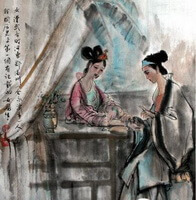 ✵Hu Yin: She adored Taoism from a young age, enjoyed reading the Huangting Jing, and was interested in Taoist practice. She was a renowned female Taoist physician of the Tang Dynasty and a unique “Huangting” scholar of the late Tang period.
- Hu Yin
-
Brief Introduction Chinese Name: 胡愔 (Hú Yīn) Taoist Monastic Name: 见素子 (Jiàn Sù Zǐ) Popular Name: 见素女, 见素女子 (Jiàn Sù Nǚ) English Name: Hu Yin (family name first) or Yin Hu (given name first) Hometown: Dongyang Dates: Late Tang dynasty, ca. 9th century Major Works: Huangting Neijing Wuzang Liufu Tu, 1 volume;Huangting Neijing Wuzang Liufu Tushuo, 1 volume;Huangting Neijing Wuzang Liufu Buxie Tu, 1 volume; Huangting Waijing Tu, 1 volume; Buxie Neijing Fang, 3 volumes Representative Work: Huangting Neijing Jing, 1 volume Biographical Introduction and Legendary Stories
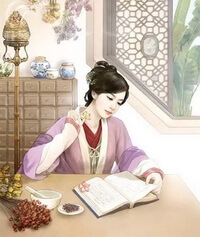 Hu Yin (Hú Yīn), a renowned female herbalist and Taoist, lived during the late Tang dynasty. She was born in Dongyang (or resided in seclusion in the Taibai Mountains of Dongyang). From an early age, she revered Taoism, studied the Huangting Jing, and practiced Taoist cultivation. She is recognized as a distinguished female Taoist physician of the Tang dynasty. Her alias was Jiàn Sù Zǐ or Jiàn Sù Nǚ—according to the preface date of her work, the latter title appeared in the second year of Dazhong (Wuchen year, ca. 848 CE). Thus, Hu Yin lived in the late Tang dynasty; however, her exact birth and death years remain unknown.
Major Works and Academic Contributions
Hu Yin’s surviving works include: Huangting Neijing Wuzang Liufu Tu (1 volume), Huangting Neijing Wuzang Liufu Tushuo (1 volume), Huangting Neijing Wuzang Liufu Buxie Tu (1 volume), Huangting Waijing Tu (1 volume), Buxie Neijing Fang (3 volumes.).
The two works Huangting Neijing Wuzang Liufu Tu (1 volume)., and Huangting Neijing Wuzang Liufu Buxie Tu (1 volume) share similar themes but differ in textual content. Both contain prefaces that are conceptually aligned yet exhibit minor textual variations. The former systematically discusses the Zang-viscera (lungs, heart, liver, spleen, and gallbladder), analyzing each viscus according to the following sequence: (1) Illustrate the physiological and anatomical position, shape, and state the weight and function, etc.; (2) Cultivation method; (3) Disease identification and syndrome diagnosis for these viscera; (4) Appropriate prescriptions and medicinal treatment; (5) Breathing techniques (expiration and inspiration) to regulate qi flow in the liver, spleen, kidneys, and gallbladder viscera; (6) Dietary restrictions—e.g., “Avoid pepper in the tenth lunar month for kidney disorders”; (7) Daoyin methods—physical and breathing exercises targeting limb movement to activate muscles and vessels and expel wind and pathogenic factors from the zang-fu viscera.
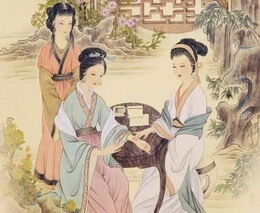 The Huangting Jing (Huangting Classic) is a foundational text of Taoist health preservation and already enjoyed wide influence during the Northern and Southern Dynasties. However, due to its cryptic literary style, it circulated primarily among elite scholars with advanced literacy at that time. At the beginning of the Tang dynasty, Bai Lüzhong (monastic name: Liangqiuzi) produced the first annotated edition of the Huangting Jing, contributing significantly to its popularization. Yet his commentary largely follows the original structure of the Huangting Jing, and although it includes rhetorical interpretations, it remains difficult to comprehend. During the Tang dynasty, scholarship on the “Huangting” flourished, giving rise to diverse theories. In the preface to Huangting Neijing Wuzang Liufu Buxie Tu, Hu Yin stated: “Various compilations and heterodox interpretations arose, causing later generations to rarely grasp its true essence—where a slight deviation leads one astray by a thousand miles.” By “heterodox interpretations,” she likely meant mystical or esoteric readings of the term "Huangting."
Hu Yin stands out as a distinctive “Huangting” scholar of the late Tang dynasty. Her primary contribution is demystifying the Huangting Jing and eliminating the mysterious factors in it. She approaches it strictly from a medical perspective—clear, accessible, and free of arcane techniques. Her methods are learnable, and her practices are attainable through disciplined training.
References:
-
- 1. Hu Yin: Biographical Introduction and Legendary Stories, Major Works and Academic Contributions
