
Hua Tuo: Biographical introduction and legendary stories, major works and academic contributions
-
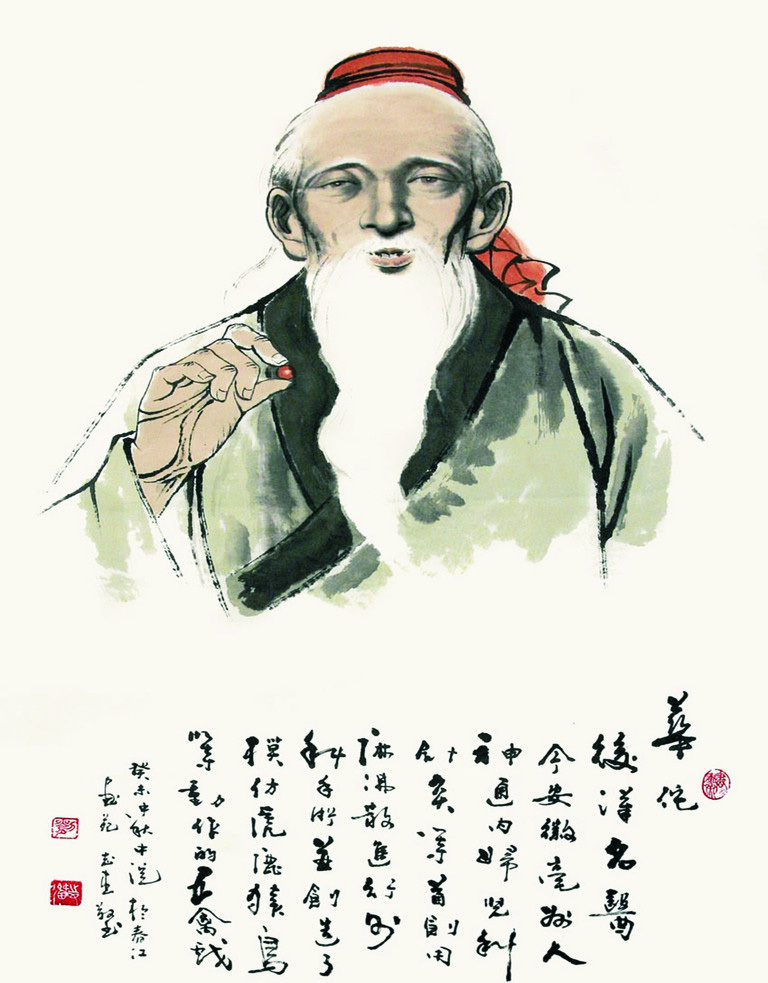
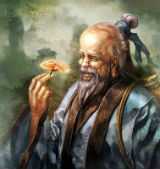 ✵Hua Tuo, a famous surgeon and master of all branches of medicine, was a famous Taoist priest who lived primarily during the late Eastern Han dynasty and the Three Kingdoms period. He was also known as Huà Fū or Huà YuánHuā. He performed many major operations, including abdominal anesthesia surgery with herbal anesthesia, and recommended therapeutic gymnastics known as Wu Qin Xi (the Frolics of Five Animals). He went deep into the people's lives, and his influence is evident throughout the Central Plains (comprising the middle and lower reaches of the Yellow River) and the Jianghuai Plain (the area at the south of the Huaihe River and north of the Yangtze River). He was a master of clinical diagnosis and treatment of internal, surgical, gynecological, and pediatric diseases, and he performed medical miracles. He is particularly was famous for creating Ma Fei San and performing laparotomies.
- Hua Tuo
-
Brief Introduction Chinese Name: 華佗 (Huà Tuó) Alternate Name: 旉 (Fū) Style Name: 元化 (Yuán Huà) English Name: Hua Tuo (family name first) Hometown: Pei Guo Qiao (Qiao Jun, Yu Zhou, Wei Kingdom) Dates: c. 108–203 CE Major Works: Qing Nang Jing (the Blue-sac Canon),Zhen Zhong Jiu Ci Jing (Moxibustion and Acupuncture On Pillow Canon),Zhong Zang Jing (the Central Treasury Canon) Representative Work: Zhong Zang Jing (the Central Treasury Canon) Biographical introduction and legendary stories
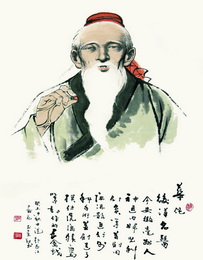 Hua Tuo is a famous surgeon and master of all branches of medicine. He was a prominent Taoist priest during the late Eastern Han dynasty and the Three Kingdoms period. He was also known as Huà Fū or Huà YuánHuā (year? –203 CE). Huà is his family name, Tuó is his given name, Fū is another one of his given names, and Yuánhuā is his alias or monastic name. He is a native of Pei Guo Qiao (an ancient toponym; Qiao Jun, Yuzhou of the Wei Kingdom during the Three Kingdoms period). Hua Tuo performed many major operations, including abdominal anesthesia surgery under herbal anesthesia, and he recommended therapeutic gymnastics known as Wu Qin Xi (the Frolics of Five Animals). Hua Tuo's influence can be seen throughout the Central Plains (comprising the middle and lower reaches of the Yellow River) and the Jianghuai Plain (the area between the south of the Huaihe River and north of the Yangtze River). He was a master of clinical diagnosis and treatment of internal, surgical, gynecological, and pediatric diseases, and he performed many medical miracles. He is particularly famous for creating Ma Fei San and performing laparotomies.
The Hua family was originally famous, and one of its descendants lived in the picturesque village of Xiaohua Zhuang. The village is located about 5 kilometers north of Qiao County (present-day Huatuo Town in Qiaocheng District, Bozhou City, Anhui Province, China). By the time of Hua Tuo, the family was in decline, but they had high expectations for him. His name, "Tuo," means "load", and his monastic name, "Yuanhua," means "transformation." Hua Tuo studied hard since he was a child, became well-versed in ancient texts, including Shang Shu (The Book of Documents), Shi Jing (The Book of Songs), Zhou Yi (The I Ching, or The Book of Changes), Li Ji (The Book of Rites), and Chun Qiu (The Spring and Autumn Annals). He gradually acquired a high level of cultural accomplishment. Hua Tuo primarily studied the medical classics of previous dynasties and constantly made progress through practice. During that time, Chinese medicine had made some achievements; those ancient books—Huangdi Neijing, Nanjing, Shennong Ben Cao Jing, and other medical texts—were handed down and became widely known. The four diagnostic methods, acupuncture and moxibustion, herbal medicine, and other therapeutic techniques had been basically established and were widely applied. Inspiring stories of ancient physicians who cared more about helping people with medicine than about wealth and prosperity not only provided the possibility for Hua Tuo to study medicine, but also cultivated his sentiment. Hua Tuo was excellent and skilled in the study of medicine. According to his biography in the history text Hou Han Shu (The History of the Later Han Dynasty), he "mastered several classics and learned the art of nature-cultivation," especially becoming "adept in prescriptions and formulas." People at that time called him a "miracle physician." A modern record states that he lived from about 145 to 203 CE, but the credibility of this modern record is questionable, simply because the history book Hou Han Shu·Hua Tuo Zhuan (The History of the Later Han Dynasty: The Legend of Hua Tuo) recorded that "he was over a hundred years old, but his appearance is still in the prime of life." In addition to the book Hou Han Shu, Hua Tuo's deeds and legends were recorded in the ancient books Zhenjiu Jiayi Jing (The ABC Classic of Acupuncture and Moxibustion), San Guo Zhi (The Records of the Three Kingdoms), Tai Ping Guang Ji, and San Guo Yan Yi (The Romance of the Three Kingdoms). However, none of these books recorded his exact dates. According to clues from historical data, Hua Tuo was "over a hundred years old", and had passed away before the year 208 CE. His birth year may have been around or before the year 108 CE, during the Yan Ping period (the reign title of Emperor An Di of the Eastern Han dynasty) or before it.
Hua Tuo was an excellent herbalist with a wide range of medical skills. He was good at internal medicine, surgery, gynecology, pediatrics, acupuncture, and moxibustion, and he was especially skilled in surgery. He was proficient in internal medicine, gynecology, pediatrics, acupuncture, and moxibustion. Ancient records state that "(Hua Tuo) studied and traveled to the Xu area and was a master of several classics. He knows the method skills of nature-cultivation and is good at it; his appearance is still young even when he is nearly 100 years old. People at that time thought that he was an immortal." Hua Tuo was also a famous alchemist and Taoist.
Hua Tuo traveled to different areas and helped local folks. He was well-known in the area of the Central Plains (comprising the middle and lower reaches of the Yellow River) and the Jianghuai Plain (the area south of the Huaihe River and north of the Yangtze River). Hua Tuo lived during the period between the end of the Eastern Han dynasty and the early Three-Kingdoms period, an era of warlords. In addition to wars, people suffered from natural calamities, droughts, floods, and pestilence. The famous poet Wang Can (Wáng Càn, 177–217 CE) described this scene in his poem Qi āi Shī (The Seven Mourning Poems): "There are no other scenes; white bones of the dead scatter the fields." It seems that Hua Tuo knew well about the book of herbalist Zhang Zhongjing, and he compiled his extensive medical experience into a book known as the Qing Nang Jing (The Blue-sac Canon), but unfortunately, the book was lost and did not survive to the present day. The ancient book Zhong Zang Jing (The Central Treasury Canon) was once ascribed to Hua Tuo. Fortunately, his medical knowledge and experience were not entirely lost because several of his successful students inherited parts of it. Hua Tuo had several disciples: they were Fan e (Fán ē), who was skilled in acupuncture and moxibustion; Wu Pu (Wú Pǔ), who wrote a classical herbal book named Wu Pu Ben Cao (Wu Pu's Herbal Book); and Li Dangzhi (Lǐ Dāngzhī), the author of Ben Cao Jing (The Classics of Materia Medica).
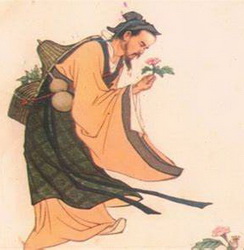 Hua Tuo was known as one of the three miraculous ancient herbalists during the Jian'an period (196–220 CE; Jian'an is the reign title of Emperor Xian Di of the Eastern Han dynasty); his biographies and stories are recorded in the ancient history books Hou Han Shu (The Book of the Later Han, or The History of the Later Han Dynasty), San Guo Zhi (The Records of the Three Kingdoms), and biographic work Hua Tuo Bie Zhuan (The Privately Compiled Biography of Hua Tuo). Hou Han Shu recorded that Hua Tuo was especially skilled in herbal remedies, and it documented some stories about his treatment skills and cases. These stories include cases involving Hua Tuo's excellent skills in acupuncture, Du You Xu Yi, a scorpion bite, a parasite, and Cao Cao's headache (a kind of intermittent headache), as well as Tuo's invention of Wu Qin Xi (the Frolics of Five Animals), a series of exercises mimicking the movements of a tiger, deer, bear, ape, and bird for health preservation. According to legend and records, his disciple Wu Pu practiced Wu Qin Xi regularly and still had very good eyesight and hearing, as well as strong, complete teeth at 90 years old.
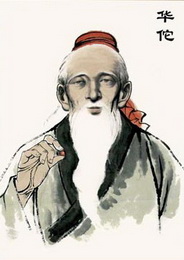 In his later years, the herbalist Hua Tuo was suspected by Cao Cao, who had him tortured to death in prison. Cao Cao was a warlord of the Wei Kingdom during the Three-Kingdoms period. According to history books, Cao Cao suffered from Tou Feng, a serious and difficult disease characterized by intermittent headaches. After Hua Tuo treated him with acupuncture and moxibustion, Cao Cao's symptoms were relieved, but he did not recover completely. Therefore, Cao Cao wanted Hua Tuo to stay with him. According to records in Hou Han Shu, "Hua Tuo left Cao Cao because his wife was ill and never returned. Cao Cao sent him several letters calling him back and commanded the county lord to invite him again with gifts, but Tuo still did not want to come back. Cao Cao became angry, sent someone to investigate, and found that Hua Tuo's wife was not actually sick. He imprisoned and tortured Hua Tuo. Xun Yu, a famous counselor of Cao Cao, begged for Hua Tuo, saying: 'Hua Tuo is really good at skills that relate to people's lives. We should release him.' But Cao Cao never listened to him and finally killed Hua Tuo."
The related story was also recorded in San Guo Zhi, written by historian Chen Shou (Chén Shòu). It recorded that: "Xún Yù, a very important counselor of Cao Cao, begged for Hua Tuo, saying, 'Hua Tuo is perfect in skills that relate to people's lives. We had better release him.' But Tai Zu (the posthumous title of Cao Cao) said, 'No worries; shouldn't there be many such kinds of mouse creatures?'. So he tortured and killed Tuo. Later, when his son Cang Shu (Cao Cao's son) caught a troublesome disease, Tai Zu lamented his misfortune, saying, 'I regret killing Hua Tuo; it caused my son to die in vain today.'"
 Hua Tuo invented a new method of anesthesia called Má Fèi Sǎn. This method helped Hua Tuo greatly with his surgical treatments, resulting in more successful cures. He was able to perform surgical procedures such as tumor extirpation and gastrointestinal sutures. As he traveled to many rural areas, he paid attention and collected effective recipes from different areas and learned a lot of herbal knowledge from local folks. He used these recipes to help patients. Some stories recorded a case of parasite treatment; it recorded that Hua Tuo met a man with laryngeal obstruction who could not eat anything and was on his way to see a doctor. The patient was in great pain, and his groaning sounded very painful. Hua Tuo examined him carefully and told him: "You can buy two to three liangs of Píng Jī (powdered duckweed) from a pancake seller, add half a bowl of Suān Cù (sour vinegar). Mix them together and eat it. Your suffering will be relieved later." After eating the mixture of Píng Jī and vinegar, the patient vomited a parasite that looked like a snake, and his problem was really resolved. When the patient visited Hua Tuo with the parasite, he saw many parasites hanging on the wall of Hua Tuo's house. Hua Tuo had treated many patients with this recipe. An ancient herbal classic recorded many blends under the title of Hua Tuo to treat parasitic infections, such as those for the anal parasites, nine parasites, ascarids, taenias, and pinworms.
References:
-
- 1. Hua Tuo: Biographical introduction and legendary stories, major works and academic contributions
- 2. Hou Han Shu·Hua Tuo Zhuan (The History of the Later Han Dynasty: The Legend of Hua Tuo), by Fan Ye
- 3. San Guo Zhi·Hua Tuo Zhuan (The Records of the Three Kingdoms: The Legend of Hua Tuo), by Chen Shou
