✵This article documents the herb Pokeberry Root, including its English name, Latin name, Pinyin name, properties and flavor, and its botanical sources—two plant species: (1) Phytolacca acinosa Roxb. and (2) Phytolacca americana L. It provides a detailed description of the botanical features, growth characteristics, and ecological environments of these two species, as well as the morphological characteristics of the herb Pokeberry Root, its pharmacological actions, medicinal efficacy, and administration guidelines.
Radix Phytolaccae (Pokeberry Root)
Pinyin Name: Shānɡ Lù
English Name: Pokeberry Root
Latin Name:Radix Phytolaccae Property and Flavor: Cold, bitter, and toxic.
Brief Introduction: The herb Radix Phytolaccae is the dried root of Phytolacca acinosa Roxb. or Phytolacca americana L., used internally as a diuretic and hydragogue for treating edema and ascites, and externally for boils and sores. It is commonly known as Radix Phytolaccae, Pokeberry Root, or Shāng Lù.
Botanical Source: Classical herbal texts define Radix Phytolaccae (Pokeberry Root) as the dried root of (1) Phytolacca acinosa Roxb. or (2) Phytolacca americana L. These are perennial herbs belonging to the genus Phytolacca L., family Phytolaccaceae (pokeweed family), order Caryophyllales (formerly in order Centrospermae). The two commonly used species are introduced below:
(1) Phytolacca acinosa Roxb.
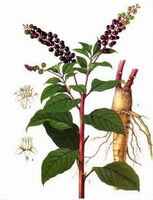
Botanical Description:Phytolacca acinosa Roxb. is also known as Phytolacca esculenta van Houtte (P. esculenta van Houtte) and commonly referred to as Shāng Lù. It is a perennial herb growing 0.5–1.5 meters tall, with a smooth, glabrous surface. The root is hypertrophied, stout, conical, and succulent; its cortex is primrose yellow (pale yellow) with elongated lenticels and numerous lateral roots. The stem is green or purplish-red and highly branched. Leaves are simple, alternate, and petiolate; the petiole base is slightly flattened and broad. The leaf blade is thinly chartaceous (papery), ovate-elliptic or elliptic, 12–15 cm long and 5–8 cm wide; the apex is acute or acuminate, the base is cuneate and attenuate, and the margin is entire.
Racemes are terminal or axillary on the stems and erect. There are five tepals (perianth lobes), white at first and gradually turning pale red (rose-colored); eight to ten stamens; and eight to ten free carpels, closely aggregated but not fused.
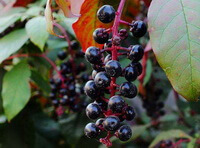
The fruit is an oblate berry with a persistent calyx, turning deep reddish-purple or black at maturity. The seeds are reniform and black. Flowering and fruiting occur from May to October.
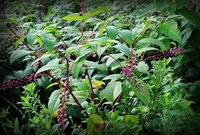
Ecological Environment: The plant grows in open forests, along roadsides, or in outdoor gardens. It is commonly found at the foot of mountains, in forests, along roads, and in fields near houses.
Growth Characteristics:Phytolacca acinosa prefers a warm, moist climate and is cold-tolerant. The optimal growth temperature ranges from 14–30 °C (57.2–86 °F). The above-ground parts wither in autumn and winter, while the underground succulent root can withstand temperatures as low as −15 °C (5 °F). The plant exhibits broad soil adaptability—thriving in sandy soil or red loam, whether fertile or infertile—and produces luxuriant foliage. For cultivation, fields with deep, loose, fertile, humus-rich, well-drained sandy loam are recommended. Low-lying land and heavy clay soils are unsuitable.
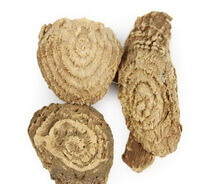
Characteristics of the Herb: The root is conical and highly branched. The surface is taupe-brown (grayish-brown) or sallow (grayish-yellow), bearing prominent transverse lenticels and longitudinal grooves. Most commercial specimens are cross-sectioned slices, longitudinal slices, or irregular blocks. Cross-sections are irregularly circular, with wavy margins, 2–8 cm in diameter and 2–6 mm thick; the cross-sectional surface is pale yellow or yellowish-white, displaying multiple uneven concentric ring patterns. Longitudinal slices are irregular rectangles, often curved or curled, 10–14 cm long and 1–5 cm wide. The surface is uneven, and the xylem exhibits numerous raised longitudinal striations. The herb is firm and hard, not easily fractured. It has a faint odor and a sweet, mild taste, followed by a slight numbing sensation upon prolonged chewing.
Pharmacological Actions: (1) Expectorant effect; (2) Antitussive effect; (3) Diuretic effect; (4) Inhibitory activity against Shigella dysenteriae, Haemophilus influenzae, Streptococcus pneumoniae, and certain dermatophytes; (5) Immune-enhancing effects.
Medicinal Efficacy: Hydragogue and anti-edematous (reducing swelling), alleviating fluid retention, promoting urination and defecation, detoxifying, and resolving stagnation. It is indicated for edema with abdominal distension, constipation, urinary obstruction, beriberi, pharyngitis (sore throat), carbuncles, malignant ulcers, abdominal masses, hypochondriac or abdominal masses, scrofula, swollen carbuncles, and toxic sores.
Administration of Radix Phytolaccae (Shānɡ Lù):
Reference:
Administration Guide for Radix Phytolaccae (Shānɡ Lù)
TCM Books:
(1) Internally: 3–9 grams. Externally: fresh herb crushed and applied topically, or finely powdered herb sprinkled and applied; (2) Internally: water decoction, 1.5–3 qián (≈ 4.5–9 grams), or powdered form. Externally: crushed herb applied topically; (3) Internally: water decoction, 3–10 grams, or powdered form. Externally: appropriate amount, crushed and applied topically.
Contraindications, Precautions, and Adverse Reactions: Contraindicated during pregnancy.
(2) Phytolacca americana L.
Botanical Description:Phytolacca americana L. is also known as Phytolacca decandra L. (P. decandra L.), commonly called Chuí Xù Shāng Lù or Měi Zhōu Shāng Lù ("American pokeweed"). It is a perennial herb growing up to 1–2 m tall. Roots are stout, hypertrophied, and obconical. The stem is erect, terete (cylindrical), and sometimes purplish-red.
Leaf blades are elliptic-ovate or ovate-lanceolate, 9–18 cm long and 5–10 cm wide; the apex is acute, and the base is cuneate. Petioles measure 1–4 cm in length.
Racemes are terminal or axillary, 5–20 cm long. Pedicels (flower stalks) are 6–8 mm long. Flowers are white, slightly reddish, ≈ 6 mm in diameter. There are five tepals (perianth lobes); stamens, carpels, and styles are typically ten in number; carpels are connate.
Inflorescences are pendulous. Berries are oblate and turn atropurpureus (deep purple-black) at maturity. Seeds are reniform and circular, ≈ 3 mm in diameter. Flowering occurs from June to August; fruiting from August to October.
Ecological Environment: The plant grows in open forests, along roadsides, in wastelands, and in damp areas near human habitations. It is native to North America.
Characteristics of the Herb: The morphology resembles that of Phytolacca acinosa Roxb.
Medicinal Efficacy: The root possesses emetic properties and is indicated for edema, leukorrhea, and rheumatism; the seed has diuretic activity; the leaves exhibit antipyretic effects and are used in beriberi treatment. Externally, the herb is applied to unnamed sores, boils, and dermatophytosis.

 ✵This article documents the herb Pokeberry Root, including its English name, Latin name, Pinyin name, properties and flavor, and its botanical sources—two plant species: (1) Phytolacca acinosa Roxb. and (2) Phytolacca americana L. It provides a detailed description of the botanical features, growth characteristics, and ecological environments of these two species, as well as the morphological characteristics of the herb Pokeberry Root, its pharmacological actions, medicinal efficacy, and administration guidelines.
 Pinyin Name: Shānɡ Lù
 Botanical Description: Phytolacca acinosa Roxb. is also known as Phytolacca esculenta van Houtte (P. esculenta van Houtte) and commonly referred to as Shāng Lù. It is a perennial herb growing 0.5–1.5 meters tall, with a smooth, glabrous surface. The root is hypertrophied, stout, conical, and succulent; its cortex is primrose yellow (pale yellow) with elongated lenticels and numerous lateral roots. The stem is green or purplish-red and highly branched. Leaves are simple, alternate, and petiolate; the petiole base is slightly flattened and broad. The leaf blade is thinly chartaceous (papery), ovate-elliptic or elliptic, 12–15 cm long and 5–8 cm wide; the apex is acute or acuminate, the base is cuneate and attenuate, and the margin is entire.
 Racemes are terminal or axillary on the stems and erect. There are five tepals (perianth lobes), white at first and gradually turning pale red (rose-colored); eight to ten stamens; and eight to ten free carpels, closely aggregated but not fused.
 Ecological Environment: The plant grows in open forests, along roadsides, or in outdoor gardens. It is commonly found at the foot of mountains, in forests, along roads, and in fields near houses.
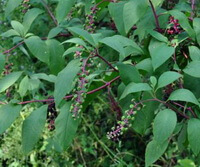 Botanical Description: Phytolacca americana L. is also known as Phytolacca decandra L. (P. decandra L.), commonly called Chuí Xù Shāng Lù or Měi Zhōu Shāng Lù ("American pokeweed"). It is a perennial herb growing up to 1–2 m tall. Roots are stout, hypertrophied, and obconical. The stem is erect, terete (cylindrical), and sometimes purplish-red.
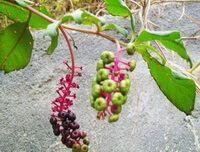 Racemes are terminal or axillary, 5–20 cm long. Pedicels (flower stalks) are 6–8 mm long. Flowers are white, slightly reddish, ≈ 6 mm in diameter. There are five tepals (perianth lobes); stamens, carpels, and styles are typically ten in number; carpels are connate.
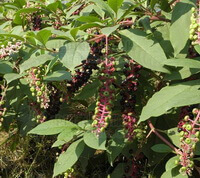 Ecological Environment: The plant grows in open forests, along roadsides, in wastelands, and in damp areas near human habitations. It is native to North America.
 URL QR code: