
Introduction of Hua Shi Zhong Zang Jing: The Central Treasury Canon
-
 ✵Zhong Zang Jing, also known as Hua Shi Zhong Zang Jing or the Treasured Classic, is a comprehensive ancient text on herbal medicine and clinical treatment. Although its authorship has traditionally been ascribed to the prominent Eastern Han physician Hua Tuo, modern scholarship holds that it was likely compiled by unknown authors during the Six Dynasties period (386–589 CE). The book comprises 49 chapters covering diagnosis and treatment, pulse diagnosis, Zang-Fu viscera theory, deficiency-excess syndromes, and cold and heat syndromes, as well as a list of remedies.
- Hua Shi Zhong Zang Jing (Central Treasury Canon)
-
Brief Introduction Chinese Name: 《華氏中藏經》(Hua Shi Zhong Zang Jing) English Name: The Central Treasury Canon or The Treasured Classic Author (or Authors): ☯Hua Tuo (華佗, Huà Tuó) Edition Age: Eastern Han Dynasty Introduction of Hua Shi Zhong Zang Jing
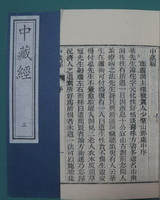 The Hua Shi Zhong Zang Jing, also known as The Central Treasury Canon, The Central Treasury Canon of Hua Tuo, or The Treasured Classic, is a comprehensive ancient text on herbal medicine and clinical treatment. Though traditionally attributed to the renowned Eastern Han physician Hua Tuo, scholarly consensus indicates it was probably composed by anonymous authors during the Six Dynasties period (386–589 CE). Modern researchers suggest it may have been compiled by Hua Tuo’s disciples—Wu Pu and Fan E—who recorded his teachings and transmitted them through handwritten copies. The text contains 49 chapters addressing diagnosis and treatment, pulse diagnosis, Zang-Fu viscera theory, deficiency and excess syndromes, and cold and heat syndromes, as well as a compendium of remedies.
The Central Treasury Canon establishes Zang-Fu viscera theory as its core framework. It systematically synthesizes and elaborates upon classical concepts of life and disease drawn from the Huangdi Neijing (The Yellow Emperor's Inner Canon) and the Nan Jing (The Difficult Classics), integrating the author’s interpretations and expansions. These constitute the foundational content of its Zang-Fu viscera theory, which exerted profound and lasting influence on the subsequent development of Zang-Fu theory in traditional Chinese medicine. Later physicians—including Sun Simiao (in Qian Jing Yao Fang), Qian Yi (in Xiao Er Yao Zheng Zhi Jue, or Key to the Therapeutics of Children's Disease), and Zhang Yuansu (in Yi Xu Qi Yuan)—adopted, refined, and extended this Zang-Fu theory. Notably, much of the Zang-Fu theory in Yi Xu Qi Yuan directly quotes or closely follows that of the Hua Shi Zhong Zang Jing.
The Central Treasury Canon presents a systematic exposition centered on Zang-Fu theory. It draws upon and critically engages with earlier texts—including the Huangdi Neijing, the Nan Jing, and other classical works on Yin and Yang, cold and heat, deficiency and excess,Zang-Fu distinctions, pulse diagnosis, and syndrome differentiation—to synthesize a coherent theoretical model. Through comprehensive analysis and original interpretation, the Canon elucidates the underlying principles and establishes one of the earliest formalized theories of Zang-Fu syndrome differentiation—laying the conceptual foundation for this pivotal diagnostic paradigm in traditional Chinese medicine. Its influence remains evident in clinical and theoretical practice today.
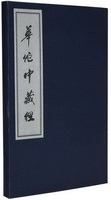 The Central Treasury Canon consists of three volumes: Volumes I and II are theoretical, while Volume III records approximately 60 prescriptions for various syndromes. The 49 chapters are grouped into four thematic sections:
Section I (Chapters 1–20): General theoretical principles;
Section II (Chapters 21–32): Differentiation of deficiency and excess, cold and heat, life and death of the Zang and Fu viscera, and normal and abnormal transmission patterns;
Section III (Chapters 33–49): Miscellaneous diseases and prognostic methods for assessing survival or mortality;
Section IV: A categorized list of remedies.
The theory of the Central Treasury Canon includes several original contributions to classical medical thought. These are:
(1) It offers a novel interpretation of the Triple Energizer (the "three burners") theory. The earliest references to the Triple Energizer appear in the Huangdi Neijing (Huangdi's Internal Classic), specifically in the Suwen (The Plain Questions), chapter "Ling Lan Mi Dian Lun" (The Secret Cabinet of the Spiritual Orchid), and the debate was recorded in Chapter 25 of the Nan Jing (The Difficult Classic). The central debate concerns the name, function, and ontological status of the Triple Energizer. In the Central Treasury Canon, the Triple Energizer is defined as "the sea of fluids, the water channel, or the fluid pathway," and its functions are described as "regulating the Qi of the five Zang and six Fu viscera, the Ying and Wei systems, the channels and collaterals, and the internal and external, and the left, right, upper and lower." It is stated to be "intangible in form yet divisible into three regions: the upper, middle, and lower energizers." Due to its function of "transportation and excretion without storage", the Triple Energizer is classified as a Fu viscus. Distinct from the other five Fu-viscera, it is designated a unique or “extra” Fu viscus, and its associated channel is the Foot Taiyang meridian.
(2) It innovates the pathogenesis theory of Zang-Fu disorders by systematically differentiating Yin and Yang, cold and heat, deficiency and excess, and upper and lower.
(3) It established the Eight-Principle Syndrome Differentiation.
References:
-
- 1. Introduction of Hua Shi Zhong Zang Jing: The Central Treasury Canon
- 2. Hua Shi Zhong Zang Jing: The Central Treasury Canon, or the Treasured Classic, attributed to Hua Tuo
- 2. Hua Shi Zhong Zang Jing, collected in the Pingjing Guan Cong Shu, collated by Sun Xingyan
- 3. Zhong Zang Jing Jiao Zhu: The Collated and Annotated Edition of the Central Treasury Canon
