
Zhang Jiebin: Biographical introduction and legendary stories, major works and academic contributions
-
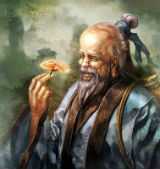 ✵Zhang Jiebin was a famous physician from the Ming Dynasty. He was especially versed in the Internal Classic. Zhang Jingyue was well-versed in history and classics and was familiar with the ancient Six Classics and various schools. He spent many years studying the ancient classics, from Huang Di and Qi Bo onward, and had a specific understanding of them. With 40 years of effort, he compiled the famous medical work Lei Jing (the Classified Canon, or the Systematic Compilation of the Inner Canon).
- Zhang Jiebin
-
Brief Introduction Chinese Name: 張介賓 (Zhāng Jièbīn) Aliases: 景嶽 (Jǐng yuè), 通壹子(Tongyi Zi) Style Name: 会卿 (Huì Qīng) English Name: Zhang Jiebin (family name first) or Jiebin Zhang (given name first) Hometown: HuiJi Dates: c. 1563-1640 CE Major Works: Lei Jing (the Classified Canon, or the Systematic Compilation of the Inner Canon), Lei Jing Fu Yi, Lei Jing Tu Yi, Jing Yue Quan Shu (Jing Yue's Complete Works), Zhi Yi Lu, etc. Representative Works: Lei Jing (the Classified Canon, or the Systematic Compilation of the Inner Canon), Lei Jing Fu Yi (Supplementary to the Classified Canon), Lei Jing Tu Yi (Illustrated Supplementary to the Classified Canon), Jing Yue Quan Shu (Jing Yue's Complete Works), etc. Biographical introduction and legendary stories
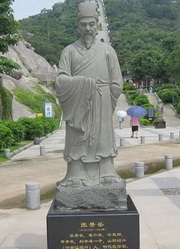
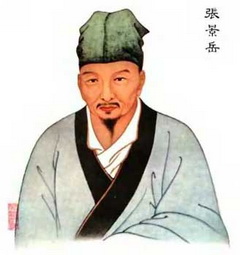
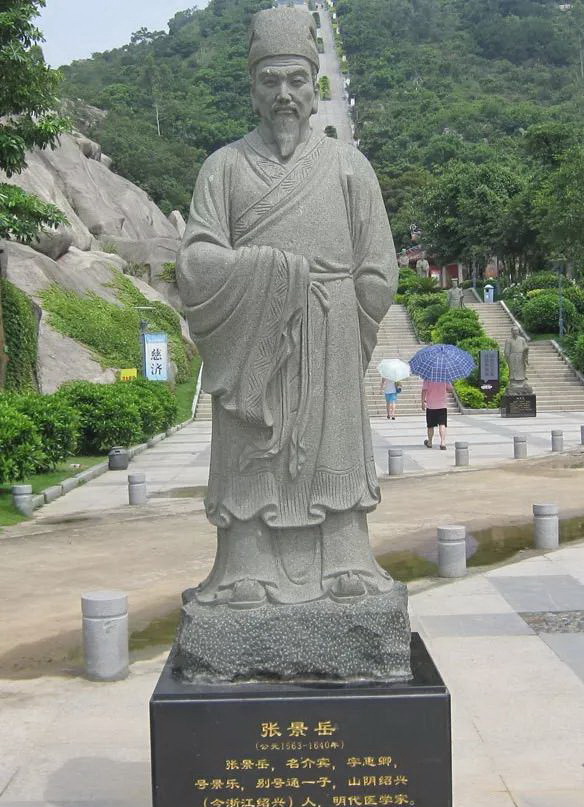
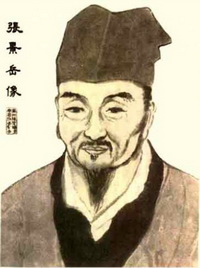 Zhang Jiebin (Zhang Jingyue, 1563–1640 CE), whose courtesy name was Hui Qing (Huì Qīng) and alias was Jingyue (Jǐngyuè), and whose pseudonym was Tongyi Zi, was a famous physician of the Ming Dynasty. He was especially versed in the Nei Jing(the Inner Cannon). His ancestors were relocated to Hui Ji (present-day Shaoxing) due to their military achievements. He was an intelligent child with exceptional aptitude, and his passion was reading. His father, Zhang Shoufeng (Zhāng Shòufēng), taught him ancient medical texts from an early age and introduced him as a disciple of the renowned herbalist Yu Mengshi at the age of fourteen. Within a few years, he mastered all his teacher’s skills. After completing his medical studies, Zhang Jingyue did not immediately begin clinical practice. As a generous and adventurous person who loved travel, he hoped to emulate his ancestors by serving in the military. Thus, he joined the army and traveled to regions including Yulin, Jieshi, Fengcheng, and Yajiang—his footsteps covering nearly half of China. Later, because his character and temperament were incompatible with secular political affairs, he achieved little in military service. Consequently, he returned to his hometown and devoted himself to medical research.
Major works and academic contributions:
Zhang Jingyue was well-versed in history and classical literature and thoroughly familiar with the ancient Six Classics and various philosophical and medical schools. He spent decades studying the ancient classics, beginning with the era of Huangdi and Qibo. After forty years of dedicated effort, he compiled the landmark medical work Lei Jing (Classified Canon, or Systematic Compilation of the Inner Canon), comprising 32 volumes organized into twelve categories: She Sheng, Yin Yang, Zang-Fu visceral Manifestation, Mai Se, Channel and Meridians, Root Causes and Symptoms, Scent and Taste, Treatment, Disease, Acupuncture, Yunqi Doctrine (the five evolutive phases and six climatic factors), and Hui Tong (Integration and Synthesis). Lei Jing stands as a masterpiece. According to historical records, "its compilation spanned over thirty years and underwent four major revisions before the final edition was completed." The book was first published in the fourth year of the Tianqi era (1624 CE; Tianqi was the reign title of Emperor Xi Zong of the Ming Dynasty, 1621–1627 CE). Zhang Jingyue studied and practiced the Nei Jing (The Inner Canon) for nearly thirty years. He regarded the Nei Jing (The Inner Canon) as the supreme authority in medicine and held that herbalists must master it. Yet he acknowledged that the Nei Jing (the Inner Canon) "is difficult to read and study due to its profundity and abstruseness" and therefore requires systematic explanation. Since the Tang Dynasty, numerous commentators had annotated the Nei Jing (the Inner Canon). Wang Bing, a prominent Tang-dynasty scholar, exerted wide influence by editing and annotating the Su Wen(the Plain Questions), but he provided no annotations or interpretations for the Ling Shu (the Miraculous Pivot). Subsequently, scholars from various schools produced diverse commentaries, offering more detailed explanations of previously underexplored topics. Since the Su Wen (The Plain Questions) and Ling Shu (The Miraculous Pivot) are closely interrelated and mutually illuminating, Zhang Jingyue sought greater coherence and accessibility: "I thoroughly searched both works, revised outdated editions," reclassified their contents, and "and integrated the two into a single unified text, naming it Lei Jing. The term Lei signifies ‘categorization’—using the Lingshu to elucidate the essential principles of the Suwen, and employing the Suwen to uncover the profound meanings of the Lingshu. Together, they form an internal-external complementarity, enabling thorough comprehension of their full significance." Lei Jing (Systematic Compilation of the Internal Classic) is divided into twelve thematic categories and numerous subsections. Each subsection is titled according to its subject matter and presents original passages from both the Suwen and Lingshu, followed by Zhang Jingyue’s detailed annotations and interpretations. He also critically evaluates the shortcomings of earlier commentaries—from Wang Bing onward—with clarity and rigor. His notes are arranged in logical sequence, facilitating easy reference and verification. His interpretations are incisive and authoritative. As an open-minded and erudite herbalist, Zhang Jingyue conducted an in-depth, meticulous study of the Nei Jing(the Inner Canon), drawing upon multiple scholarly traditions. Lei Jing synthesizes the essence and key insights of prior commentators while integrating Zhang’s own original perspectives. It offers theoretical breakthroughs and creative reinterpretations, accompanied by fresh, insightful annotations and explanations—making it an indispensable reference for studying the Nei Jing. He also employed diagrams and provided detailed expositions on topics such as Yin-Yang, the Five Phases, Yunqi, meridians, and acupuncture. He compiled the eleven-volume specialized work Lei Jing Tu Yi (Illustrated Explanations of the Classified Canon), containing his definitive treatise on the development and interpretation of the Nei Jing (the Inner Canon), as well as the four-volume Lei Jing Fu Yi (Supplementary Explanations of the Classified Canon). The two works provided supplementary annotations on topics not addressed or clarified in Lei Jing. In his later years, Zhang Jingyue integrated his extensive clinical experience, profound scholarly study, and theoretical insights to compile the 64-volume academic compendium Jing Yue Quan Shu (Jing Yue's Complete Works), which records medical theories, therapeutic prescriptions, and herbal knowledge. Huang Zongxi (1610-1695 CE) recounted a legendary account of him: "He alleviates patients’ suffering by contemplating the origins of pathogenic factors. His simple prescriptions—administered in large dosages—prove remarkably effective. People seeking treatment flock to his gate; even generals send gold to solicit his care." Zhang Jingyue was erudite across multiple disciplines, including medicine, divination, and astrology. While residing in Liaoyang Dao, he heard a horse driver singing loudly and remarked, "This is an inauspicious sound!" Later events unfolded precisely as he had foretold. At age fifty-eight, he returned to the Yue region and resided there for twenty years. On the day of his death, he painted a self-portrait and imparted final words of wisdom to his three sons. He passed away at the age of seventy-eight.
The four-volume work Lei Jing Fu Yi (Supplementary Explanations of the Classified Canon), published in the fourth year of the Tianqi era (1624 CE), serves as a supplement to Lei Jing. It elaborates on related research and articulates the author’s specific theoretical viewpoints. Volume One, titled Yi Yi, explores the theoretical interrelationships between medical doctrine and the Zhou Yi (I Ching) theory. Volume Two, titled Lv Yuan, examines ancient musical theory and its connections to medicine. Volume Three, titled Qiuzheng Lu, expounds the kidney-tonifying theory. Volume Four, titled Zhenjiu Fu, compiles acupuncture-related verses composed by earlier herbalists for clinical reference.
The eleven-volume work Lei Jing Tu Yi (Illustrated Explanations of the Classified Canon), also published in the fourth year of the Tianqi era (1624 CE), supplements Lei Jing with diagrams and visual exegesis. It offers in-depth, graphically supported explanations of thee Nei Jing (The Inner Canon), focusing primarily on Yunqi and acupuncture. It includes diagrammatic illustrations of Yunqi (the five elements' motion and six kinds of natural factors) dynamics, the meridians and Shu-acupoints, principal acupuncture and moxibustion points, and associated key concepts. The text is accompanied by abundant, meticulously rendered diagrams of meridians and acupuncture points. Drawing upon a wide corpus of classical literature, it provides numerous illustrations and visual interpretations. It remains an essential reference for studying Yunqi theory, acupuncture, and moxibustion.
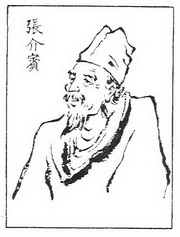 The book Jing Yue Quan Shu (Jing Yue's Complete Works) was completed by 1640 CE. It comprises twenty-four thematic categories and sixty-three volumes. Rich in content, it encompasses foundational theory, herbs, prepared prescriptions, and clinical disease management. It stands as a comprehensive, systematically organized clinical reference. Zhang Jingyue possessed broad learning, exceptional talent, and mastery of rhetorical expression.His writings are distinguished by their eloquence, multidimensional analysis, extensive citation of authoritative sources, and rigorous logical deduction and inference. These qualities explain why Jing Yue Quan Shu (Jing Yue's Complete Works) achieved wide circulation and became indispensable reading for generations of herbalists. For over two centuries thereafter, it remained a required text for practitioners and exerted profound influence. The work is organized into twenty-four categories across sixty-three volumes. Its principal contents are briefly outlined below: Volumes One through Three, under the title Chuan Zhong Lu, discuss Yin-Yang theory, the six climate factors, and offer critical commentary on earlier herbalists and sages. Volumes Four through Six, titled Mai Shen Zhang, select and synthesize refined, essential doctrines from diverse schools concerning syndrome differentiation and diagnosis. Volumes Seven and Eight, titled Shang Han Dian, address syndromes and treatment principles for seasonal exogenous diseases in general. Volumes Nine through Thirty-six, titled Za Zheng Mo, provide detailed discussions of internal disorders—including various wind syndromes, non-wind syndromes, syncope, wind affection, wind numbness (wandering arthritis), perspiration syndromes (sweating disorders), palpitations, wasting-thirst syndromes, stagnation syndromes, and more—totaling over seventy distinct conditions. Each entry presents classical definitions, analyzes syndromes and treatments, cites prior scholarship, and includes simple and alternative prescriptions as well as acupuncture and moxibustion protocols. Volumes Thirty-seven and Thirty-eight, titled Fu Ren Gui, cover gynecological topics such as menstruation, pulse diagnosis in women, pregnancy, childbirth, postpartum care, leucorrhea (leukorrhea), breast syndromes (breast disorders), and offspring, and so on. Volumes Thirty-nine and Forty, titled Xiao Er Ze, address pediatric subjects including neonatal care, infant feeding, infant convulsions, vomiting, diarrhea, night sweats, and febrile sweating in infants, and so on. The 41st through 44th volumes are titled Ma Zhen Quan and Dou Zhen Quan and discuss the pathological causes and treatment of measles and exanthema variolosum (variola, smallpox). The 45th and 46th volumes are titled Wai Ke Qian and cover topics such as syndrome differentiation and identification of external diseases, as well as their treatment and herbal prescriptions. The 47th and 48th volumes are titled Ben Cao Zheng and record over 300 kinds of herbs. It follows the categorical framework of Ben Cao Gang Mu and classifies herbs into 14 categories, providing introductions to their names, properties, tastes, yin-yang attributes, principal functions, mechanisms of action, application scope (indications), precautions, and cautions (contraindications). The 49th and 50th volumes, titled Xin Fang Ba Zhen, mainly contain a collection of effective new recipes and herbal prescriptions established by the author, totaling 186 new herbal prescriptions. The 51st through 59th volumes, titled Gu Fang Ba Zhen, mainly contain a collection of effective ancient recipes and herbal prescriptions, totaling 1,516 prescriptions. The 60th through 63rd volumes, titled Fu Ren Fang, Xiao Er Fang, Dou Zhen Fang Ji Wai Ke Fang, mainly contain a collection of effective recipes and herbal prescriptions for gynecology, pediatrics, exanthema variolosum (variola, smallpox), and external diseases. They compile essential discussions from earlier herbalists and integrate them with the author’s own insightful conclusions to form a comprehensive work.
Zhi Yi Lu is an 11-volume book published in 1688 CE. It is a late work by Zhang Jingyue that compiles 45 medical treatises. The treatises mainly analyze the strengths and weakness of earlier schools and herbalists. They offer balanced critiques of the bigoted views held by certain schools and herbalists during the Jin and Yuan dynasties, aiming to correct their errors. The articles focus on syndrome differentiation and the treatment principles of various diseases. They elaborate on the theory of warm tonification and provide further revisions and analyses of Zhang Jingyue's earlier, less mature viewpoints.
Zhi Yi Lu, a collection of 45 treatises by Zhang Jingyue in his later years, provides detailed analyses of the theories of various schools during the Jin and Yuan periods. It also offers amendments and supplements to the treatises he published earlier. Zhang Jingyue excelled at differentiating the eight principal syndromes and identifying the pathogenesis and root causes of disease. He advocated warm tonification and developed distinctive treatment methods for deficiency and asthenic conditions. He opposed the indiscriminate use of bitter and cold herbs to nourish Yin and corrected the errors of the cold theory. His theories on Yin-Yang and Life-Gate profoundly influenced the development of foundational principles in traditional Chinese medicine. Zhang Jingyue's academic achievements are undeniable, and he made significant contributions to the advancement of traditional Chinese medicine.
According to later authors, in the final years of his life, Zhang Jingyue recompiled the ancient work Shang Han Lun (Treatise on Febrile Diseases) with his profound insights. Unfortunately, this work was never published, and the manuscripts disappeared without a trace—a major loss for subsequent generations.
Zhang Jingyue corrected some errors of Zhu Danxi. Zhu Danxi lived during an era when the Ju Fang (Imperial Pharmacy) tradition was dominant. Physicians of that period frequently employed pungent, hot, and drying herbs, which could damage yin and lead to yin injury and depletion of body fluids. Zhu Danxi based his theory on the conclusion that "Yang is excess and Yin is deficient." During the Ming dynasty, the fire-heat theory of Liu Wansu (Liu Hejian) and Zhu Danxi prevailed. Many herbalists adhered regidly to a single theory and were conservative in prescribing; they overused cold and cooling herbs, thereby injuring the spleen and damaging the stomach. This became a widespread clinical malpractice. Through years of clinical practice, Zhang Jingyue gradually abandoned Zhu Danxi's theory and instead followed Xue Ji, the pioneer of the Warm-Recuperation School. Xue Ji served as Tai Yi Yuan Shi (Chief Imperial Physician) of the Ming dynasty and primarily treated members of the imperial households, whose diseases were often rooted in deficiency—hence his preference for tonifying therapies. Zhang Jingyue adopted Xue Ji's approach and developed his own theory of warm tonification. He formulated a theory distinct from Zhu Danxi's "Yang is excessive and Yin is deficient," proposing instead that "Yang is not excessive; essential Yin is deficient." He created numerous renowned herbal prescriptions for kidney tonification. Zhang Jingyue's theory, born out of the need to correct prevailing clinical imbalances, exerted profound influence on later generations. While he favored warm tonics in clinical applications, unscrupulous practitioners sometimes abused them to conceal their own shortcomings.
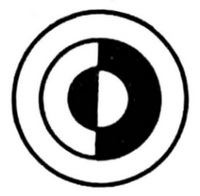 Zhang Jingyue's Medical Philosophy: Zhang Jingyue emphasized the study of ancient philosophy. He had an in-depth knowledge of the ancient works Nei Jing (The Inner Canon) and Zhou Yi (The Book of Changes, or I Ching). His purpose in studying philosophy was "to disclose the essential meanings of the I Ching for flexible applications in medical theories." In his works, he advised studying the Zhou Yi together with medicine. His main viewpoints on this subject can be summarized in six key points:
(1) The explanation is the integration, or unity, of the heaven-earth with the San Yuan Taiji Tu (the diagram of the universe in three circles). Zhang Jingyue recorded a graph titled San Yuan Taiji Tu (Diagram of the Universe in Three Circles) in his book Lei Jing Tu Yi. He also quoted a discussion about Yin and Yang from the article Nei Jing·Yin Yang Ying Xiang Da Lun (The Inner Canon·The Great Treatise on Yin Yang Classification of Natural Phenomena Chapter) as a supplemental note.
(2) The integration of Yin and Yang: Zhang Jingyue advocated the unification of Yin and Yang, emphasizing the guiding role of Yin-Yang theory in traditional Chinese medicine (TCM). His view of Yin-Yang integration originates from the Nei Jing (The Inner Canon), where he elucidates the relationship between Yin-Yang and medical theory.
(3) Respect for the primacy of Yang and the antagonism between healthy qi and pathogenic factors: Zhang Jingyue emphasized the primacy of Yang. His perspective on Yang’s fundamental importance derives from the Nei Jing·Sheng Qi Tong Tian Lun (the Inner Canon·The Vital Qi Access to the Heaven Chapter), combined with the balance of Yin and Yang.
(4) Integration of Yin-Yang and the Five Elements (Five Phases): The Yin-Yang theory originated in the pre-Qin period, as stated in the ancient text Dao De Jing (Tao Te Ching) by Lao-tzu, "All things carry Yin on their backs and embrace Yang." The Five Elements theory is a cornerstone of classical Chinese philosophy. Texts such as the Nei Jing (the Inner Canon) synthesize these two frameworks. Zhang Jingyue’s interpretation of relevant theory on Yin-Yang and the Five Elements constitutes the philosophical foundation of his warming-tonifying therapeutic approach.
(5) The Will and Intent Emerge from Form and Substance: Regarding relationships, Zhang Jingyue wrote in Lei Jing Tu Yi·Yin Yang Ti Xiang: "The mosquito’s mouth is minimal; Qi and blood can pass through. The louse’s eye is very small; it can recognize things. From this, one can deduce that, whether it is the widest and most extreme or the tiniest and most essential, it is accumulated with Qi and generated by chance. The largest cannot be measured, and the tiniest cannot be detected. How can they simply be described as manufactured?"
(6) The Balance Between Movement and Quiet: Zhang Jingyue attached great importance to the relationship between movement and quiet in his practice.
 Zhang Jingyue’s Warming Therapy: Zhang Jingyue is the main representative of the Warming Tonification School. His warm supplementation theory was influenced by the ancient physicians Xue Lizhai, Li Dongyuan, and Xu Shuwei. Frequent plagues occurred during the Ming dynasty. Herbal prescriptions with cold and bitter properties were mostly used for residual pathogens not cleared after treatment and for prolonged low fever due to Yin deficiency. Thus, the theories "Six Qi all follow the Transformation of Fire" by Liu Hejian and "Yang is usually redundant, while Yin is ever deficient" by Zhu Danxi became popular. Zhang Jingyue believed that, to correct the errors of popular theories, one must clearly discuss and differentiate the theories of various schools; then absorb their useful aspects while avoiding their mistakes. He pointed out that Liu Hejian's theory "Six Qi all follow the transformation of fire" contradicts the concept of "imbalance among the six climatic factors." In diagnosis, conclusions should be based on the patient's actual condition and differentiated according to causes such as cold, heat, deficiency, and excess, and so on. One should not attribute all pathogenic factors solely to excess fire. He also criticized Zhu Danxi's theory "Yang is usually redundant, while yin is ever deficient" as one-sided, arguing that it overlooked the utmost dynamism and mutual transformation of Yin and Yang—grasping only one aspect while failing to see their integral unity. He proposed that, in clinical practice, one should avoid overusing many bitter-cold herbs that damage the patient's Yang Qi. Zhang Jingyue prioritizing the primordial Qi and employing warming tonics. His principal theory of warm supplementation is elaborated in the following three key points:
(1) Correcting Zhu Danxi's theory that "Yang is usually redundant, while yin is ever deficient" : Zhang Jingyue proposed the counter-theory that "Yang is ever deficient, while yin is basically not redundant," which he expounded upon in his writings.
(2) The ministerial fire must not be regarded as a thief. Li Dongyuan proposed that "the ministerial fire is the thief of the primordial Qi" and that "fire and the primordial Qi cannot coexist." Zhang Jingyue, however, held a different view grounded in the ancient text Su Wen·Tian Yuan Ji Da Lun Pian. He stated that the assertions "the ministerial fire is not a thief" and "fire and primordial Qi cannot coexist" are erroneous. Different from the explanation from Li Dongyuan, Zhang Jingyue’s “ministerial fire,” by contrast, denotes a physiological, vital function—fundamentally distinct in conception.
(3) The Life Gate Theory: Zhang Jingyue's Life Gate Theory integrates Yin-Yang theory, the Five Elements (the Five Phases), and the theories of Essence (Jing) and Qi. The concept of the Life Gate originally appeared in the ancient texts Nei Jing·Ling Shu and Nan Jing. By the Ming dynasty, discourses on the Life Gate had further evolved. Zhang Jingyue's Life Gate Theory was influenced by Zhao Xianke. He systematically presented his Life Gate Theory in Lei Jing Fu Yi and enriched it by integrating Yin-Yang theory, thereby advancing the classical doctrine.
Zhang Jingyue's Theory of Syndrome Differentiation and Treatment:
(1) Clear Syndrome Differentiation, Essential and Professional in Treatment: Zhang Jingyue proposed that the pathogenic factors of diseases are complicated and varied, as are the treatment methods. The key is to understand the essence of the disease, use prescriptions reasonably, and treat the root cause; only then eliminating the symptoms is relatively easy to treat. He also emphasized that the herbs must be essential and targeted—the number of herbs should not be excessive, but each must be selected according to its standard and dosage; otherwise, the desired therapeutic effects cannot be achieved.
(2) The Importance of Physical Treatment: Zhang Jingyue placed great emphasis on physical treatment.
(3) Strengthening the Healthy Qi and Nourishing Yin: Zhang Jingyue emphasized strengthening the healthy Qi. Although he was a representative figure of the Warm-Supplement School, he also attached paramount importance to nourishing Yin.
(4) Detailed Differentiation of Deficiency and Cold Syndromes, Proficient in Warm-Supplement Therapy: Zhang Jingyue critically reflected on others' errors and paid close attention to differentiating deficiency and cold syndromes. He stated, "cold syndromes often present with subtle symptoms, which physicians may easily overlook." Therefore, symptoms must be identified meticulously. He criticized the prevailing notion that "no supplementing method applies to cold-induced diseases," calling it highly misleading. In his commentary on the Shang Han Lun, he demonstrated that both supplementing and purging methods were employed in treating cold-induced diseases. He further discussed the harm caused by the theory that "no supplementing method applies to cold-induced diseases." He also explained the rationale for using supplementing methods in cold-induced disease and insisted on syndrome-differentiation-based treatment principles. Moreover, he refuted popular misconceptions such as "no relieving method applies to dysentery" and "blood signs never indicate cold." He maintained that disease treatment must be grounded in the actual clinical condition—not rigid adherence to outdated rules. He strongly endorsed Wang Haogu’s theory that "all six climatic pathogens can cause bleeding, not only fire," thereby correcting the prevailing hematemesis treatment approach that "uniformly employs nourishing yin to clear fire," and clarified distinct therapeutic principles for different syndromes. Zhang Jingyue excelled at detailed differentiation of deficiency and cold syndromes and was highly skilled in warm-supplement therapy because of his profound mastery of syndrome differentiation and the interrelationships among yin-yang, exterior-interior, cold-heat, and deficiency-excess. His approach was comprehensive and unbiased—not rooted in doctrinal partiality.
(5) Applying Supplement to eliminate pathogenic warm or cool according to the syndrome identification. Zhang Jingyue held that when applying the supplement to eliminate pathogenic warm or cool, practitioners must base their decisions on meticulous syndrome differentiation—not personal bias. Earlier physicians asserted that "exterior-releasing therapies must involve warming herbs, and interior-purging therapies must involve cooling herbs." Zhang Jingyue, however, regarded this view as harmful and advocated thorough analysis. He emphasized the condition for the application of supplementing therapies and warming therapies. For syndromes of excessive fire and heat, he opposed the erroneous practice of "mistaking deficiency and cold for excess and rashly administering warming herbs."
Zhang Jingyue's academic achievements include classifying the Nei Jing (The Inner Canon) and systematizing the theory of traditional Chinese medicine (TCM). The ancient text Nei Jing (The Inner Canon) is one of the four fundamental classics of TCM. Zhang Jingyue’s in-depth study of the the Inner Canon constituted a major contribution to the development of TCM. His work, the Lei Jing, resulted from thirty years of dedicated study of the Nei Jing. He classified both the Su Wen and Ling Shu into twelve categories. The content of his classification aligns closely with—and remains consistent with—the foundational theories of modern TCM, including yin-yang, the five elements (the five phases), Zang-Fu viscera and meridians, pathological reasons (pathogenic factors) and pathogenesis, the four diagnostic methods, and the eight principles (exterior-interior, cold-heat, deficiency-excess, yin-yang), as well as treatment methods and principles, and so on. This demonstrates Zhang Jingyue’s profound mastery of the Nei Jing (the Inner Canon).
Zhang Jingyue's academic achievements also include exploration and in-depth study of the Shang Han Lun. He conducted an in-depth study of this classical work. Related discussions are compiled in his Jing Yue Quan Shu, specially in the sections "Shang Han Dian", which together comprise two volumes. The first volume contains 32 essays interpreting the Nei Jing (The Inner Canon); it clarifies the meaning of "Shang Han" and provides a systematic exposition of the theoretical framework of the Shang Han Lun, focusing on general pathogenic factors, syndrome differentiation, and treatment strategies. The second volume contains 26 essays analyzing principal syndromes, symptoms, and their corresponding treatments. Zhang Jingyue sought to elucidate subtle, often overlooked meanings within the Shang Han Lun. He further expounded Zhang Zhongjing’s profound insights across three dimensions: pathological reasons (pathogenic mechanisms), disease progression and transmission, and the eight principles. His methodology in studying the Shang Han Lun was exceptionally rare—indeed, unparalleled in his time.
Zhang Jingyue's academic achievements also encompass contributions to the foundational theory of TCM. Regarding TCM’s theoretical foundations, he held that medical theory and the Zhou Yi (the I Ching, or Yijing) share a common origin. By integrating concepts from the Zhou Yi (the I Ching, or Yijing), he enriched the application of yin-yang theory in TCM—a contribution that significantly advanced the development of Yixue (Yi-ology, the scholarly study of the Yijing).
Zhang Jingyue's academic achievements further include contributions to TCM diagnostics. He emphasized the centrality of diagnostic inquiry in clinical practice and offered distinctive perspectives on inspection, inquiry, and pulse-taking. Related essays appear in the Lei Jing under the section "Mai Se Lei", and additional discussions titled "Chuan Zhong Lu", "Ming Li", and "Yin Yang" are collected in his Jing Yue Quan Shu.
Zhang Jingyue's academic achievements also extend to prescriptions and materia medica. He excelled in supplementing both yang and yin and held specific, well-reasoned views on prescription formulation. His pharmacological treatise "Ben Cao Zheng", included in the Jing Yue Quan Shu, represents his authoritative work on herbalism. His interpretations and clinical applications of classical prescriptions—as well as his newly formulated prescriptions—are documented in the volumes "Gu Fang Ba Zhen" and "Xin Fang Ba Zhen". He established clear principles for herb selection and dosage, and developed a comprehensive theory of physical (bodily) regulation. Notably, his Ben Cao Zheng records Chuan Bei Mu (Fritillaria roylei Hooker) earlier than any other extant herbal compendium.
 Zhang Jingyue's Principle of "Refined and Simple" Medication in Clinical Practice: Zhang Jingyue proposed the principle of "refined and professional" in his clinical use of herbal medicine. He never passed off fish eyes as pearls (never substituted inferior substitutes for genuine herbs)—a stance vividly and incisively reflected throughout his writings. First, he emphasized that herbal potency must be targeted and precise. Second, he advocated that prescriptions be formulated according to refined, coherent principles. Haphazard combinations involving excessive numbers of herbs inevitably dilute therapeutic focus and undermine efficacy. The 186 prescriptions documented in his works consistently embody these principles in practice: they exhibit refined potency and focused action; they are simple, practical, and clinically effective.
Use ancient prescriptions flexibly. Zhang Jingyue created many new prescriptions based on classical ones, applying them with flexibility and supplementation through innovative methods. His skills in transforming ancient prescriptions were unique, grounded in his original theoretical insights. Drawing on classical herbal prescriptions,he developed numerous new formulas that yielded remarkable clinical outcomes, embodying the principle of “intentions more fully and penetratingly realized” found in those ancient prescriptions. Zhang Jingyue modified classical herbal prescriptions by selectively adding or omitting herbs, thereby achieving optimal therapeutic effects and demonstrating exceptional clinical acumen. His transformations and applications of other classical herbal prescriptions attest both to his scholarly accomplishments and to his practical expertise.
Zhang Jingyue's academic achievement and contributions to the internal medicine. Zhang Jingyue made significant contributions to syndrome differentiation and treatment in internal medicine. He held distinctive views on various internal syndromes and offered novel interpretations and innovations regarding the theories and therapeutic approaches of earlier schools and physicians. His key innovations are summarized in six points:(1) He established the novel syndrome "Fei Feng" to rectify the conceptual confusion surrounding "Zhong Feng," to distinguish conditions with or without pathogenic factors, and to formulate relevant treatment principles. (2) He classified vertigo and dizziness into “upper vertigo” and “lower dizziness,” proposing a relevant pathogenic theory on vertigo.(3) He differentiated panting (dyspnea) into deficiency-type and excess-type patterns and identified cough as either an endogenous or exogenous syndrome.(4) He categorized insomnia according to the presence or absence of pathogenic factors and differentiated distension and fullness syndromes based on deficiency or excess.(5) He classified blood-related syndromes into “Excessive Fire” and “Qi Injury,” establishing treatment strategies tailored to the distinct pathomechanisms involving Fire, Qi, and Blood. (6) He advocated prompt diuresis for diarrhea and cautious purgation for constipation; he also attributed dysentery not solely to damp-heat pathogens.
 Attention to Primordial Qi and Disease Prevention: The ancient text Su Wen·Shang Gu Tian Zhen Lun states that a person could "live beyond one hundred years," indicating that ancient sages recognized the natural human lifespan as exceeding 100 years. Zhang Jingyue endorsed this view in his treatise Zhong Xing Lun (The Treatise on Reviving at Middle Age), asserting that the natural human lifespan should exceed 100 years. Although individual lifespans vary due to multiple factors—including constitutional inheritance—most people are constitutionally capable of living 90 to 100 years. Yet, many individuals experience declining physical agility after age 50, largely due to inadequate health maintenance during the postnatal period. Zhang Jingyue shared this perspective and, in Zhong Xing Lun, emphasized that—barring natural or human-caused disasters—this theory accounts not only for normal physiological and social needs but also underscores self-regulation of such needs. Compared with the historical suppression of natural human desires, this represents substantial progress in both theoretical understanding and practical application.
Zhang Jingyue also made original contributions to theories of health preservation, senile diseases (geriatric diseases), and pediatric diseases. His influence extended to gynecology, surgery, otolaryngology (ear, nose, and throat,the ENT department), ophthalmology, psychics, psychosomatic medicine, eugenics, and acupuncture-moxibustion in Traditional Chinese Medicine (TCM). His era marked a flourishing period for TCM scholarship and the proliferation of medical schools. His theories have exerted profound and lasting influence since their inception. Zhang Jingyue was a renowned physician, herbalist, and medical scientist of the Ming dynasty.
References:
-
- 1. Zhang Jiebin: Biographical introduction and legendary stories, major works and academic contributions
