
Tao Hongjing: Biographical introduction and legendary stories, major works and academic contributions
-
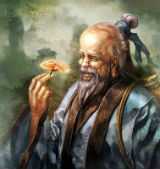 ✵Tao Hongjing, a famous Taoist priest who specialized in the study of herbs and was also known as Tao Tongming (456–536 CE), had the courtesy name Tongming and was a native of Danyang Moling. He was also a renowned Taoist priest during the Southern and Northern Dynasties period, who compiled Ben Cao Jing Ji Zhu (Commentary on Sheng Nong's Herbal), 7 volumes, also known as Commentary on Sheng Nong's Herbal, one of the most valuable texts on Chinese materia medica in China history. It describes 730 varieties of medicinal substances, including vegetables (plants), animal and mineral medicine. Tao was also the author of Yang Xing Yan Ming Lu (Recordings of Nature-cultivation and Life Preservation), 2 volumes.
- Tao Hongjing
-
Brief Introduction Chinese Name: 陶弘景 (Táo Hóngjǐng) Alias: 華陽隱居 (Huáyáng Yǐnjū) Style Name: 通明 (Tōngmíng) English Name: Tao Hongjing (family name first) or Hongjing Tao (given name first) Hometown: 丹陽秣陵 (Moling, Danyang Jun) Dates: c. 456–536 CE Major Works: Tao Yin Ju Ben Cao (Herb Canon of Tao Hermit),Yang Xing Yan Ming Lu (Recordings of Nature-cultivation and Life Preservation),Zhou Hou Bai Yi Fang,Ben Cao Jing Ji Zhu (the Commentary on Shengnong's Herbal),Yao Zong Jue,Dao Yin Yang Sheng Tu, etc. Representative Works: Yang Xing Yan Ming Lu (Recordings of Nature-cultivation and Life Preservation),Ben Cao Jing Ji Zhu (the Commentary on Sheng Nong's Herbal), etc. Biographical introduction and legendary stories
 Tao Hongjing (456–536 CE), also known as Tao Tongming, was a renowned Taoist who specialized in the study of herbs. His courtesy name was Tongming, his alias was Huáyáng Yǐnjū (the Hermit of Huayang), and his posthumous title was Zhēn Bái Xiān Shēng. He was native to Danyang Moling. He lived through three dynasties of the Southern Dynasties: the Song Dynasty (420–479 CE), the Qi Dynasty (479–502 CE), and the Liang Dynasty (502–557 CE). He was a naturalist and made significant contributions to herbalism during that period. He was also a renowned Taoist priest during the Southern and Northern Dynasties. He compiled the Ben Cao Jing Ji Zhu (the Commentary on Shengnong's Herbal), 7 volumes, one of the most valuable books on Chinese materia medica in Chinese history. It describes 730 varieties of medical substances, including vegetables (plants), animals, and mineral herbs. Tao was also the author of the two-volume work Yang Xing Yan Ming Lu (Recordings of Nature-cultivation and Life Preservation).
Historical records state that Tao Hongjing had unusual traists since childhood. He showed an interest in books at the age of four or five, "using a reed stick as a pen, learning characters by writing them in the ashes." He started reading the Confucian classics at the age of nine, including the Li Ji (the Book of Rites), Shang Shu (the Book of History, or the Book of Documents), Zhou Yi (Yi Jing, or I Ching), Chun Qiu (the Spring and Autumn Annals), Xiao Jing (the Book of Filial Piety), Mao Shi (Annotations of the Book of Songs by Mao Heng and Mao Chang), Lun Yu (the Analects of Confucius), among others. He was well-versed in them. At ten years old, he received a book named Shen Xian Zhuan (The Immortals' Biographies, by Ge Hong), and he "read and studied it day and night, thus has the will of life preservation." By the time he was an adult, he had developed "a graceful elegance and a refined appearance with clear, bright eyebrows and big eyes." He had "already read over ten thousand volumes of books and felt deeply ashamed if he did not know something." At the age of fifteen, he wrote a book known as Xun Shan Zhi (Records of Seeking the Mountains), expressing his strong admiration for the hermitic life. By the time he was seventeen, he was widely known for his talent and learning. Tao Hongjing, Jiang Xiao (Jiāng Xiào), Chu Xuan (Chǔ Xuàn), Liu Yu (Liú Yǔ) were collectively known as the "Shengming Siyou", or the Four Friends of the Shengming era. "Shengming" was the reign title of Liu Zhun, Emperor Shun Di of the Song Dynasty (477–479 CE).Major works and academic contributions
According to ancient literature, Tao Hongjing received the book Shen Xian Zhuan (The Immortals' Biographies), written by Ge Hong, at the age of ten. At the age of fifteen, he wrote the book Xun Shan Zhi (Records of Seeking the Mountains), expressing admiration for the hermitic life. At the age of thirty, he took Sun Youyue (Sūn Yóuyuè) as his teacher and learned the method of Qing Jing. He began living in solitude on Mount Juqu (present-day Mount Maoshan) in 492 CE and was known as the Huayang Hermit. He constructed the Huayang Palace with his disciples until his death. Tao Hongjing was excellent in astronomy, calendrical calculation, herbs, alchemy, classics, geography, natural science, literature, and arts. He compiled over 80 books; all surviving texts became important in Taoism and in the history of Chinese science and technology. He lived on Mount Mao for 45 years, had many disciples, and passed away at the age of 81. His posthumous title is Zhen Bai.
 In addition to his famous herbal books, Tao Hongjing wrote several others, including Xiao Yan Fang (Effective Recipes), five volumes; Zhou Hou Bai Yi Fang, three volumes; Tao Yin Ju Ben Cao (Herb Canon of the Tao Hermit); Yao Zong Jue; Dao Yin Yang Sheng Tu; and more. He also compiled many books about Taoism.
Tao Hongjing's book Yang Xing Yan Ming Lu (Recordings of Nature-cultivation and Life Preservation) summarized the Taoist health preservation science, including spirit cultivation, physical conditioning, Qi-promoting methods, regulation of sexual activity, and more. The book is divided into two volumes comprising six sections, including “Teaching and Instructions” and “Dietary Guidelines.” The book systematically organizes health preservation methods from the pre-Qin era through the Wei and Jin dynasties. These methods include qigong exercises, breathing techniques, massage, and regulation of sexual activity. The book advocates achieving longevity through dietary moderation, regulating daily routines, and cultivating the body and mind.
The book Ben Cao Jing Ji Zhu (Commentary on Shengnong's Herbal) introduced a new classification system for herbal medicine based on different species: stones, herbs and woods, insects, animals, fruits, vegetables, kernels (grains), and seeds. It recorded about 730 kinds of herbs. This book enriched the system of Taoism medicine; it discusses the relationship between efficacy and factors such as the origin of medicinal substances, the timing of collection, processing methods, dosage, administration methods, and the authenticity of medicines.
Following Ge Hong's teachings, Tao Hongjing developed the Jin Dan School of Taoism and discovered the flame test identification method for saltpeter (KNO3).
 According to the records, the herbalist Tao Hongjing compiled many books. The Song Dynasty text Hua Yang Yin Ju Nei Zhuan (The Inner Biography of the Hua Yang Hermit) by Jia Song (Jià Sōng) records that Tao Hongjing compiled 32 works totaling 233 volumes. His representative books on nature-cultivation are Yang Xing Yan Ming Lu (Recordings of Nature-cultivation and Life Preservation) and Yang Sheng Jing (Classical Books for Health Maintenance). On herbalism, in addition to his book Ben Cao Jing Ji Zhu (Commentary on Sheng Nong's Herbal), he compiled Yao Zong Jue (General Knack of Herbs), etc.
Regarding physical conditioning, herbalist Tao suggested that the basic principle is that "eating habits should observe limits on time and quantity." He proposed that "the harm caused by eating may be greater than sexual desire and passion. Sensual passions and desire can be suppressed over years, but one cannot stop eating food for even one day. When food brings great benefit, it also brings much trouble."
References:
-
- 1. Tao Hongjing: Biographical introduction and legendary stories, major works and academic contributions
