
Yu Jinghe: Biographical Introduction and Historical Accounts, Major Works and Academic Contributions
-
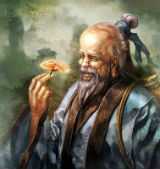 ✵Yu Jinghe: A renowned herbalist of the Menghe School during the late Qing Dynasty. He was humble and upheld noble medical ethics, possessed exceptional clinical skill, and held profound expertise in cold-induced diseases. He authored several works, including Yu Zhu Shang Han Lun Yi (Supplemental Annotations on the Treatise on Cold-Induced Diseases by Yu) and Shang Han Liu Jing Bing Jie (Explanation of Cold-Induced Diseases and the Syndromes of the Six Channels).
- Yu Jinghe
-
Brief Introduction Chinese Name: 余景和 (Yú Jǐnghé) Alias: 少愚 (Shào Yú) Style Name: 聽鴻 (Tīng Hóng) English Name: Yu Jinghe (family name first) or Jinghe Yu (given name first) Hometown: Jingxi, Yixing, Jiangsu Dates: c. 1847–1907 CE Major Works: Yu Zhu Shang Han Lun Yi (Supplemental Annotations on the Treatise on Cold-Induced Diseases by Yu), Shang Han Liu Jing Bing Jie (Explanation of Cold-Induced Diseases and the Syndromes of the Six Channels), Shang Han Qi Meng Ji Gao (Collective Drafts on the Enlightenment of Cold-Induced Diseases), Yu Ting Hong Yi An (Medical Cases of Yu Ting Hong) Representative Works: Yu Zhu Shang Han Lun Yi, Shang Han Liu Jing Bing Jie. Biographical Introduction and Historical Accounts
 Yu Jinghe (style name: Tīng Hóng), was born in Yixing, Jiangsu, during the Qing Dynasty. Born in the twenty-seventh year of the Daoguang era (1847 CE), he died in the thirty-third year of the Guangxu era (1907 CE) at the age of sixty. He was a renowned herbalist of the Menghe School during the late Qing Dynasty. He was humble, upheld noble medical ethics, and possessed exceptional clinical skill and profound knowledge of cold-induced diseases. His father, Yu Luqing (Yú Lúqīng), was a distinguished local scholar. Most of his family perished during the wars of the tenth year of the Xianfeng era (1860 CE). Yu Jinghe was only nine years old when he lost his father. His mother, Lady Miao (Miào Shì), was skilled in poetry and etiquette. Thanks to her instruction, Yu Jinghe later developed strong literary and scholarly abilities. At age thirteen, he became an apprentice at the Wujin Menghe herbal shop. During this period, he studied diligently and self-motivatedly, shaped by the hardships of his childhood. His apprenticeship immersed him in herbal medicine, and he also received instruction from his elder brother. He devoted himself single-mindedly to studying Yi Zong Jin Jian and other classical texts, persisting year after year. Once, the shopkeeper fell critically ill with refusing Yang syndrome (a condition of extreme Yin excess repelling Yang), and treatments by other herbalists proved ineffective. Yu Jinghe administered Fu Gui (a warming, tonifying formula), and the shopkeeper recovered. By age twenty, he had thoroughly memorized foundational classics including the Shang Han Lun (Treatise on Cold-Induced Diseases), Jin Kui Yao Lüe (Synopsis of the Golden Chamber), Nei Jing (The Inner Canon), and Nan Jing (Classic of Difficult Issues), among others. Yet he felt ashamed to lack formal mentorship from a master herbalist. Fortunately, Fei Lanquan (Fèi Lánquán), a renowned Menghe School herbalist, accepted him as a disciple. Thereafter, he served as a fellow at a medicine-and-tea shop for over a decade. Though not yet officially practicing, he occasionally treated patients. In 1882, Yu Jinghe moved to Changshu at the invitation of friends. There, he began formal medical practice and gained renown for successfully treating severe and critical illnesses. He consulted patients from morning until night, attending to both young and old. So tireless was his service that the soles of his shoes wore through. His medical proficiency was so esteemed that Wang Lianshi (Wáng Liánshí), a prominent late-Qing herbalist, remarked: "Among those who specialize in cold-induced diseases, none surpass him today." Born into solitude and having endured worldly hardship, Yu Jinghe embodied noble medical ethics. Herbalist Sun Sigong (Sūn Sīgōng) praised him: "He is plain and gentle; whether gentlemen or common folk from the countryside seeking treatment, he examines them carefully and without discrimination. Free of flattery or arrogance, he adheres to no fashionable or exaggerated customs."
Major Works and Academic Contributions
Yu Jinghe’s extant works include Yu Zhu Shang Han Lun Yi (Supplemental Annotations on the Treatise on Cold-Induced Diseases by Yu) a four-volume treatise and one of his most influential and representative contributions. Two original manuscripts—Shang Han Liu Jing Bing Jie (Explanation of Cold-Induced Diseases and the Syndromes of the Six Channels) and Shang Han Qi Meng Ji Gao (Collective Drafts on the Enlightenment of Cold-Induced Diseases)—have survived to the present day.
The four-volume Yu Zhu Shang Han Lun Yi (Supplemental Annotations on the Treatise on Cold-Induced Diseases by Yu) was compiled by Ke Qin and annotated by Yu Jinghe. It is one of Yu Jinghe’s most notable works and was published in 1893. Yu believed that Ke Qin’s works were “simply organized by arrangement and lucid in exposition,” so he appended a copy of Shang Han Lun Yi (The Supplementary Treatise on Cold-Induced Diseases), added annotations, and compiled this book. According to Yu Jinghe, there are minor discrepancies between the supplemented passages—reconstructed from lost text—and Ke Qin’s original.
Shang Han Liu Jing Bing Jie (Explanation of Cold-Induced Diseases and the Syndromes of the Six Channels), edited by Yu Jinghe, was completed in the seventeenth year of the Guangxu era (1891 CE). In the sixteenth year of Guangxu (1890 CE), Yu obtained a copy of Shang Han Lun Yi (The Supplementary Treatise on Cold-Induced Diseases) and, drawing upon his daily study experience, composed annotations titled Yu Zhu Shang Han Lun Yi (Supplemental Annotations on the Treatise on Cold-Induced Diseases by Yu). Shang Han Liu Jing Bing Jie forms part of Yu Jinghe’s systematic exposition of the six-channel syndromes in cold-induced diseases.
Shang Han Qi Meng Ji Gao (Collective Drafts on the Enlightenment of Cold-Induced Diseases) is a classical Chinese medical text originally compiled by Ke Qin and later annotated by Yu Jinghe. The seven-volume work was completed by Ke Qin in the eighth year of the Kangxi reign (1669 CE); Yu Jinghe’s annotations were added during the Guangxu period (1875–1908 CE). Volumes 1–6 address, in sequence, diseases of the Taiyang, Yangming, Shaoyang, Taiyin, Shaoyin, and Jueyin channels. Volume 7 discusses principles and methods for prescription formulation. Yu’s commentary emphasizes that the Four Diagnostic Methods must never be neglected. These include observation of emotional states (e.g., joy and distress), assessment of sleep disturbances (e.g., insomnia despite drowsiness), and evaluation of appetite anomalies (e.g., anorexia despite hunger). Such signs must be carefully observed in clinical practice. The yin-yang balance, deficiency-excess status, and authenticity-falsity of cold-induced disease patterns must all be clearly distinguished and differentiated without confusion. Prescription formulation based on syndrome differentiation must follow established principles—but also remain adaptable and responsive to individual clinical conditions.
References:
-
- 1.Yu Jinghe: Biographical Introduction and Historical Accounts, Major Works and Academic Contributions
