
Lǚ Zhenming: Biographical Introduction and Historical Accounts, Major Works and Academic Contributions
-
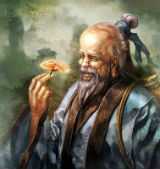 ✵Lǚ Zhenming was a Qing-dynasty herbalist and scion of a multi-generational Confucian scholarly family. He passed the imperial civil service examinations and attained the rank of Jǔ Rén (the second-degree degree conferred in the provincial examination). His clinical diagnoses and treatments were renowned for their remarkable efficacy. For over two decades, he devoted himself single-mindedly to studying Zhang Zhongjing’s works; his monograph, Shang Han Xun Yuan (Seeking the Primordial Source of the Treatise on Cold-induced Diseases) has been acclaimed since the Daoguang period (1821–1850) as the foremost scholarly study of the Shang Han Lun (Treatise on Cold-induced Diseases).
- Lǚ Zhenming
-
Brief Introduction Chinese Name: 呂震名 (Lǚ Zhènmíng) Alias: 搽村 (Chá Cūn) Style Name: 建勛 (Jiàn Xūn) English Name: Lǚ Zhenming (family name first) or Zhenming Lǚ (given name first) Hometown: Anhui Province (ancestral) / Qiantang (natal) Dates: c. 1797–1852 CE Major Works: Shang Han Xun Yuan (Seeking the Primordial Source of the Treatise on Cold-induced Diseases), Nei Jing Yao Lun (Essential Discourses on the Inner Canon). Representative Works: Shang Han Xun Yuan, Nei Jing Yao Lun. Biographical Introduction and Historical Accounts
 Lü Zhenming, styled Jian Xun and self-titled Cha Cun, traced his ancestral roots to Anhui Province; his forebears migrated to Qiantang, where he was born and raised. The official Qing historical compendium Qing Shi Gao (Draft History of the Qing Dynasty) records his name as 呂震 (Lü Zhen), identifying him as a Qing-dynasty herbalist and descendant of a long-established Confucian scholarly lineage. In the fifth year of the Daoguang reign (1825 CE), he passed the provincial civil service examination and attained the Jǔ Rén (the second-degree degree conferred in the provincial examination). He was subsequently appointed Zhou Pan—a clerical assistant official—in Jingmen Prefecture, Hubei Province. From the twelfth year of Daoguang (1832 CE) onward, he resided permanently in Qiantang. An avid reader, he held classical medical texts in particular esteem. In clinical practice, he exercised meticulous care in inspection and pulse diagnosis; every prescription was drafted, rigorously reviewed across multiple rounds of self-critique, and only then finalized—accounting for the extraordinary efficacy of his diagnoses and treatments. After more than twenty years of dedicated study of Zhang Zhongjing’s writings, he asserted that the Shang Han Lun is not merely a treatise on cold-induced disorders but, in essence, a systematic elaboration and practical extension of the Nei Jing (The Inner Canon)—transcending narrow disease classification to embody universal principles of humane therapeutics.
According to a biographical account composed by Pan Zunqi (Pān Zūnqí), Lü Zhenming’s longtime friend and fellow scholar, the memoir concisely outlines his life and accomplishments. It states: Lü Zhenming was born at the hour of Wei (1–3 p.m.) on the nineteenth day of the seventh lunar month in the second year of the Jiaqing reign (1797 CE), and died at noon on the third day of the fifth lunar month in the second year of the Xianfeng reign (1852 CE), having lived fifty-six years. He passed the provincial examination and attained the Jǔ Rén degree in the Yiyou year of Daoguang (1825 CE). He served as Tongzhi (a local administrative officer) in Jingmen Prefecture, Hubei. Lü Zhenming had one son, two daughters, and two granddaughters. His grandfather’s posthumous name was Sì Lín, styled Lán Tián; known for generosity and charitable giving, he sustained villagers through benevolence and material support. His father’s posthumous name was Wén Yàn, styled Gēng Yáng; inheriting his father’s ethos, he launched his career with frugality and prudence. Lü Zhenming displayed exceptional intelligence in childhood and grew into a forthright, magnanimous adult. He passed the triennial provincial examination to attain the Jǔ Rén degree. Throughout his life, he repeatedly offered remonstrances to authorities and maintained a lifelong passion for reading medical literature. When patients sought consultation, he asked incisive, focused questions—never uttering irrelevant words. Every prescription was drafted first, then subjected to several rounds of careful review before finalization; he further instructed patients earnestly and exhaustively on herb compatibility, contraindications, and dietary precautions—never omitting a single essential point. Profoundly versed in the Nei Jing’s theories of the Five Phases and Six Qi (the theory of five elements' motion and six kinds of climatic factors), thoroughly familiar with the Eight Extraordinary Meridians, and widely read across hundreds of medical schools, he regarded the Zhang Zhongjing school as the most authoritative and classical tradition in Chinese medicine. Lü Zhenming once declared: “Zhang Zhongjing’s Shang Han Lun rests upon the foundation of humane principle (ren dao); it conforms to the cosmic order (tian dao),, enabling learners to translate theory into effective clinical practice—not merely establishing doctrines and methods for cold-induced diseases alone. If one can differentiate syndromes according to the Six Channels, one will not be misled by the multiple ambiguities inherent in a complex condition such as cold-induced disease. This unifying principle pervading all things also applies to miscellaneous diseases—that is, grasp the essentials and keys of the healing art. According to historical records, Lü Zhenming’s medical ethics were admirable and noble: "As a herbalist, he treated each patient’s illness as if it were his own. When several members of a family fell ill, he attended to them one by one without showing fatigue." In his spare time, Lü Zhenming wrote down his theories and expounded Zhang Zhongjing’s doctrines. He never ceased writing—summer passed and winter came (seasons changed)—and his energy gradually waned. The year before last year, he suffered an apoplexy syndrome, treated himself, and recovered fully. Throughout his life, he was devoted solely to wine; he did not anticipate that this habit would precipitate his fatal illness, and thus he succumbed to it. His character was forthright and disdainful of material concerns; he lived in Qiantang for twenty years without ever uttering a word about poverty. Even on the day he died, he left behind a wine debt—which a friend settled on his behalf. Oh! Lü Zhenming possessed extraordinary talent yet remained confined to humble circumstances. Though he held an official post, he relinquished it readily, choosing instead to sustain himself through medicine and save lives; is he therefore among those whose talents are thwarted by their times—even as they strive wholeheartedly? Since I learned more details about his medical expertise from mutual acquaintances, my account focuses primarily on his clinical and theoretical contributions. He compiled the Nei Jing Yao Lun (Essential Discussions of the Inner Canon) in several volumes and the Shang Han Xun Yuan (Seeking the Primitive Origin of the Treatise on Cold-Induced Diseases). All his works significantly advanced Xuan Qi studies—the scholarly tradition rooted in Qi Bo and Huang Di, i.e., traditional Chinese medicine—and his writings will surely become invaluable guides for future generations.Major Works and Academic Contributions
Lü Zhenming conducted extensive research on the Shang Han Lun (Treatise on Cold-Induced Diseases). He spent over twenty years investigating the origins of various syndromes associated with cold-induced disease. In his later years, he authored the Shang Han Xun Yuan (Seeking the Primitive Origin of the Treatise on Cold-Induced Diseases), a work containing many incisive analyses and original insights. Later herbalists—including Lu Maoxiu (Lù Mào-xiū)—frequently cited his writings. He also authored the Nei Jing Yao Lun (Essential Discussions of the Inner Canon), though unfortunately this text has not survived to the present day.
The Shang Han Xun Yuan (Seeking the Primitive Origin of the Treatise on Cold-Induced Diseases) is a monograph on the Shang Han Lun (Treatise on Cold-induced Diseases), comprising three volumes (designated First, Middle, and Final Volumes). It was compiled by the herbalist Lü Zhenming and completed in the thirtieth year of the Daoguang reign (1850 CE). It stands as a major Qing-dynasty contribution to Shang Han Lun scholarship. The book is organized into three sections: the First Section, the Middle Section, and the Final Section. The First Section primarily distinguishes the etiological origins and syndrome differentiation methods for wind, cold, dampness, warm, and heat—as well as the Six-Channel syndromes. The Middle Section lists twenty-one principal symptoms described in the Shang Han Lun, such as fever, restlessness, and spontaneous sweating, treating each as a central topic; it clarifies diagnostic ambiguities, highlights distinctions in accompanying symptoms, pathogenic nature, treatment principles, and herbal prescriptions. The Final Section focuses on the meanings of the formulas in the Shang Han Lun: indications for each prescription and detailed explanations of herb compatibility are thoroughly addressed. Lü Zhenming adopted the phrase “seeing the disease and knowing its source” from Zhang Zhongjing’s preface—hence the title Shang Han Xun Yuan (Seeking the Primitive Origin of the Treatise on Cold-Induced Diseases). He argued that the traditional theory—“there are five types of cold-induced diseases,” as recorded in the Nan Jing (The Difficult Classics)—classifies wind, cold, warm, and heat all under the broader category of cold-induced disease. His discussions synthesize essential theories from diverse schools and elucidate the implicit meanings embedded in Zhang Zhongjing’s text. Lu Maoxiu praised this work as the foremost study of the Shang Han Lun produced since the Daoguang era. Lü Zhenming’s Shang Han Xun Yuan (Seeking Primitive Origin with the Treatise on Cold-induced Diseases) contains numerous illuminating observations. Indeed, it is a masterpiece in the field of Shang Han Lun scholarship. Its author demonstrates profound and sophisticated mastery of traditional Chinese medical theory.
Nei Jing Yao Lun (Essential Discussions of the Inner Canon), one volume. According to his biography, this work is recorded as a monograph on the study of the Nei Jing (The Inner Canon) by Lü Zhenming. Unfortunately, it has not survived to the present day.
References:
-
- 1. Lǚ Zhenming: Biographical Introduction and Historical Accounts, Major Works and Academic Contributions
- 2. Biographical Sketch of Qiantang’s Lü Chácūn Sima, by Pan Zunqi
- 3. Author’s Preface to Shang Han Xun Yuan, by Lü Zhenming
- 4. Qing Shi Gao · Yi Wen Zhi (Draft History of the Qing Dynasty:the Arts and Literature Section)
